A Window into Dutch Merriment
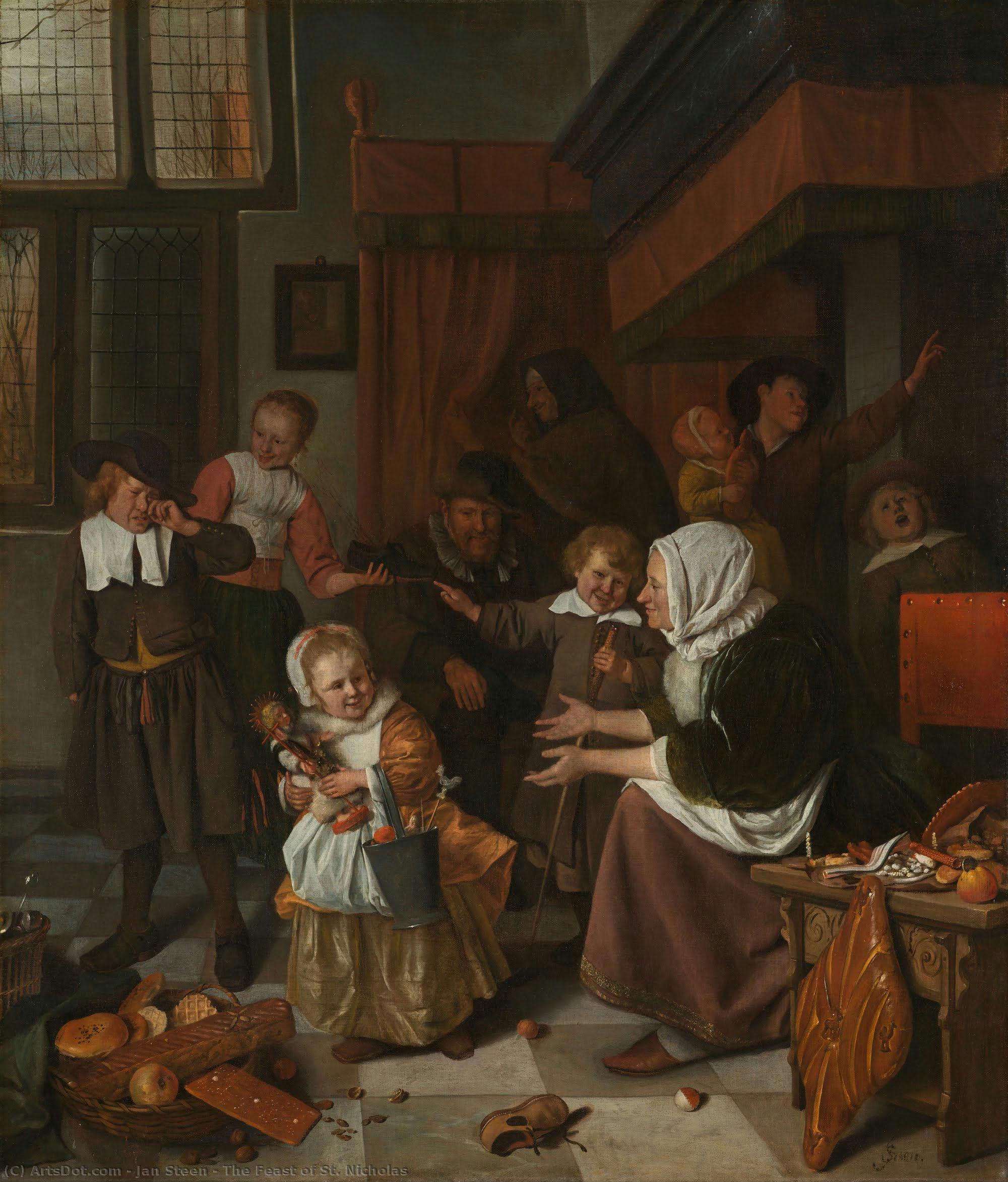
In the heart of the Dutch Golden Age, few artists possessed the ability to transform a chaotic domestic moment into a timeless masterpiece quite like Jan Havickszoon Steen. His 1665 work, The Feast of St. Nicholas, serves as a vibrant, almost cinematic window into the soul of 17th-century Netherlandish life. Rather than reaching for the distant grandeur of mythological gods or the stiff formality of aristocratic portraits, Steen turns his gaze inward, toward the warmth and wonderful disorder of the family home. The scene captures the electric anticipation of St. Nicholas’s Day, a celebration where the air is thick with the scent of citrus, the sweetness of treats, and the infectious energy of childhood delight. It is an intimate tableau that invites the viewer to step off the street and into a room brimming with life, laughter, and the subtle complexities of human connection.
The composition is a masterclass in the Baroque fascination with movement and light. Steen employs chiaroscuro—the dramatic interplay of deep shadows and luminous highlights—to sculpt the figures within the room, giving them a palpable, three-dimensional presence. As light spills across the dining table, it illuminates a bountiful spread of oranges, apples, and festive delicacies, making the textures of the food almost tangible to the observer. This meticulous attention to detail is not merely decorative; it serves to ground the scene in a profound realism. The way the light catches a child’s wide-eyed expression or the glint of a toy creates an emotional resonance that transcends time, making the painting feel less like a historical relic and more like a captured heartbeat of a family long since passed.
Symbolism and the Human Comedy
Beyond its surface-level joy, Steen’s work is layered with a sophisticated moral vocabulary characteristic of the era. To the casual observer, it is a celebration; to the discerning eye, it is a subtle commentary on virtue and mischief. The inclusion of certain objects acts as a quiet dialogue between the characters and their values. For instance, the presence of a birch rod tucked near a child’s shoe serves as a playful yet poignant reminder of Christian morality—a gentle warning that even amidst the most exuberant celebrations, righteousness and discipline remain essential. This tension between the wildness of youth and the guiding hand of tradition is beautifully embodied in the gestures of the adults, such as the grandmother’s tender interaction with her grandson, which suggests that beneath the festive chaos, a foundation of compassion and care prevails.
For collectors and interior designers alike, this painting offers much more than mere decoration; it provides a narrative anchor for a space. The rich, warm palette of ochres, deep reds, and earthy tones makes it an exquisite centerpiece for a room designed to evoke comfort and heritage. Whether placed in a sunlit gallery or a cozy study, The Feast of St. Nicholas brings with it an atmosphere of prosperity and domestic harmony. It is a piece that rewards repeated viewing, revealing new layers of storytelling with every glance—a true testament to Steen’s enduring legacy as the master of the human comedy.