A Moment Frozen in Time: The Spirit of Dutch Revelry
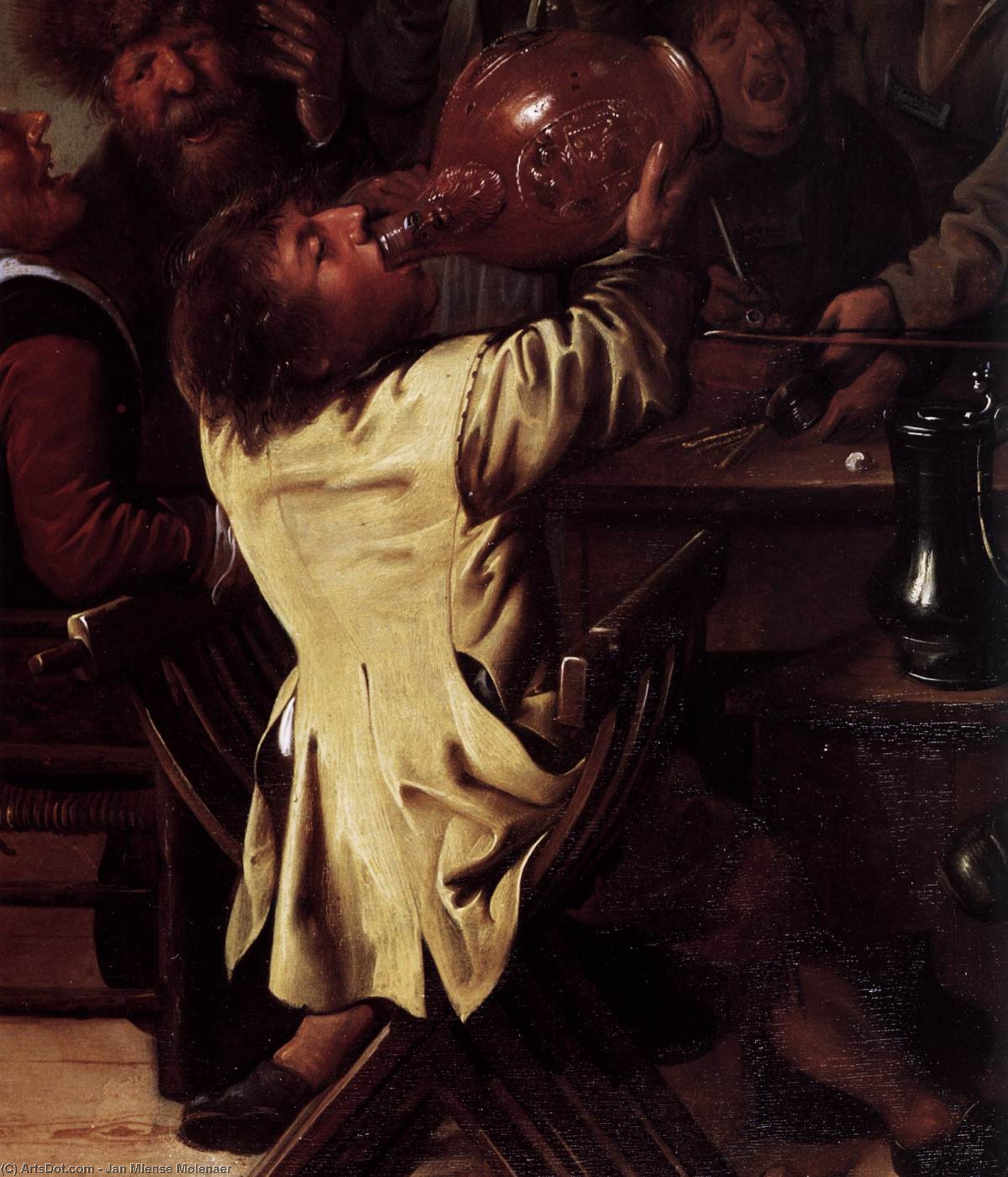
In the heart of the seventeenth century, during the height of the Dutch Golden Age, Jan Miense Molenaer captured more than just figures; he captured the very pulse of human connection. The King Drinks (detail) serves as a breathtaking window into a world of conviviality and shared joy. As we gaze upon this intimate fragment of a larger celebration, we find ourselves drawn into a crowded tavern or a rustic home where the boundaries between strangers dissolve in the warmth of communal drinking. The central figure, caught in the act of tilting a large wine jug toward his lips, embodies the uninhibited spirit of the scene. Around him, eyes are fixed in anticipation or amusement, creating a psychological tension that makes the viewer feel less like an observer and more like an invited guest at the table.
The mastery of Molenaer lies in his ability to elevate a simple genre scene into a profound study of light and atmosphere. His technique, which evolved from the energetic brushwork reminiscent of Frans Hals to a more nuanced, atmospheric depth akin to Adriaen van Ostade, is on full display here. The way light dances across the ceramic surface of the jug and catches the subtle textures of the clothing creates a sense of three-dimensional reality that is nothing short of hypnotic. Every stroke contributes to a palpable sense of movement—the tilt of a head, the leaning of a body, the expectant stillness of those watching the "king" drink. For the collector or interior designer, this piece offers a rich tapestry of textures and tones that can anchor a room with historical gravity and a lively, conversational energy.
Symbolism and the Art of Everyday Life
Beyond the surface-level merriment, Molenaer’s work often carries layers of social commentary and symbolic weight. In the Dutch tradition, scenes of drinking were frequently used to explore themes of temperance, excess, and the fleeting nature of pleasure. The "King" in this scene—likely a participant in a traditional game or a mock ceremony—represents the temporary inversion of social order, where for one brief moment, the common man wears a crown of revelry. The presence of the humble cup and the sturdy jug serves as a reminder of the earthly delights that define the human experience. There is a profound honesty in this depiction; it does not shy away from the messy, loud, and unrefined aspects of life, instead finding beauty in the authentic interactions of the working class.
For those looking to integrate fine art into a modern living space, The King Drinks (detail) provides an unparalleled emotional resonance. It is a piece that breathes life into a gallery wall or a study, offering a sense of warmth and historical continuity. Whether displayed in a contemporary setting to provide a striking classical contrast or placed within a traditional library to complement period aesthetics, this reproduction brings with it the soul of Haarlem’s golden era. It is an invitation to pause, to reflect on our own shared moments of connection, and to appreciate the enduring power of a well-told visual story.