A Tapestry of Fate: The Narrative Grandeur of Joseph in Prison
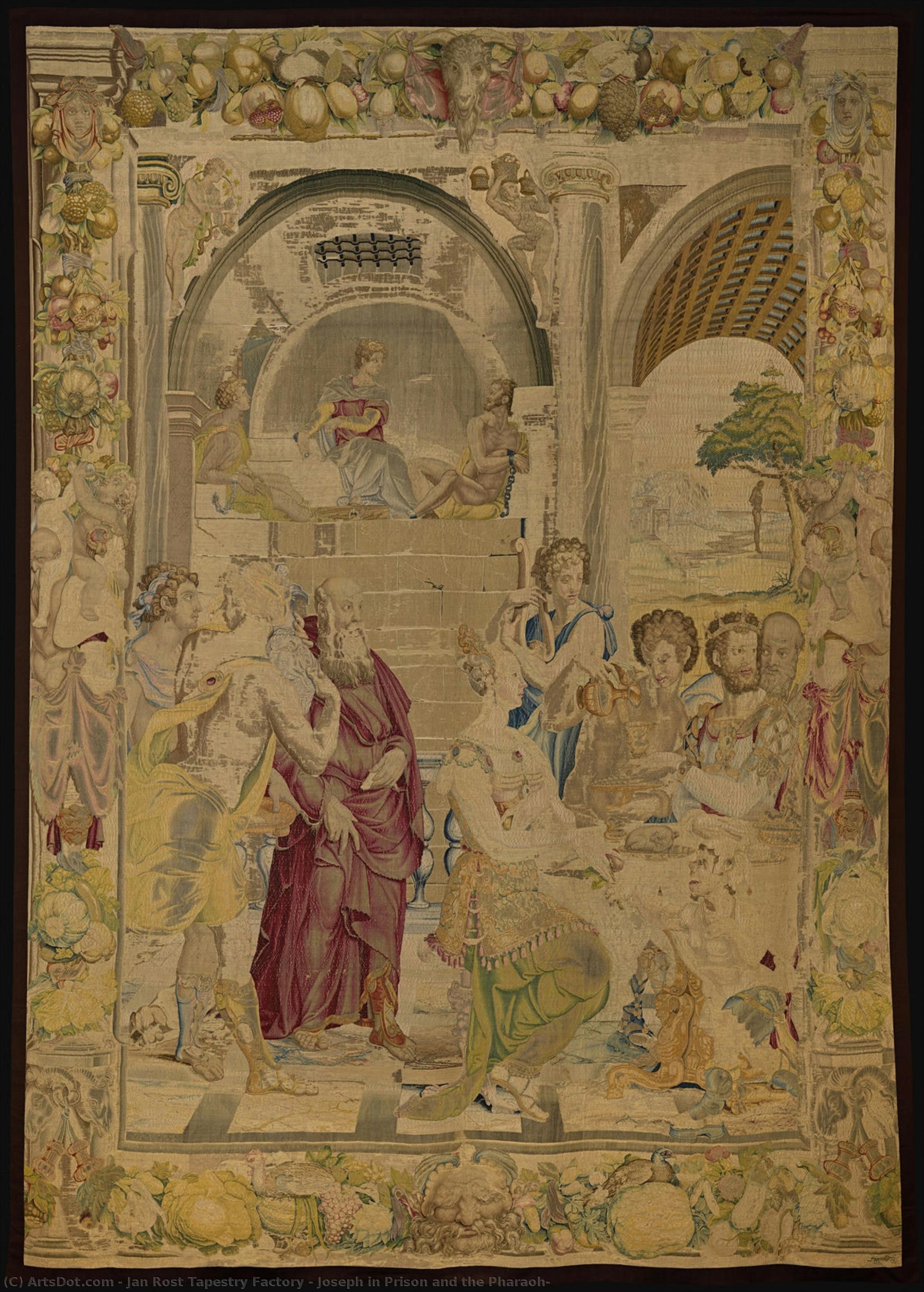
In the breathtaking tapestry Joseph in Prison and the Pharaoh, we are transported to a moment of profound biblical drama, where the threads of destiny weave together the fates of men and monarchs. Created in 1547 by the Jan Rost Tapestry Factory, this masterpiece serves as more than just a decorative textile; it is a window into a world of divine providence and human resilience. The scene unfolds within an opulent outdoor courtyard, where the heavy textures of brick walls meet the vibrant, flowing garments of the figures present. At the heart of this composition lies the figure of Joseph, draped in a regal purple robe that commands the viewer's attention, symbolizing both his current state of confinement and his inherent nobility. The interplay of light and shadow across the intricate weaves captures a sense of suspended animation, as if the very air of the courtyard is thick with the weight of the prophecy about to unfold.
The artistry of the Jan Rost Tapestry Factory shines through in the meticulous technical execution characteristic of the Flemish tradition. Each thread appears to pulse with life, utilizing a rich and sophisticated color palette that balances deep, earthy reds and lush greens with brilliant splashes of yellow and celestial blue. The weaver’s ability to render complex textures—from the heavy drape of royal silks to the organic scattered details of fruit like apples—demonates a mastery of the medium that was designed to dazzle the eyes of the Medici court. This level of detail is not merely ornamental; it serves to ground the biblical narrative in a tangible, sensory reality, making the historical and spiritual weight of the story feel immediate and visceral to the observer.
Beyond its visual splendor, the work carries deep symbolic resonance that continues to captivate collectors and historians alike. The presence of scattered apples and the varied postures of the onlookers—some kneeling in reverence, others standing in contemplative silence—suggest a layered dialogue between the earthly and the divine. For the modern interior designer or art enthusiast, this piece offers an unparalleled opportunity to introduce a sense of historical gravity and narrative depth into a space. A high-quality reproduction of this tapestry does not simply decorate a wall; it anchors a room with a legacy of Renaissance craftsmanship and the timeless, emotional power of a story about hope emerging from the darkest of prisons.