A Portrait of Genius: Decoding Jan van Eyck’s “La Femme du Peintre”
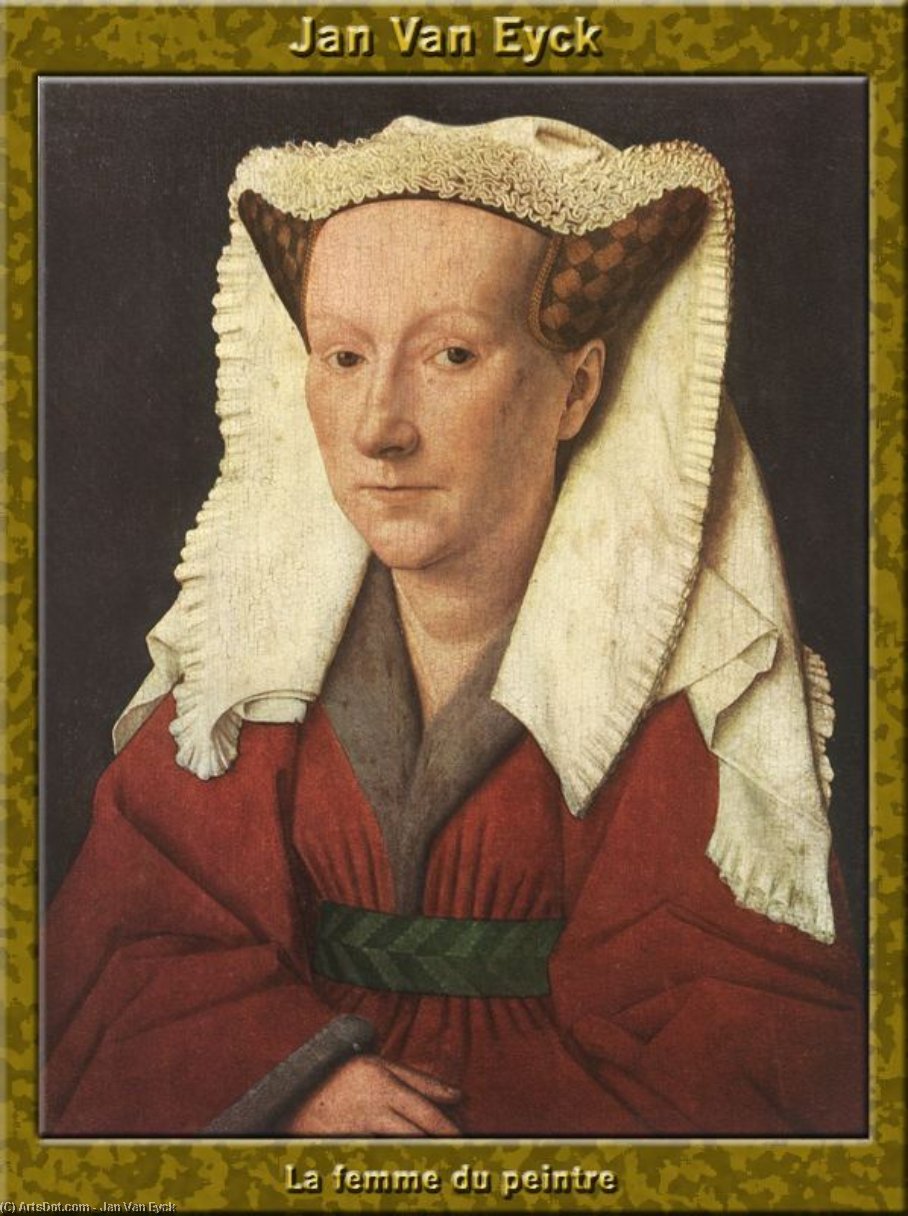
The painting "La femme du peintre" – French for “The Painter’s Woman” – stands as a cornerstone of Early Netherlandish art, embodying not just visual beauty but also profound intellectual and symbolic resonance. Executed around 1430, this portrait transcends mere representation; it's an exquisitely crafted meditation on artistry itself, capturing the gaze of Jan van Eyck—one of the most influential painters of his era—and inviting us to contemplate the complexities of creative endeavor.
- Subject Matter: The central figure is a woman presented with serene dignity and captivating composure. Her gaze directly confronts the viewer, establishing an intimate connection that speaks volumes about Van Eyck’s intention – to portray not simply a beautiful face but also a spirit imbued with thoughtfulness and awareness.
- Style & Technique: Van Eyck's mastery of oil paint revolutionized artistic practice. Unlike tempera paints which relied on pigment bound in egg yolk, oil allowed for unprecedented luminosity and detail. Observe the subtle gradations of color achieved through layering – a technique perfected by Van Eyck—creating an ethereal quality that captures the nuances of light and shadow with remarkable accuracy.
Historical Context: The Burgundian Court and Artistic Patronage
The painting’s creation coincided with the flourishing of the Burgundian court in Bruges, Belgium. This era witnessed a surge of artistic patronage fueled by royal ambition and a burgeoning humanist spirit. Van Eyck benefited enormously from this environment, securing commissions from wealthy nobles eager to adorn their residences with masterpieces that reflected their status and intellect. The painting’s commission likely served as an emblem of the court's commitment to elevating art alongside scholarship.
- Symbolism: Beyond its aesthetic appeal, “La femme du peintre” is laden with symbolic significance. The woman herself represents ideal beauty—a concept central to Renaissance humanism—but also embodies feminine intellect and contemplation. Her attire – a crimson dress symbolizing passion and nobility – complements the emerald green belt highlighting her virtue and modesty. Furthermore, the hat serves as a visual metaphor for protection and wisdom.
- Emotional Impact: The painting’s stillness conveys an aura of quiet confidence and inner peace. It invites viewers to pause and consider not just what is seen but also what is felt—a testament to Van Eyck's ability to evoke emotion through subtle visual cues. The luminous quality of the oil paint contributes to this emotional resonance, transporting us back to a time when art served as both decoration and profound reflection.
Legacy & Reproduction: Bringing Van Eyck’s Vision Home
Jan van Eyck's influence extends far beyond the confines of 15th-century Bruges. His groundbreaking technique paved the way for subsequent generations of artists, shaping the trajectory of Western painting for centuries to come. Today, a high-quality reproduction of “La femme du peintre” offers an opportunity to experience this artistic triumph firsthand—to appreciate the meticulous detail and luminous beauty that define Van Eyck’s unparalleled skill. ArtsDot.com presents exceptional reproductions crafted with archival inks on premium canvas, ensuring that you can bring a piece of art history into your home.