A Vision of Divine Protection: Exploring Jaume Huguet’s “The Archangel St Michael”
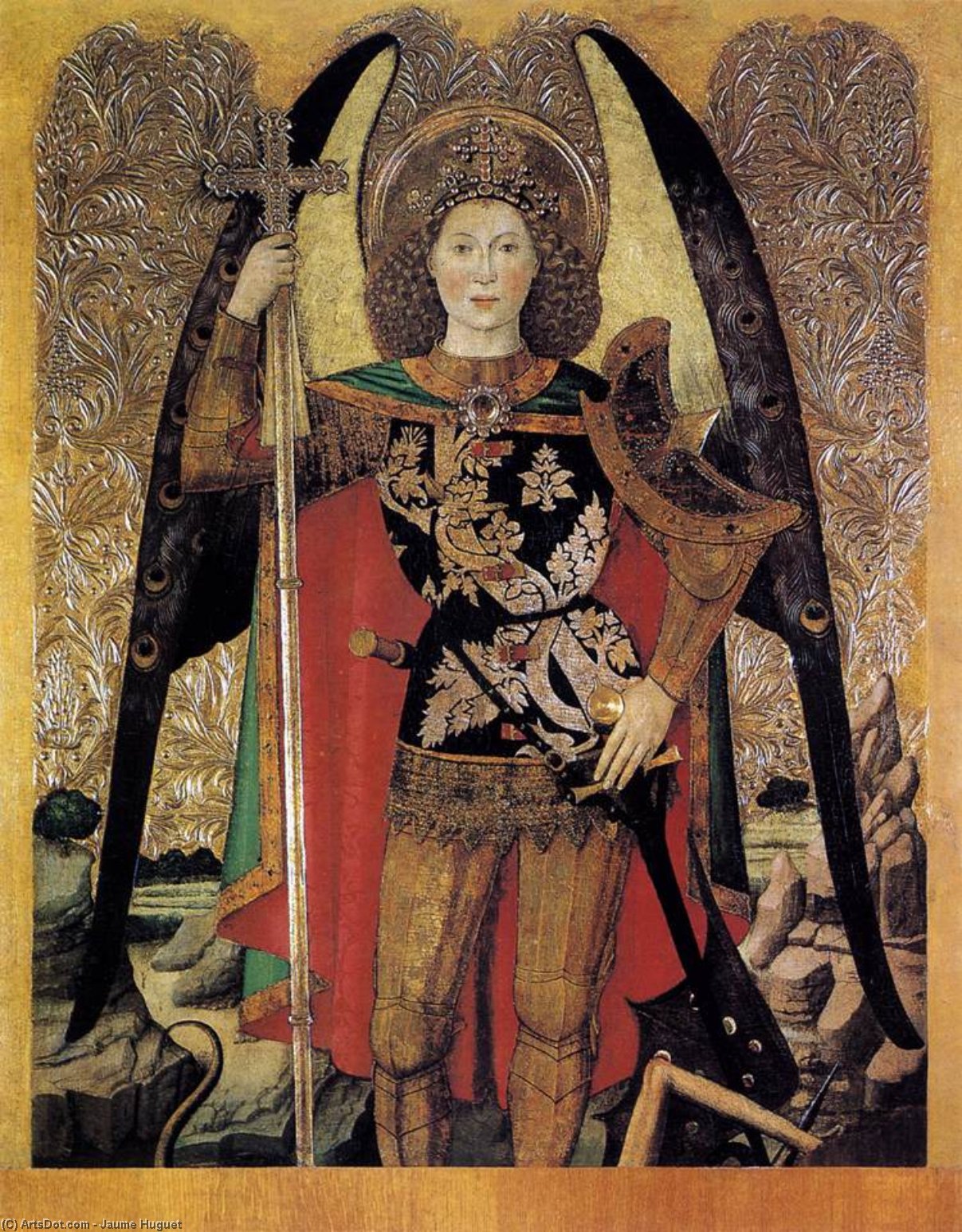
- Subject Matter and Narrative The painting depicts Saint Michael, arguably the most revered archangel in Christian iconography, engaged in a heroic posture. He stands prominently against a backdrop of stylized foliage, clutching a cross – a symbol of unwavering faith – and wielding a sword, representing divine justice and martial prowess. This depiction aligns perfectly with medieval artistic conventions where saints were portrayed as warriors safeguarding Christendom.
- Style: Late Gothic Grandeur Huguet’s masterpiece embodies the zenith of late Gothic art. Characterized by monumental scale and opulent decoration, it reflects the spiritual fervor of the period. The artist skillfully employs geometric forms and flattened perspectives to prioritize clarity of form over realistic representation—a hallmark of Gothic artistic ideals.
- Technique: Tempera on Wood Panel Executed in tempera paint on a wood panel, “The Archangel St Michael” showcases meticulous craftsmanship. Tempera pigments bind together with egg yolk and create durable, luminous colors that retain their brilliance over centuries. The slightly matte surface of the panel contributes to the artwork’s solemn atmosphere.
- Historical Context: Florence Amidst Transformation Created in 1456, “The Archangel St Michael” emerges from a pivotal moment in Florentine history—the burgeoning Renaissance. While Huguet's style retains Gothic traditions, it simultaneously anticipates the humanist ideals and artistic innovations that would soon dominate the art world. Lorenzo di Niccolò’s workshop was instrumental in bridging the gap between medieval aesthetics and emerging Renaissance sensibilities.
- Symbolism: Faith, Justice, and Divine Power Beyond its visual splendor, “The Archangel St Michael” is laden with symbolic significance. The cross symbolizes Christian faith; the sword embodies divine justice and courageously defends righteousness; and the angel wings represent God’s omnipresent protection and spiritual authority. These elements resonate deeply within the viewer's psyche, conveying a powerful message of hope and devotion.
Decorative Potential: The artwork’s rich gold background and dramatic lighting lend themselves beautifully to interior design projects seeking grandeur and spiritual inspiration. Reproductions crafted with archival pigments would faithfully capture Huguet’s original vision, adding an element of timeless elegance to any space. Consider framing it in a dark wood frame to accentuate its sculptural qualities.