Discover Jean-Antoine Watteau (1684-1721), the French Rococo master! Explore his idyllic 'fêtes galantes,' theatrical scenes, & influence on 18th-century art. View masterpieces like 'The Country Dance' & learn about his legacy.
Žan-Antoan Vato – majstor Rokokoa! Otkrijte njegove idilične 'fete galante', pozorišne scene i uticaj na umetnost 18. veka. Pogledajte remek-dela poput 'Seoske igre' i saznajte više o njegovom nasleđu.
Louvre
(Paris, France)
Otkrijte bezvremenske remek-dela Louvra! Putujte kroz istoriju umetnosti od drevnog Egipta do renesansnih ikona – Mona Liza, Venere Miloska i još mnogo toga. Pariško kulturno blago čeka na vas!
A) Kraljevskom dvorcem isključivo za Luja XIV.
B
Prema datom tekstu, šta je bila prvobitna svrha palate Louvre?
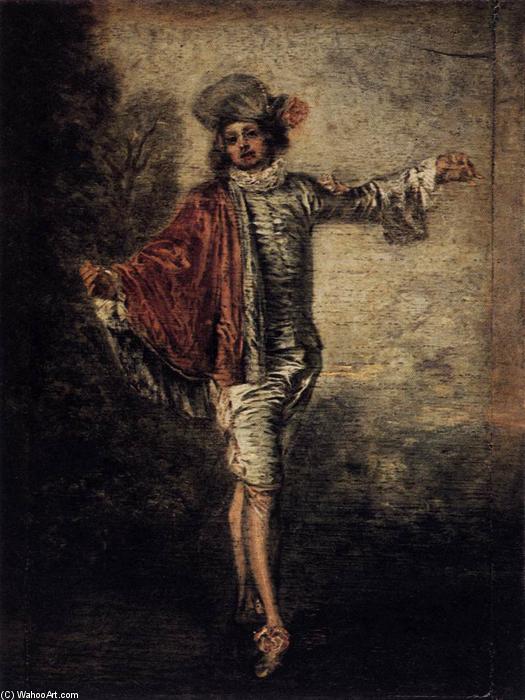
A Delicate Dance of Elegance: Exploring Jean-Antoine Watteau’s ‘L’Indifférent’
Jean-Antoine Watteau (1684–1721), a figure whose name now echoes through the halls of Rococo art history, wasn't initially destined for artistic acclaim. Born in Valenciennes, France, into modest circumstances—his father a roofer—Watteau’s early life instilled within him an observant spirit and a fascination with the everyday world, qualities that would profoundly influence his groundbreaking oeuvre. Despite facing considerable obstacles securing positions within Paris’s competitive art institutions, Watteau persevered, honing his skills under local masters and steadily cultivating his distinctive vision. This tenacity ultimately yielded remarkable results, transforming him into one of the era's most celebrated painters and establishing a legacy that continues to inspire artists today.
- Subject Matter: The painting presents an arresting portrait of a man dressed in a vibrant red coat, engaged in what appears to be a graceful dance or acrobatic movement. Though his face remains obscured—a deliberate stylistic choice characteristic of Watteau’s oeuvre—the pose exudes confidence and dynamism, capturing a fleeting moment of theatrical performance.
- Style: ‘L’Indifférent’ embodies the very essence of Rococo art – an aesthetic prioritizing delicacy, ornamentation, and refined emotion over grand narratives. Watteau eschewed the dramatic grandeur favored by his Baroque predecessors, opting instead for scenes imbued with atmosphere and suggestion, mirroring the aristocratic leisure culture of Louis XV's court.
- Technique: Watteau’s masterful brushwork is immediately apparent. He employed a technique known as *grisaille*, utilizing shades of grey to create subtle tonal variations that heighten the painting’s illusionistic depth. This meticulous approach, combined with delicate layering and blending, contributes significantly to the overall ethereal quality of ‘L’Indifférent’.
Historical Context: The Courtly Fantasies of Versailles
Watteau's artistic output coincided with a pivotal period in French history—the reign of Louis XV. Versailles, the opulent palace complex commissioned by Louis XIV, served as the epicenter of aristocratic society and artistic patronage. Watteau’s paintings captured this atmosphere perfectly, depicting idealized gatherings of nobles indulging in pursuits of pleasure and entertainment – fêtes galantes – which were considered acceptable subjects for art at the time. These scenes weren't intended to chronicle historical events but rather to evoke feelings of beauty, sophistication, and fleeting romance.
Symbolism: Absence as Expression
The deliberate omission of Watteau’s subject’s face is arguably one of the painting’s most striking symbolic gestures. Rather than portraying a recognizable individual, Watteau focuses on conveying an emotional state—a sense of detachment and indifference – which is itself a central theme within Rococo art. This technique invites viewers to contemplate not what is seen but what is felt, prompting introspection about human experience and social conventions.
Emotional Impact: A Whisper of Beauty
‘L’Indifférent’ possesses an undeniable emotional resonance. Its muted palette—dominated by shades of grey and crimson—creates a mood of serene contemplation, while the dancer's posture exudes grace and poise. Watteau succeeds in capturing not just a visual representation but also a psychological nuance that speaks to the complexities of human emotion – a subtle reminder that beauty can reside in stillness and introspection. It’s a painting designed to linger in the memory long after viewing, embodying the Rococo ideal of aesthetic pleasure as a conduit for profound feeling.