A Vision of Timeless Grace: The Allure of Ines Moitessier
In the quiet corridors of the National Gallery in London, there exists a moment frozen in 1856 that continues to captivate the modern soul. Jean-Auguste-Dominique Ingres’ “Ines Moitessier” is far more than a mere portrait; it is an invitation into a realm of profound serenity and aristocratic elegance. As one gazes upon the luminous countenance of Ines, there is an immediate sense of being drawn into her private world—a world defined by a delicate balance between outward splendor and inward reflection. The painting serves as a cornerstone of Neoclassical mastery, where every brushstroke seems to whisper of a bygone era of refinement and poise.
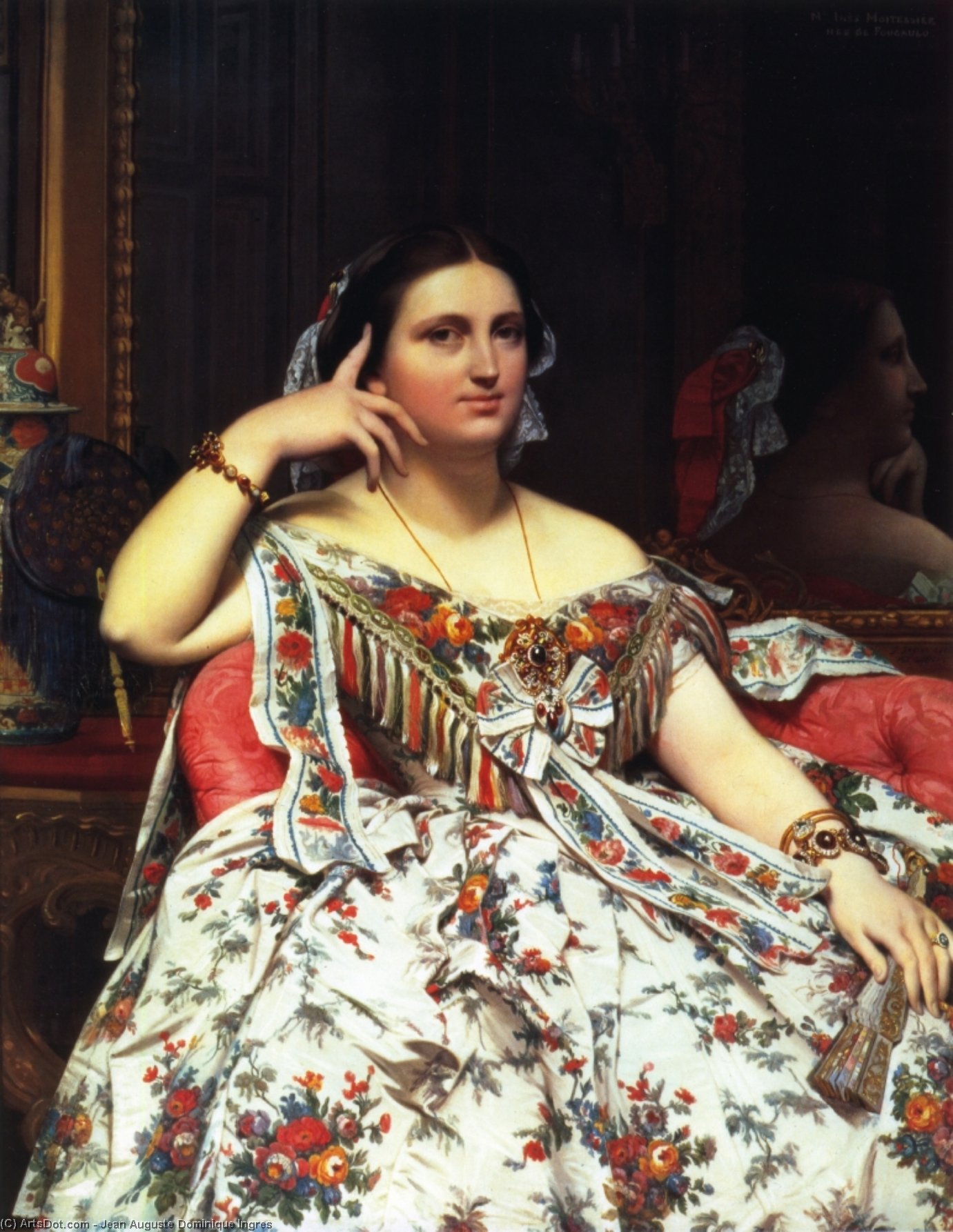
The subject herself, Marie-Clotilde-Inès Moitessier, radiates a serene beauty that transcends the canvas. Her gaze, directed subtly toward the viewer, establishes an intimate connection that feels both welcoming and enigmatic. There is a palpable psychological depth in her expression; she does not merely sit for a portrait, but rather inhabits a state of quiet contemplation. This sense of introspection is masterfully anchored by her pose—a hand resting gently against her chin—a gesture traditionally associated with intellectual engagement and the pursuit of wisdom. Through this subtle movement, Ingres elevates the sitter from a figure of social status to a symbol of the contemplative human spirit.
The Mastery of Line and Luminous Texture
To behold this work is to witness the pinnacle of Neoclassical technique. Ingres was a virtuoso of line, and in “Ines Moitessier,” his commitment to sculptural modeling is nothing short of breathtaking. He eschews the turbulent, emotive brushwork of the Romantic movement in favor of a meticulous, almost velvety surface texture. The artist employs oil on canvas to create a luminous palette where light seems to emanic from within the skin of the subject itself. This precision allows for an idealized beauty that feels both ethereal and tangibly present.
The interplay of textures provides a feast for the eyes, making this piece an extraordinary choice for those seeking to add depth to a curated interior. The flowing, silken drapery of her dress, adorned with delicate jewelry, contrasts beautifully with the smooth, porcelain-like finish of her complexion. This careful attention to detail—the way light catches a pearl or settles into a fold of fabric—creates a sense of luxury and opulence that remains incredibly relevant for contemporary art collectors and interior designers looking to evoke a sense of classical sophistication.
A Legacy of Elegance for the Modern Collector
Historically, this masterpiece emerged during a period of significant artistic tension. As a guardian of academic orthodoxy, Ingres used works like this to champion formal clarity and restraint against the rising tide of Romanticism. He sought to revive the classical ideals of beauty, stability, and order. Consequently, the painting carries a symbolic weight that speaks to the enduring value of tradition and the timelessness of grace. The attire and jewelry are not merely decorative; they are signifiers of mid-19th-century French refinement and social standing.
For the discerning collector or the designer of high-end residential spaces, a reproduction of “Ines Moitessier” offers more than just visual decoration. It brings an atmosphere of intellectual calm and historical prestige into a room. Whether placed in a sunlit study or a grand salon, the painting acts as a focal point of quiet strength. It is a piece that does not demand attention through noise, but commands it through its sheer, unshakeable elegance, making it an everlasting inspiration for those who appreciate the profound beauty of the classical tradition.