Jean-Baptiste Camille Corot
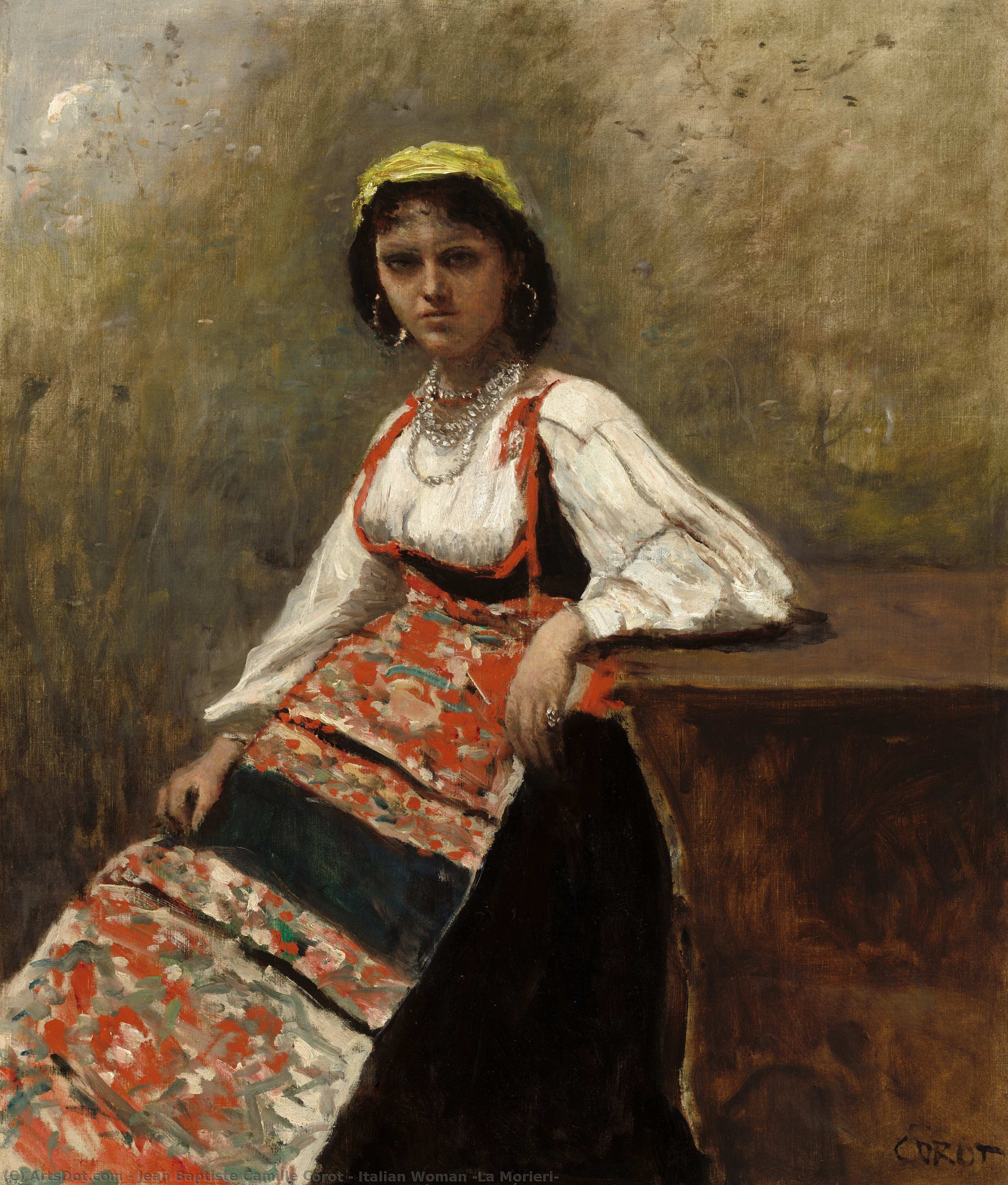
Jean-Baptiste Camille Corot’s ‘Italian Woman,’ completed in 1872, exemplifies his signature style—a harmonious blend of Neo-Classical tradition and plein-air Impressionism. This captivating portrait depicts a woman radiating quiet intensity against a backdrop of birdsong and lush foliage, reflecting Corot's profound connection to the natural world.
95 x 85 cm
Landsca
Italian Woman (La Morieri) by Jean-Baptiste-Camille Corot
Jean-Baptiste-Camille Corot’s “Italian Woman (La Morieri)” stands as an emblem of the Barbizon school's commitment to capturing the sublime beauty of rural France. Painted in 1872, this oil on canvas – measuring 95 x 85 cm – transcends mere representation; it embodies a profound meditation on femininity and the evocative power of light. The artwork resides within the National Gallery of Art’s collection, reflecting its enduring significance as a cornerstone of nineteenth-century artistic achievement.
- Subject Matter: At its core lies a portrait of an Italian woman—La Morieri—dressed in a striking scarlet gown adorned with delicate white trim. Her gaze is direct and intense, conveying a palpable sense of contemplation that invites viewers to delve into her inner world.
- Style & Technique: Corot’s distinctive style blends realism with Romantic idealism. He eschewed the polished surfaces favored by academic painters, opting instead for loose brushstrokes and subtle tonal variations—a technique honed through decades of observation in plein air landscapes. These marks are visible throughout the canvas, creating a textured surface that mimics the natural world.
Historical Context & Barbizon Influence
Corot’s work emerged during a pivotal moment in artistic history—the rise of Impressionism. However, he remained steadfastly rooted in the Barbizon school's traditions, prioritizing direct observation and capturing atmospheric conditions above meticulous detail. This approach challenged prevailing aesthetic conventions and championed a return to nature as inspiration for art. The Tokyo National Museum’s dedication to preserving and exhibiting Corot’s legacy underscores this enduring influence.
- Symbolism: Beyond its visual beauty, “Italian Woman” carries symbolic weight. The woman's posture—slightly turned towards the viewer—suggests vulnerability yet simultaneously exudes confidence. Her gaze embodies introspection and invites contemplation on themes of identity and emotion.
- Emotional Impact: Corot’s masterful use of light imbues the painting with a palpable sense of serenity and melancholy. The diffused sunlight illuminates La Morieri's face, casting delicate shadows that heighten the emotional resonance of the scene—a testament to Corot’s ability to evoke profound feelings in his audience.
Related Works & Legacy
Corot’s artistic output spanned a remarkable breadth of subjects and styles. Notably, “Jean Baptiste Camille Corot: Landscape,” created circa 1872, exemplifies his unwavering devotion to capturing the grandeur of the French countryside. Furthermore, “Jean Baptiste Camille Corot: The Cathedral of Chartres” showcases his fascination with architectural spaces—a genre that reflects his broader exploration of visual perception and artistic expression. His influence extends far beyond his own lifetime, shaping the sensibilities of subsequent generations of painters.
- Provenance: The painting’s journey through history began with Hector Brame, followed by Armand-François-Paul des Frisches, comte Doria, and ultimately ended in the possession of Robert Esnault-Pelterie. Its subsequent sale to Galerie Nathan and Sam Salz cemented its place within the annals of art connoisseurship.
Conclusion
“Italian Woman (La Morieri)” remains a captivating masterpiece—a testament to Jean-Baptiste-Camille Corot’s artistic genius and his unwavering commitment to capturing the sublime beauty of the natural world. Its enduring appeal lies in its ability to inspire contemplation and evoke profound emotional responses—a timeless achievement that secures its position as an icon of Barbizon art.