Jean-Baptiste-Camille Corot
A Life Immersed in Light and LandscapeJean-Baptiste-Camille Corot, a name that resonates with the tranquil beauty of 19th-century French landscape painting, was born into a comfortable Parisian bourgeois family on July 16, 1796. Though initially steered towards a commercial path, destiny – and perhaps an innate artistic sensibility – intervened. His early years were ma
Žan-Batist Kamil Korote (1796-1875), francuski slikar pejzaža, preteča impresionizma! Očaravajući tonovi i atmosferski pejzaži poput 'Mira' i 'Čitačice' oslikavaju njegovu umetničku viziju i uticaj na moderne slikare.
Otkrijte Muzej d'Orsej u Parizu! Smešten u prelepom nekadašnjem železničkoj stanici, istražite nezapaženu kolekciju impresionističkih i postimpresionističkih remek-dela Moneta, Van Goga i drugih. Uđite u svet umetnosti 19. veka!
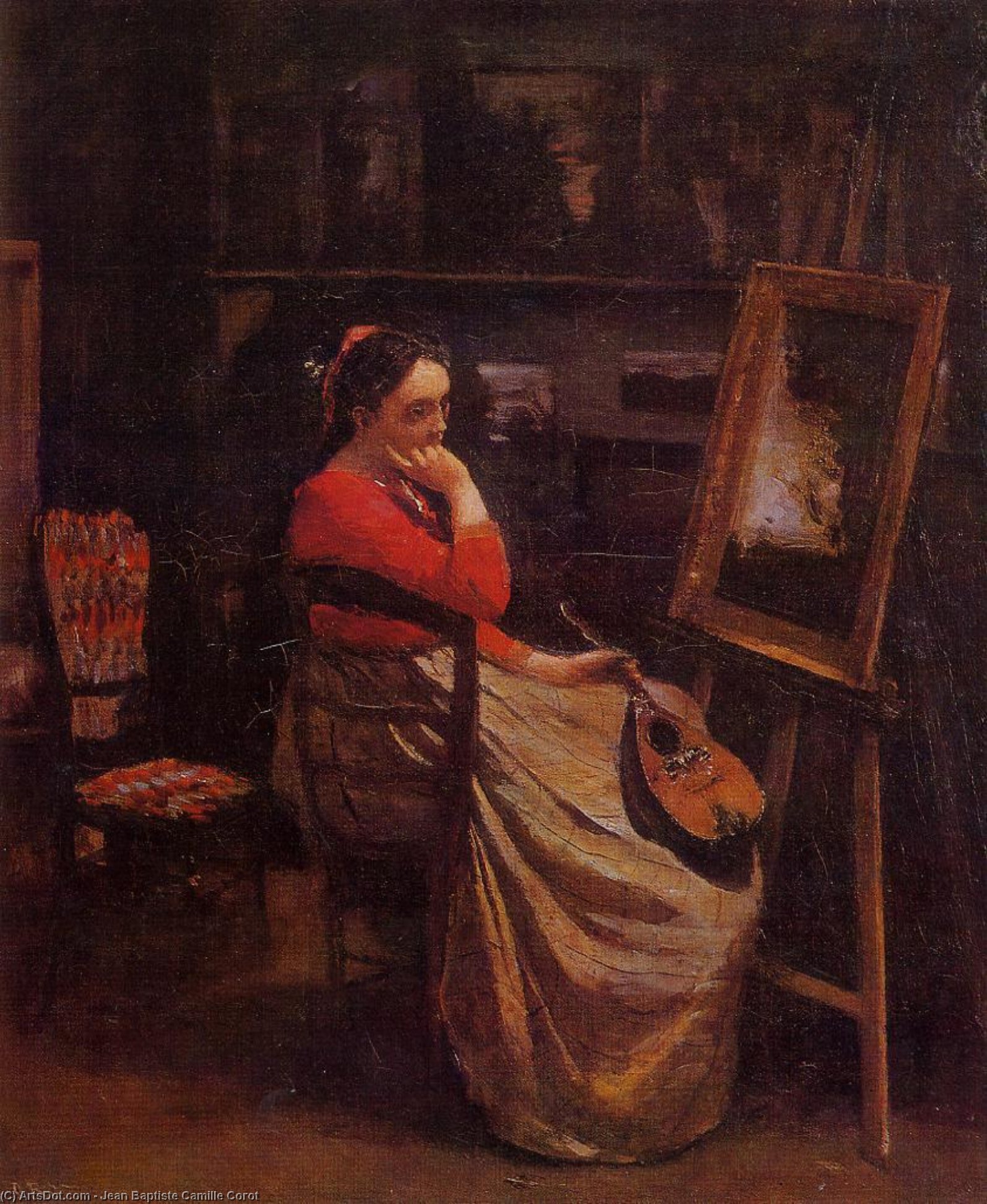
The Studio: A Portrait of Artistic Contemplation
Jean-Baptiste-Camille Corot’s “The Studio,” painted in 1865, transcends mere depiction; it embodies the very essence of artistic creation. More accurately titled "Young Woman with a Mandolin," this evocative canvas captures a moment of profound introspection within an artist's workspace—a scene that continues to fascinate viewers and inspire artists today.
Style and Technique: Impressionistic Luminosity
Corot’s approach firmly establishes him as a pivotal figure in the burgeoning Impressionist movement. Rejecting academic conventions favoring meticulous detail, he prioritized capturing fleeting impressions of light and color—a technique championed by Monet and Renoir. The painting utilizes broad brushstrokes layered to create an atmospheric haze that softens edges and imbues the scene with a palpable sense of tranquility. Corot skillfully blends pigments to achieve subtle tonal variations, prioritizing luminosity over precise representation.
Historical Context: Romantic Roots Amidst Modern Innovation
Painted during the twilight years of Romanticism, “The Studio” nevertheless anticipates the stylistic advancements of Impressionism. The Romantic preoccupation with sublime landscapes—the awe-inspiring grandeur of nature confronting human insignificance—finds resonance in Corot’s depiction of the countryside surrounding Paris. However, unlike Romantic artists who sought to convey emotion through dramatic compositions and expressive brushwork, Corot strives for objectivity, presenting a serene tableau that invites contemplation rather than eliciting visceral reaction.
Symbolism: The Mandolin as Instrument of Thought
The inclusion of the mandolin—a musical instrument traditionally associated with melancholy and introspection—is laden with symbolic significance. It serves as a visual metaphor for the artist’s mind, suggesting that creativity stems from contemplation and emotional resonance. The woman's gaze directs towards the canvas, emphasizing her engagement in the creative process and highlighting the connection between music and art.
Emotional Impact: A Balm for the Soul
"The Studio" possesses a remarkable ability to evoke feelings of peace and serenity. Its muted palette—dominated by earthy tones—creates an atmosphere conducive to reflection. The carefully arranged composition—featuring the woman, the easel, the vases, and the bowl—guides the viewer’s eye towards the central focus: the artwork itself. Ultimately, Corot's masterpiece offers a poignant reminder of the transformative power of art – its capacity to inspire beauty, foster contemplation, and nourish the human spirit.