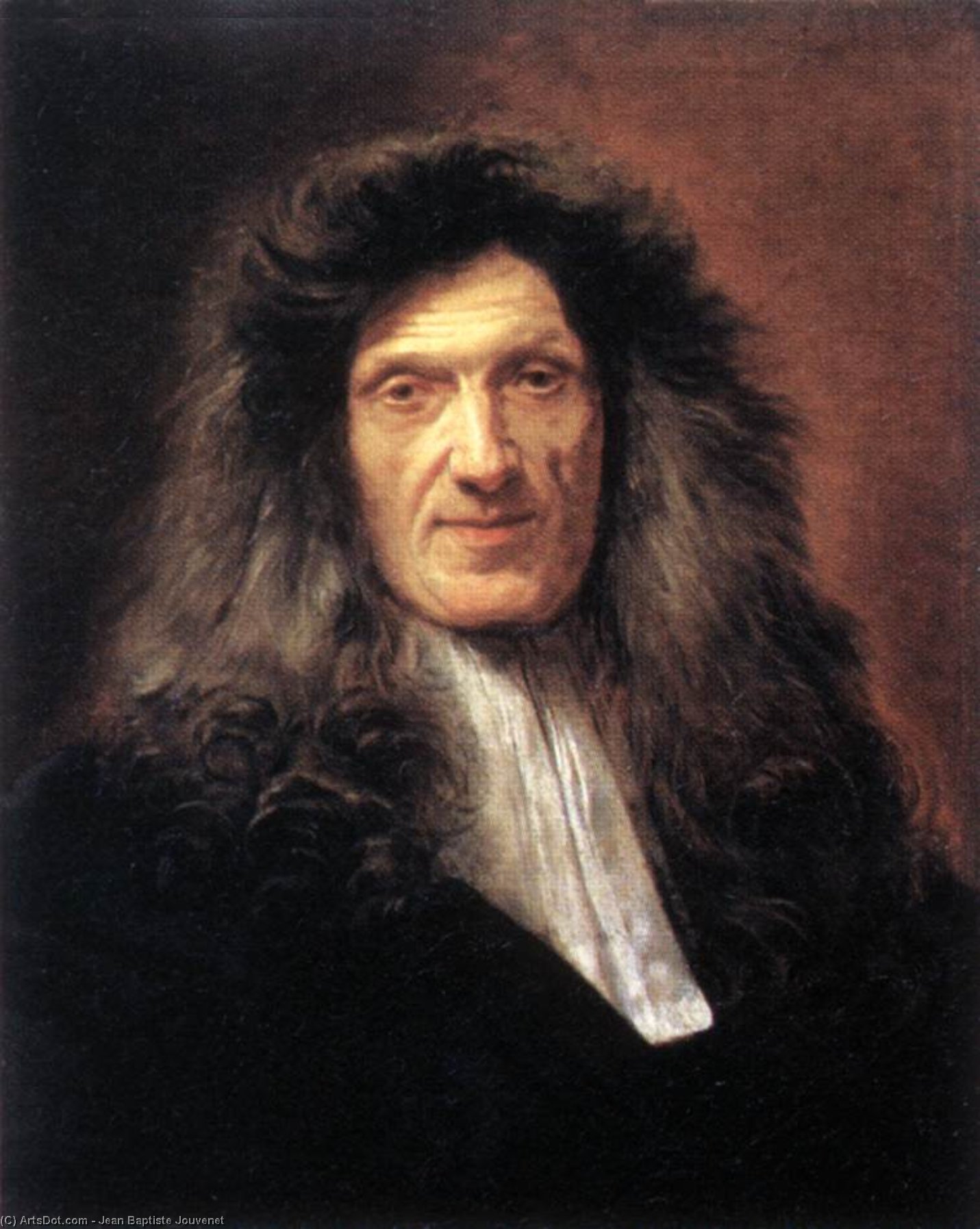
The Weight of Years: Dr Raymond Finot by Jean-Baptiste Jouvenet
Jean-Baptiste Jouvenet’s “Dr Raymond Finot,” painted in 1704, isn't merely a portrait; it’s a carefully constructed meditation on time, wisdom, and the quiet dignity of age. Housed within the hallowed halls of the Louvre Museum in Paris, this oil on canvas offers a rare glimpse into the world of 18th-century French society through the eyes of a discerning artist. More than just a likeness, it’s a study in subtle expression, masterful technique, and the profound beauty found in the weathered face of experience.
The subject himself, Dr. Raymond Finot, remains somewhat shrouded in historical detail, adding to the painting's enigmatic allure. However, within the context of 1704, he represents a figure of considerable standing – likely a respected physician and member of the Parisian elite. Jouvenet’s skill lies not in flamboyant display but in capturing the essence of this man through carefully observed details: the deep lines etched into his face, each one telling a silent story; the slightly furrowed brow suggesting contemplation; and the gentle curve of his lips hinting at both wisdom and perhaps a touch of melancholy. The painting avoids idealization, presenting an honest and unvarnished portrayal of a man nearing the end of his life.
A Baroque Masterpiece: Technique and Style
Jouvenet’s style is firmly rooted in the Baroque tradition, yet he possesses a remarkable restraint that distinguishes him from some of his more overtly dramatic contemporaries. The composition is balanced and harmonious, with the figure centrally positioned within a muted, earth-toned background – a deliberate choice that draws all attention to the subject's face. The artist employs a technique known as *chiaroscuro*, skillfully manipulating light and shadow to create depth and volume. Notice how the light catches the highlights of his hair and clothing, while simultaneously deepening the shadows around his eyes and mouth, adding to the painting’s dramatic effect.
His brushwork is remarkably controlled and precise, particularly evident in the rendering of the wrinkles and folds of his garments. This meticulous attention to detail speaks volumes about Jouvenet's dedication to realism and his ability to capture the textures and nuances of the human form. The use of oil paints allows for a rich, luminous quality that enhances the painting’s overall impact. The subtle gradations of color create a sense of atmosphere and contribute to the feeling of intimacy within the scene.
Symbolism and Historical Context
“Dr Raymond Finot” is not simply a portrait; it's imbued with symbolic meaning reflective of its time. The setting, though understated, speaks volumes about the social standing of the subject. The painting was created during the reign of Louis XIV, the “Sun King,” and reflects the values and priorities of the French court – a focus on order, reason, and refinement. The doctor’s attire, while elegant, is not ostentatious, suggesting a man of intellect and character rather than wealth or status.
Furthermore, the painting's creation coincided with a period of significant intellectual ferment in Europe, marked by the rise of scientific inquiry and philosophical debate. The subject’s contemplative gaze can be interpreted as an invitation to reflect on the mysteries of life, death, and the pursuit of knowledge – themes that resonated deeply within the cultural landscape of 18th-century France. The painting's placement in the Louvre Museum underscores its enduring significance as a testament to both artistic skill and historical insight.
A Timeless Portrait: Reproduction Possibilities
Today, “Dr Raymond Finot” remains a captivating work of art, offering viewers an opportunity to connect with a bygone era. High-quality reproductions are available through platforms like ArtsDot, allowing art enthusiasts worldwide to experience the painting’s beauty and nuance firsthand. When commissioning a reproduction, consider the meticulous hand-painted process employed by skilled artists – ensuring that every brushstroke captures the essence of Jouvenet's original vision. A faithful reproduction will not only adorn your walls but also serve as a tangible link to the rich artistic heritage of France.