A Glimpse into Parisian Intimacy
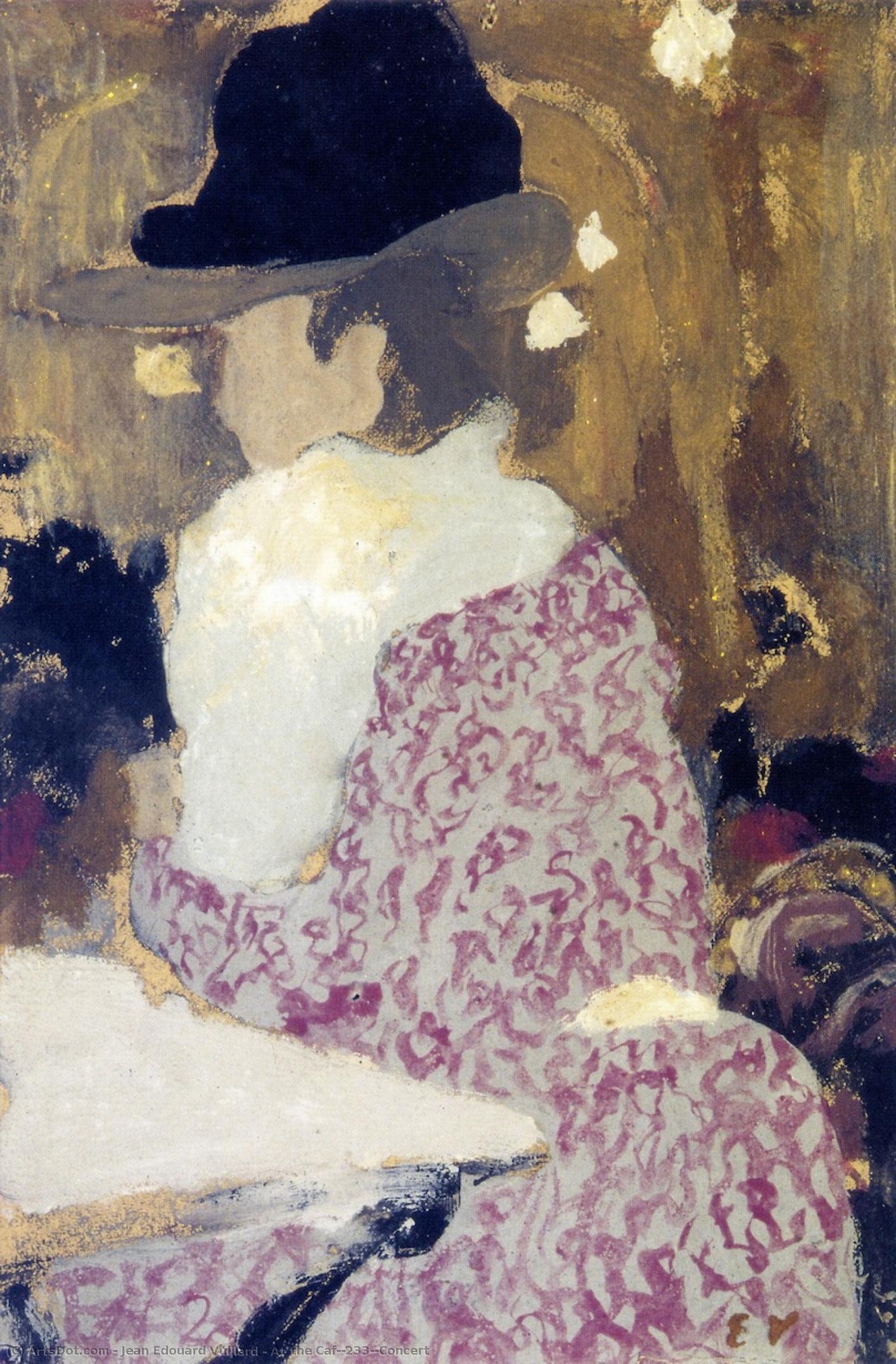
In the soft, amber glow of late nineteenth-century Paris, Jean-Édouard Vuillard captured more than just a scene; he bottled an atmosphere. At the Café-Concert, painted in 1898, serves as a breathtaking window into the soul of the Nabis movement, offering a moment of quietude amidst the perceived bustle of urban life. The painting centers on a solitary woman, seated at a table and lost in a state of profound introspection. She is not an active participant in the café's social theater but rather a silent observer, her gaze directed outward as if peering through the veil of the immediate world into her own internal landscape. This focus on the psychological weight of a single moment is what elevates the work from a mere genre painting to a deeply moving portrait of human existence.
The technique employed by Vuillard is nothing short of magical, utilizing the delicate medium of pastel to create a surface that feels almost tactile. Through layers of pigment, he achieves a velvety texture that catches the light, lending an ethereal, dreamlike quality to the composition. His brushwork—or rather, his stroke work—is loose and expressive, eschewing the rigid lines of academic tradition in favor of organic, flowing shapes. This Impressionistic approach allows the boundaries between the subject and her environment to blur slightly, suggesting that the woman and the café are part of a single, breathing entity. For the collector or designer, this creates a sense of movement and life that breathes vitality into any space it inhabits.
The Language of Color and Light
Color in At the Café-Concert acts as the primary emotional conductor. Vuillard masterfully orchestrates a palette dominated by warm, sun-drenched hues—radiant yellows, deep oranges, and soft ochres—that wrap the viewer in a sense of intimacy and warmth. These are not merely decorative choices; they are instruments of emotion used to evoke the cozy, slightly hazy atmosphere of a Parisian evening. The light appears to emanate from an unseen source, casting gentle shadows that provide volume to the figure while simultaneously flattening the perspective in a way that pays homage to the influence of Japanese woodblock prints.
This deliberate use of color and flattened space creates a rich, tapestry-like effect where patterns and textures dance across the canvas. The subject's patterned dress and hat become part of a larger decorative scheme, making the artwork particularly compelling for interior designers looking to introduce a sophisticated, historical narrative into modern decor. There is a profound sense of balance here—a harmony between the heavy, textured application of color and the lightness of the subject's contemplative mood. To possess a reproduction of this piece is to bring a fragment of Belle Époque elegance into one's home, offering a permanent sanctuary of warmth and thoughtful reflection.