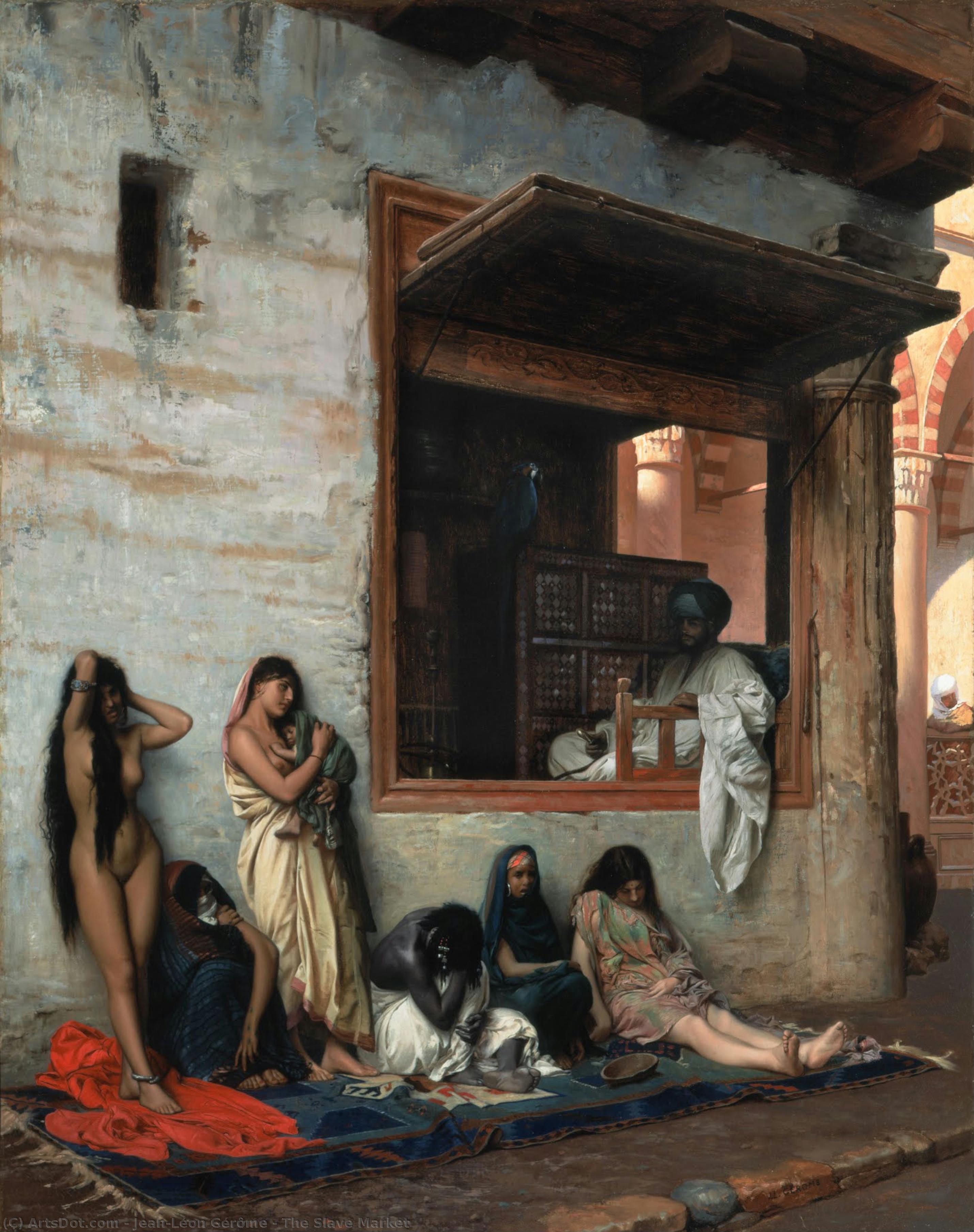
A Window Into Exotic Sensuality: Jean-Léon Gérôme’s “The Slave Market”
Jean-Léon Gérôme stands as a titan amongst French Orientalist painters, his legacy cemented by an unparalleled command of realism combined with theatrical storytelling. Born in Vesoul in 1824, he honed his artistic skills under the tutelage of Claude-Basile Cariage before relocating to Paris at sixteen and immersing himself in the rigorous training offered by Paul Delaroche and the École des Beaux-Arts. Unlike many of his contemporaries who sought merely to reproduce exotic landscapes or costumes, Gérôme possessed a singular vision—to convey emotion through meticulous detail, transforming historical narratives into immersive experiences for the viewer.
- Subject Matter: “The Slave Market” confronts viewers with a stark depiction of human suffering juxtaposed against an unsettling fascination. The scene portrays slaves awaiting sale in a courtyard setting, capturing the palpable despair of their predicament alongside the sensual allure of one nude woman—a deliberate provocation designed to critique both the barbarity of slavery and its latent erotic potential.
- Style & Technique: Gérôme’s style is characterized by painstaking realism. Every figure, every architectural element, from the turbaned man to the weathered stone walls, is rendered with astonishing precision. He employed a glazing technique—applying thin layers of translucent color over underlying pigments—to achieve luminous effects and heighten the dramatic atmosphere. This meticulous approach ensured that the painting wasn’t simply observed but felt.
The painting emerged from a broader artistic movement known as Orientalism, which flourished throughout the Victorian era. Artists like Gérôme responded to the burgeoning fascination with the East—fueled by scientific expeditions and literary fantasies—by constructing idealized versions of Middle Eastern cultures. However, Gérôme’s work transcends mere exotic spectacle; it serves as a powerful indictment of colonialism and exploitation. The artist skillfully utilizes visual cues – the stark contrast between light and shadow, the expressive faces of the figures – to amplify the emotional impact of the scene.
- Historical Context: Created in 1871, “The Slave Market” reflects the anxieties surrounding the ongoing practice of slavery in Egypt during Gérôme’s time. The painting deliberately engages with ethical considerations, prompting contemplation on the moral implications of portraying such a disturbing subject matter.
- Symbolism: Beyond its depiction of suffering, the artwork incorporates symbolic elements that contribute to its overarching message. The nude woman embodies both vulnerability and sensual desire—a deliberate juxtaposition intended to challenge societal norms and provoke debate about morality and aesthetics. Furthermore, the clock symbolizes time passing relentlessly, emphasizing the urgency of confronting injustice.
Ultimately, “The Slave Market” remains a masterpiece not only for its technical brilliance but also for its enduring ability to stir emotion and inspire reflection. Its haunting beauty—born from a careful balance of compassion and provocation—continues to captivate audiences today. A reproduction by ArtsDot offers an exceptional opportunity to experience this seminal work of art, preserving its dramatic intensity and conveying its profound commentary on human nature and societal responsibility.