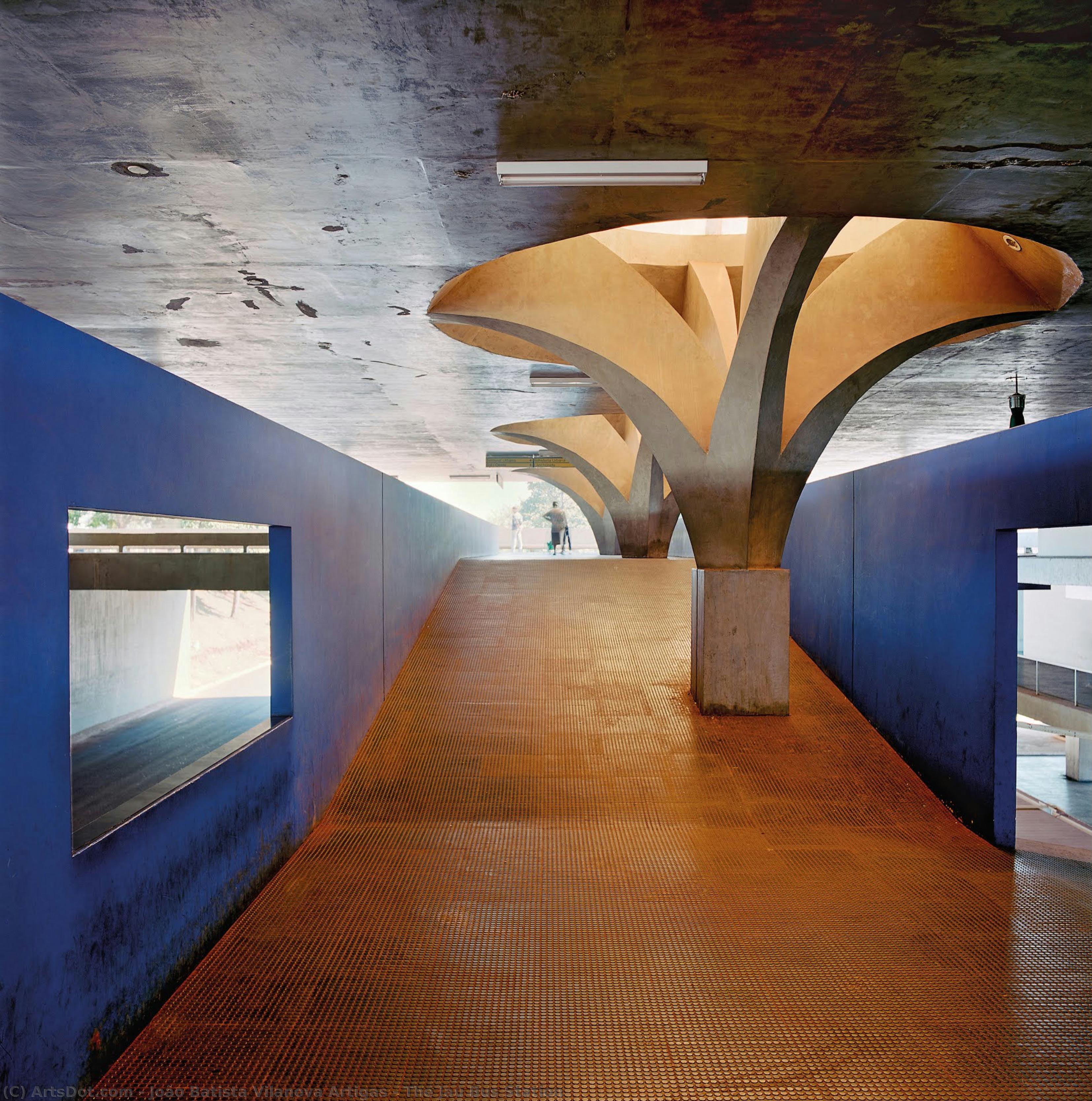
João Batista Vilanova Artigas’s ‘The Jaú Bus Station,’ a monumental Brutalist concrete masterpiece, exemplifies São Paulo’s Paulista School and embodies his commitment to social responsibility through innovative architecture.
Otkrijte Žoao Batista Vilanova Artigasa (1915-1985), osnivača Paulista škole u São Paulu! Istražite njegov modernistički arhitektonski stil, brutalističke dizajne i nasleđe socijalnog stanogradnje.
Posetite Muzej Oskar Nejmera u Kuriitbi - brazilsku arhitektonsku veličinu i raznoliko umetničko bogatstvo! Čudna kombinacija moderne arhitekture i brazilske umetnosti.
Kuriitiba, Muzej Oskar Nejmera, Oskar Nejmer, Brazilska umetnost, Arhitektura, Modernizam, Skulptura, Slikanje, Dizajn
Muzej Oskar Nejmera
Brazil
Kuriitiba
Muzej Oskar Nejmera
Skulpture
300.000+
17.000 sq m
Umetnost i diza
The Jaú Bus Station: Brutalist Elegance Rooted in Social Responsibility
João Batista Vilanova Artigas’s “The Jaú Bus Station,” completed in 1967, stands as a cornerstone of São Paulo’s Paulista School and embodies the ethos of Brazilian modernist architecture. More than just a functional transit hub, it's a sculptural statement—a testament to Artigas’s unwavering belief that architecture could serve as a catalyst for social betterment.
- Architectural Style: Brutalist Concrete – The station utilizes exposed concrete extensively, prioritizing raw materiality and geometric forms characteristic of the Brutalist movement. This deliberate rejection of ornamentation reflects a broader trend toward austerity and functionality in postwar European architecture.
- Design Concept: Geometric Minimalism – Artigas’s design eschews superfluous embellishments, opting for a monumental dome constructed from interlocking concrete blocks arranged in precise mathematical ratios. The simplicity underscores the station's core purpose: efficient movement and communal space.
- Historical Context: Postwar Brazil – Constructed during the military dictatorship (1964-1985), “The Jaú Bus Station” represents a conscious effort to elevate public spaces and improve urban living conditions amidst political repression. It’s a symbol of defiance against prevailing ideological constraints.
- Symbolism: The Dome as Protection – The dome itself symbolizes safeguarding the travelers, representing not only physical shelter but also spiritual resilience—a beacon of hope amid uncertainty. Its scale communicates grandeur and reinforces its role as a focal point for the station’s activity.
The photograph captures the station's interior with remarkable clarity, highlighting the interplay of light and shadow across the textured concrete surfaces. The composition emphasizes the dome’s central position and draws attention to the movement of people traversing its space. Artigas’s meticulous attention to detail—from the precise positioning of furniture to the careful consideration of circulation patterns—demonstrates his commitment to creating an environment that fosters both practicality and aesthetic pleasure.
“The Jaú Bus Station” continues to inspire architects and designers today, serving as a powerful reminder that beauty can emerge from stark simplicity and that architecture possesses the capacity to transform communities. Its enduring legacy resides in its ability to convey Artigas’s profound conviction: that buildings should aspire to elevate human experience and contribute positively to society.