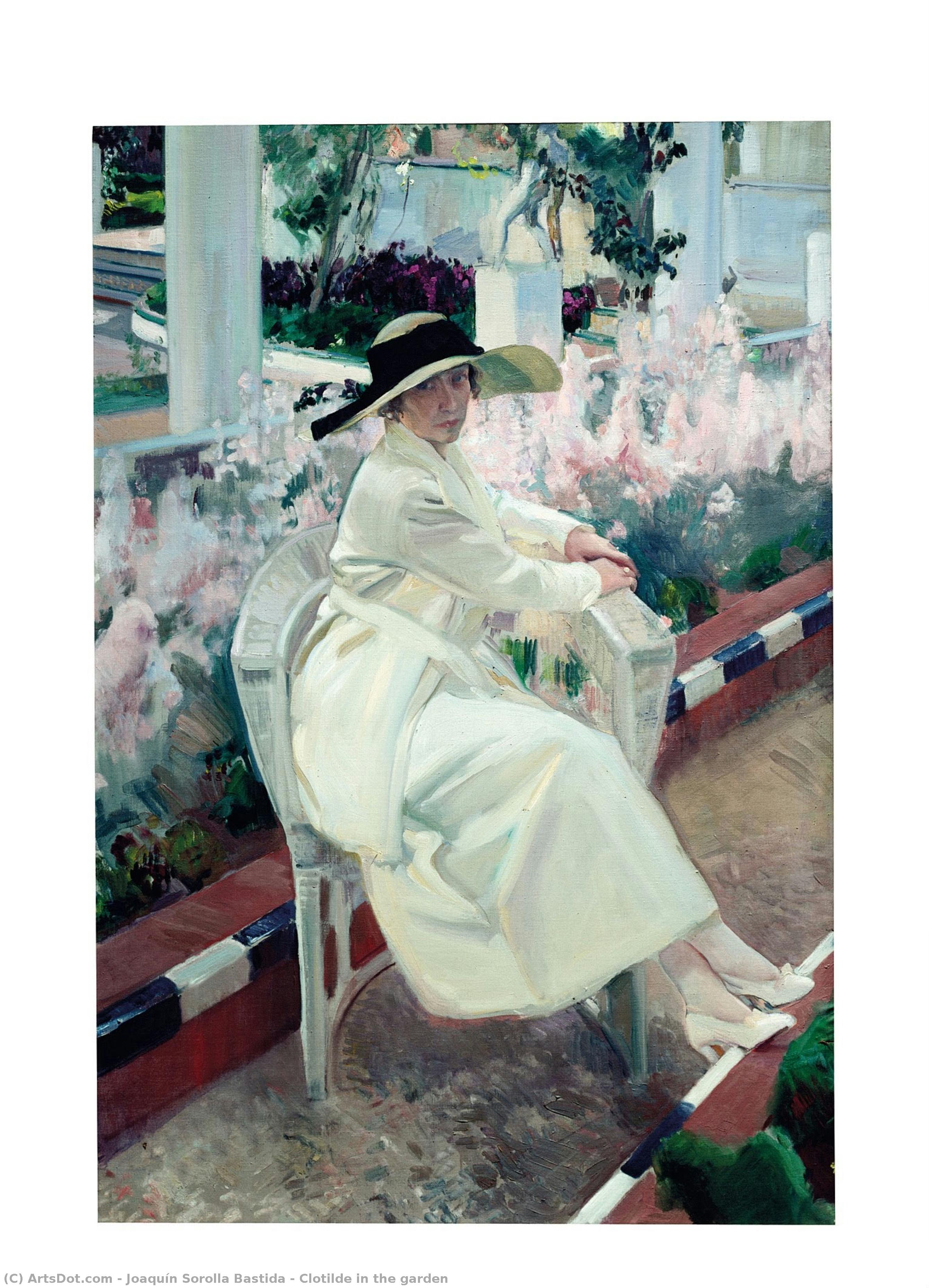
A Moment of Tranquility: Unveiling Joaquín Sorolla’s “Clotilde in the Garden”
Joaquín Sorolla y Bastida, a name synonymous with the radiant light and vibrant energy of Spain, gifted us with an extraordinary series of paintings capturing the essence of life along the Mediterranean coast. Among his most beloved works is "Clotilde in the Garden" (1919), a captivating portrait that transcends mere representation to embody a profound sense of serenity and timeless beauty. More than just a depiction of a woman amidst nature, it’s an intimate glimpse into a private moment, imbued with Sorolla's signature mastery of light and color.

Impressionistic Light and a Masterful Composition
Painted during a period of remarkable artistic evolution, “Clotilde in the Garden” firmly establishes Sorolla within the Impressionist movement while retaining his uniquely Spanish sensibility. The painting’s loose brushstrokes, vibrant hues, and emphasis on capturing fleeting light are hallmarks of this style. Notice how Sorolla doesn't meticulously render every detail; instead, he uses broken color to create a luminous effect, suggesting texture and atmosphere with remarkable skill. The composition itself is carefully orchestrated – Clotilde, seated gracefully beside the fountain, becomes the focal point, subtly framed by the elegant pergola and the delicate pink wallflowers that echo her attire. The diagonal lines created by the pathway and the garden’s layout draw the eye deeper into the scene, establishing a sense of depth and inviting the viewer to step into this idyllic setting.
A Portrait of a Woman and Her World
The subject of the portrait is Clotilde García del Castillo, Sorolla's wife. She’s depicted in a simple white suit, exuding an air of quiet dignity and composure. Her pose – relaxed yet attentive – suggests a moment of peaceful contemplation. The setting itself is integral to the painting’s narrative; it’s not simply a backdrop but an extension of Clotilde's personality and her connection to nature. The fountain, with its implied sound of water, adds to the atmosphere of tranquility, while the wallflowers, prominently featured in other Sorolla works, symbolize beauty, fragility, and remembrance – perhaps alluding to the passage of time and the preciousness of life.
Historical Context and Artistic Legacy
Created in 1919, “Clotilde in the Garden” reflects a pivotal moment in Sorolla’s career. Following years dedicated to large-scale historical and social paintings, he increasingly focused on intimate portraits of his family and scenes from his own life. This shift is evident in the painting's relaxed atmosphere and its emphasis on capturing the beauty of everyday moments. Sorolla’s work was deeply influenced by the Spanish Second Republic (1931–1939), a period of social and political upheaval that encouraged artists to explore themes of national identity, social justice, and the dignity of the common people. His paintings often served as visual records of this era, capturing the spirit of a nation undergoing profound transformation. Today, “Clotilde in the Garden” stands as a testament to Sorolla’s artistic genius – a luminous celebration of light, color, and the enduring beauty of life.
Further Resources: