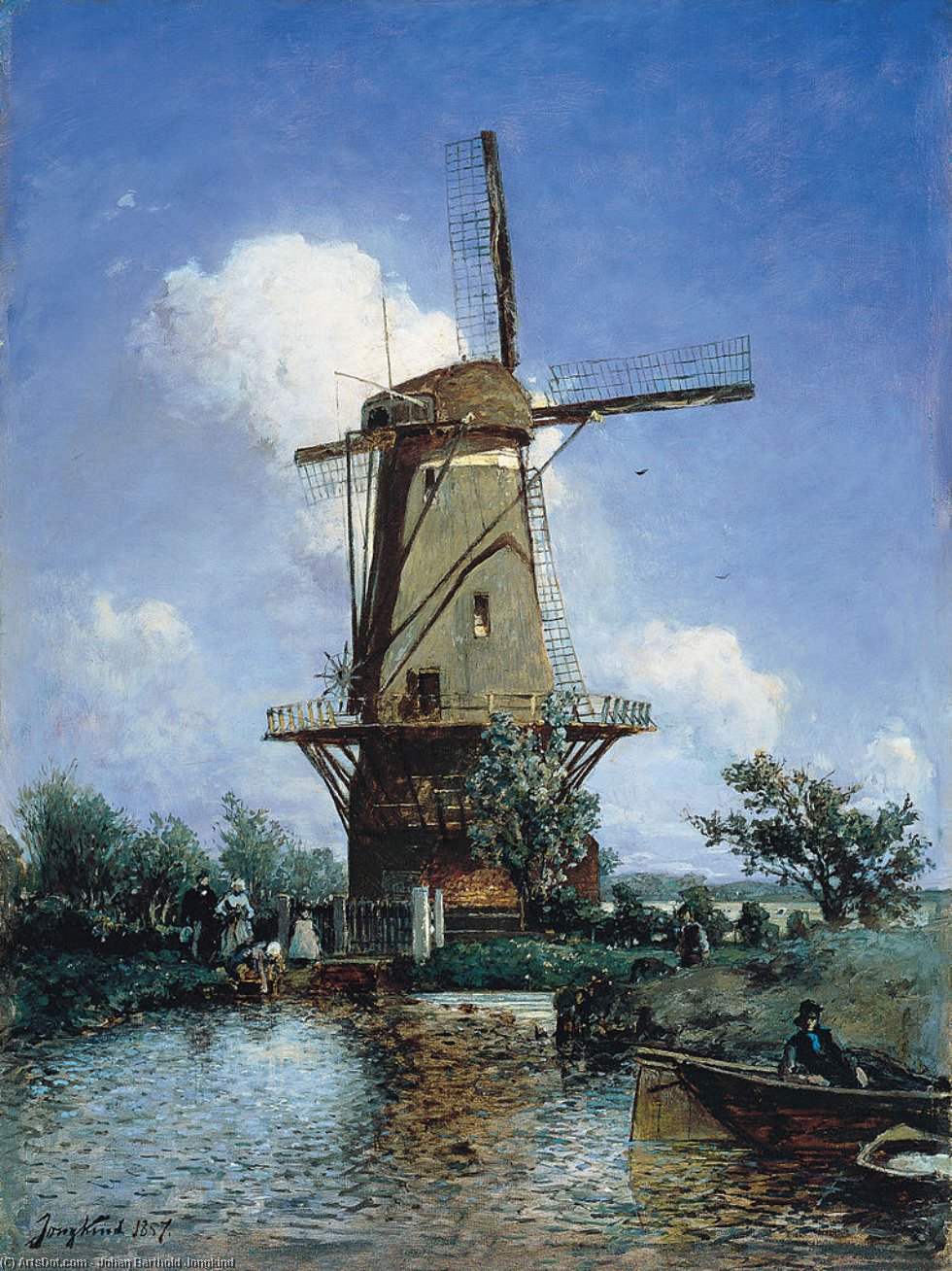
Admire 'Windmill near Delft' by Jongkind! A classic Dutch Romantic landscape painting featuring a serene windmill scene in oil on canvas. Explore its beauty!
Johan Barthold Jongkind (1819-1891): Holandski pionir Impresionizma, poznat po živopisnim marinskim pejzažima i pariskoj sceni. Uticao na Moneta svojim atmosferičnim stilom.
Откријте европско уметност из ренесансе до експресионизма у музеју Тихес-Борнемисза у Мадриду! Истражите шемаре великих уметника као Ван Гох, Рембрандт и Пикасо у дивним дворцима.
Музеј Тихес-Борнемисза, Мадрид, Шпанија, Европска уметност, Ренесанса, Експресионизам, Ван Гох, Рембрандт, Пикасо, Гоја, Архитектура, Дворец, Књига уметности
Музеј Тихес-Борнемисза
Шпанија
Мануела Риљарсвелд
Мадрид
Windmill near Delft – A Masterpiece of Dutch Romanticism
Delft’s allure extends far beyond its picturesque canals and historic architecture; it resides in the artistic legacy embodied by Johan Barthold Jongkind, specifically his iconic painting “Windmill near Delft,” completed in 1857. This artwork isn't merely a depiction of a rural landscape; it’s a profound meditation on light, atmosphere, and the spirit of its time—a cornerstone of Dutch Romanticism and an influential precursor to Impressionism. Examining Jongkind’s vision reveals layers of artistic innovation and emotional resonance that continue to captivate audiences today.
Subject Matter and Composition
The painting captures a quintessential Dutch scene: a solitary windmill standing proudly against a brilliant azure sky punctuated by fluffy white clouds. Situated slightly off-center to the right, the windmill dominates the composition, drawing the eye immediately into its central presence. A tranquil canal winds gracefully through the foreground, mirroring the expansive heavens above and adding depth to the overall vista. Scattered figures—two women tending to flowers near the water’s edge, a man piloting a boat—populate the landscape, subtly enriching the narrative without overshadowing the dominant visual element. Jongkind skillfully employs horizontal lines to emphasize the breadth of the sky, creating a harmonious balance between land and air.
Style and Technique – Embracing Impressionistic Light
Jongkind’s artistic approach distinguishes itself from earlier Dutch landscape traditions through its embrace of Impressionistic principles. Loose brushstrokes characterize the entire canvas, prioritizing capturing fleeting moments of light and color rather than meticulous detail. The artist eschews sharp outlines, favoring soft edges that blend seamlessly together—a technique directly influenced by Claude Monet and Eugène Boudin, with whom Jongkind maintained a close artistic friendship. Color palettes are muted yet vibrant, reflecting the diffused sunlight filtering through the clouds, conveying a serene mood infused with nostalgia for a bygone era. The artist’s layering of paint builds up texture and luminosity, creating an immersive experience that invites contemplation.
Historical Context – Romanticism's Reflection of Nature
“Windmill near Delft” emerged during the Romantic period in Dutch art—a movement characterized by an intense fascination with nature and emotion. Artists sought to express subjective experiences rather than objective representations, prioritizing feeling over factual accuracy. Jongkind’s work aligns perfectly with this ethos, mirroring the Romantic preoccupation with capturing the sublime beauty of the natural world and conveying a sense of spiritual contemplation. The painting reflects the broader cultural shift toward valuing imagination and intuition—a reaction against the Enlightenment's emphasis on reason and scientific observation. Its creation coincided with a growing interest in plein air painting – working outdoors directly from nature – furthering the Impressionist movement’s core tenets.
Symbolism – Resilience and Tranquility
Beyond its aesthetic qualities, “Windmill near Delft” carries symbolic significance rooted in Dutch cultural heritage. The windmill itself represents industriousness and perseverance—a testament to the nation's agricultural traditions and technological advancements. Simultaneously, the tranquil canal and expansive sky evoke feelings of serenity and peace—mirroring the Romantic ideal of harmony between humanity and nature. Jongkind’s masterful depiction encapsulates a timeless vision of rural Dutch life, celebrating both its practical realities and its spiritual beauty.
Conclusion – An Enduring Legacy
“Windmill near Delft” stands as a testament to Johan Barthold Jongkind's artistic genius—a pivotal work that bridged the gap between Romanticism and Impressionism. Its luminous brushwork, evocative color palette, and harmonious composition continue to inspire admiration and resonate with viewers today. More than just a landscape painting, it’s an embodiment of Dutch cultural identity and a celebration of the sublime beauty found in the natural world—a masterpiece deserving of continued appreciation for generations to come.