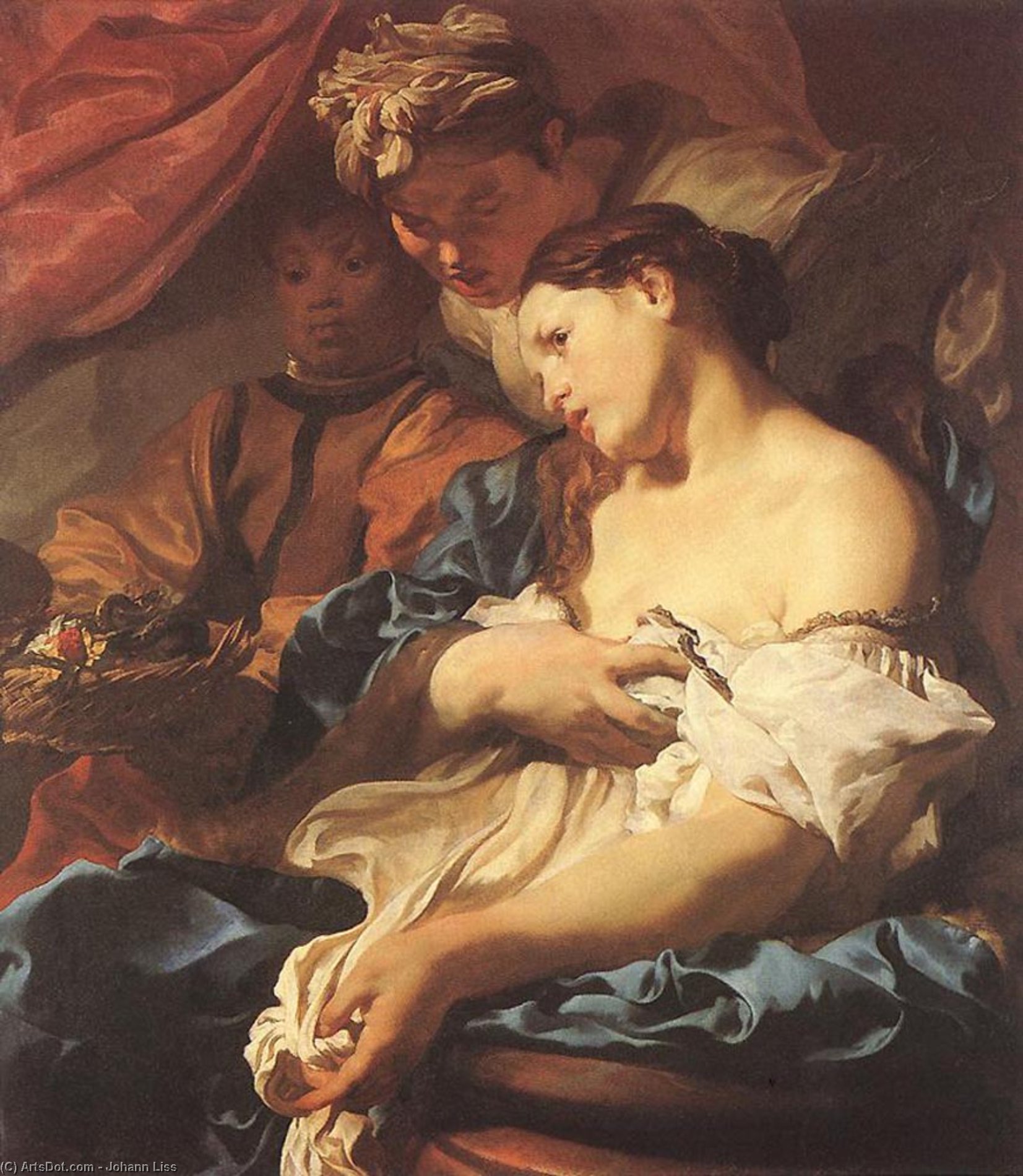
Smrt Kleopatře od Johanna Lissa – maestralna kombinacija svetlosti i boje prikazuje poslednji trenutak života egipatske kraljice, umetničko dela Alte Pinakothek koje fascinuje svojom delikatnom estetikom.
Otkrijte Johana Lisa (1597-1630), venecijanskog baroknog slikara poznatog po živopisnim bojama, dinamičnim potezima četkicom i mitološkim/biblijskim scenama. Istražite njegovo nasleđe!
Otkrijte evropsku umetnost u Alte Pinakotheku u Minhenu! Istražite renesansna i barokna remek-dela Džerara, Rembranta i Rubensa u prelepom neoklasičnom ambijentu.
Nemačka
Minhen
Alte Pinakothek
Renesansna umetnost
600 slika
Muzej umetnosti
1836
Gotska renesansa
2
Koji je arhitektonski stil dominantno zastupljen u dizajnu Alte Pinakotheka?
The Death of Cleopatra – A Silent Drama in Light
Johann Liss’s “The Death of Cleopatra,” painted in 1624–1625, isn't a grand spectacle of tragedy; rather, it’s a masterful distillation of sorrow into a deceptively tranquil tableau. This artwork resides within the Alte Pinakothek museum in Munich, Germany, and exemplifies Liss’s signature approach – quiet observation coupled with an unparalleled sensitivity to light and texture—a style that distinguishes him from his contemporaries like Rembrandt and Vermeer. The painting captures the poignant moment following Cleopatra's suicide, focusing not on the dramatic act itself but on its aftermath: the lingering stillness of grief and the subtle interplay between life and death.
A Study in Light and Shadow – Liss’s Technique
Liss’s technique is remarkable for its restraint. He employs oil paint on canvas with meticulous precision, layering thin glazes to achieve an astonishingly luminous effect. The dominant light source—likely positioned from above—illuminates Cleopatra's body with a warm, diffused glow, bathing her flesh in hues of peach and rose. This radiant illumination contrasts sharply with the darker tones surrounding it, creating depth and emphasizing the contours of the figures. Liss’s masterful manipulation of chiaroscuro – the dramatic contrast between light and dark – isn’t merely decorative; it serves to heighten the emotional impact of the scene, conveying a sense of vulnerability and impending finality. The artist skillfully renders the textures of fabrics—the draped gown of Cleopatra and the servant’s robe—adding tactile richness to the composition.
Symbolism Within Stillness: Interpreting the Scene
The painting's symbolism is understated yet profound. The central figure, Cleopatra herself, lies on her side, her arm outstretched as if yearning for solace. Beside her stands a young servant boy clutching a basket filled with flowers—a poignant symbol of remembrance and beauty amidst decay. The serpent, which delivered Cleopatra’s fatal blow, rests motionless in the basket alongside the blossoms, representing both death and regeneration – an allusion to Egyptian beliefs about immortality. Liss deliberately avoids depicting the gruesome details of suicide; instead, he presents a moment of profound quietude, inviting contemplation on mortality and the ephemeral nature of existence. The overcast gaze of Cleopatra underscores her acceptance of fate, embodying serenity in the face of inevitable loss.
Historical Context: Baroque Emotion and Artistic Innovation
“The Death of Cleopatra” emerged during the Baroque period—a time characterized by dramatic emotion and opulent ornamentation—yet Liss’s work stands apart from its peers through its understated elegance. Unlike many Baroque artists who sought to overwhelm their audiences with grandeur, Liss prioritizes psychological realism and nuanced observation. The painting reflects the broader artistic trends of the era, which favored depictions of human suffering and spiritual contemplation. However, Liss's innovative use of light and texture elevates his work beyond mere stylistic imitation, establishing him as a pioneer of Venetian Baroque painting—a style renowned for its luminous color palettes and atmospheric perspective. Liss’s legacy continues to inspire artists today who strive to capture the essence of emotion within carefully crafted compositions.
A Timeless Reflection on Mortality
Ultimately, “The Death of Cleopatra” transcends its historical context, offering a timeless meditation on themes of loss, beauty, and acceptance. Liss's ability to convey such profound emotions through subtle visual cues—the luminous light, the textured fabrics, the symbolic gestures—solidifies his place as one of the most influential painters of his time. It’s a piece that invites viewers to pause, consider, and contemplate the fragility of life itself – a testament to Liss's enduring artistic vision.