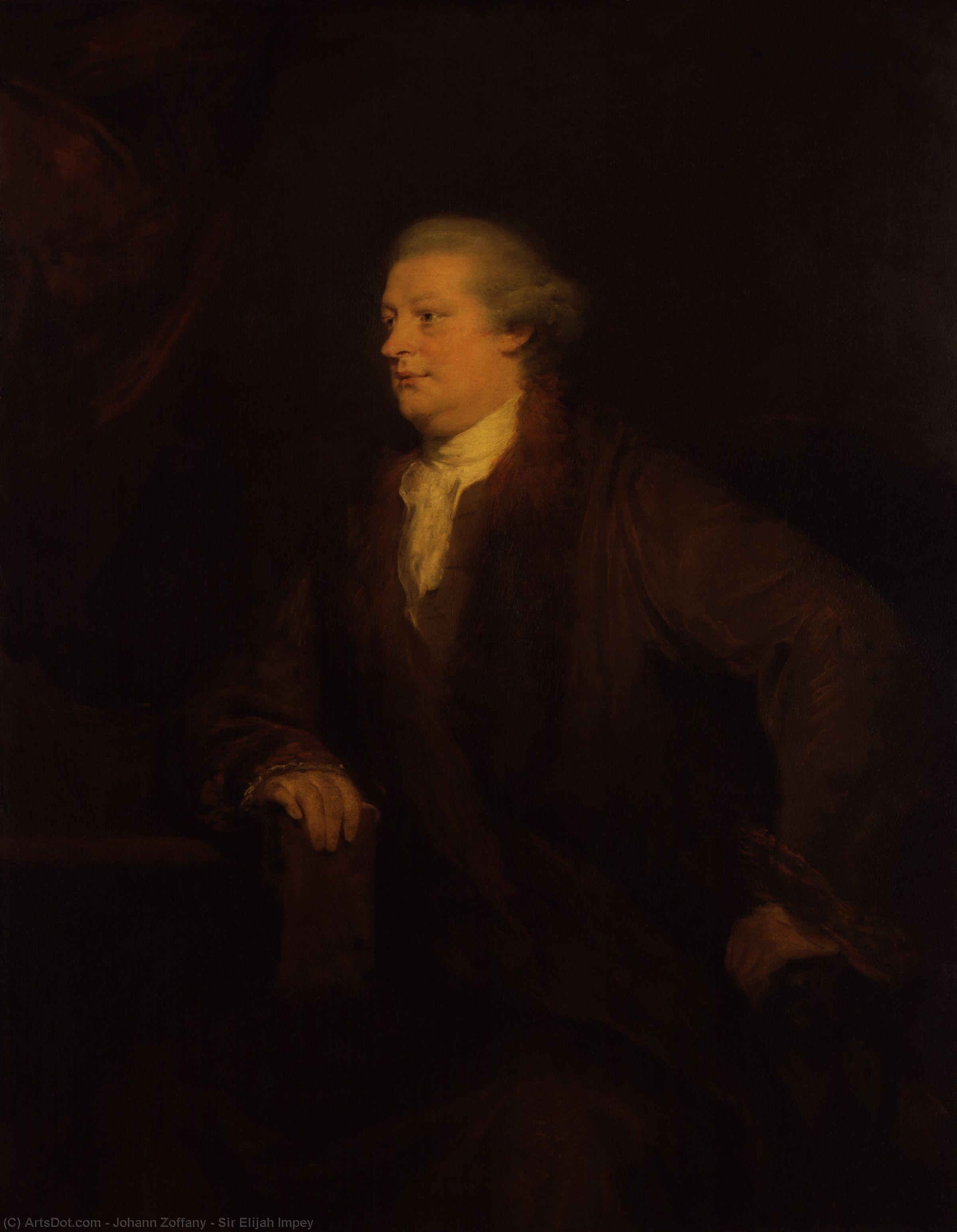
A Portrait of Power: Sir Elijah Impey by Johann Zoffany
Painted in 1772, this captivating portrait by German artist Johann Zoffany offers a fascinating glimpse into the world of British colonial India and the life of Sir Elijah Impey (1731-1804), Chief Justice of Bengal. Measuring 124 x 98 cm, the work is far more than a simple likeness; it’s a carefully constructed statement about status, authority, and the complexities of empire.
Style & Technique: Conversation Piece Meets Formal Portraiture
- Zoffany's Signature Style: Johann Zoffany was renowned for his “conversation pieces” – informal group portraits depicting fashionable society engaged in leisurely activities. While this is a single portrait, it retains elements of that style through its relaxed pose and the inclusion of figures in the background, suggesting a narrative beyond mere representation.
- Masterful Detail: Zoffany’s training in both sculpture and painting is evident in the meticulous detail with which he renders Impey's clothing, facial features, and even the ornate design of the wall behind him. The use of light and shadow creates a sense of depth and realism.
- A Blend of Influences: Zoffany’s artistic journey – from Germany to Italy and finally England – resulted in a unique style that blended German precision with Italianate warmth and English sensibilities. This is visible in the balanced composition and rich color palette.
Historical Context & Symbolism: The Face of British Justice in India
- Sir Elijah Impey’s Role: As Chief Justice, Sir Elijah Impey was a pivotal figure in establishing the legal framework for British rule in Bengal. His judgments had profound consequences for both the British East India Company and the Indian population.
- The Setting & Attendants: The presence of two other figures – one standing behind Impey, possibly an aide or attendant, and another further back – underscores his position of authority and the hierarchical structure of colonial society. The ornate background suggests wealth and power.
- A Moment in Time: Painted during a period of increasing British influence in India, the portrait reflects the confidence and ambition of the East India Company. It’s a visual representation of Britain's expanding empire and its assertion of control over distant lands.
Emotional Impact & Lasting Appeal
Beyond its historical significance, this portrait possesses a compelling emotional resonance. Impey’s gaze is direct and unwavering, conveying a sense of intelligence, determination, and perhaps even aloofness. The painting invites viewers to contemplate the complexities of power, justice, and cultural exchange in the age of empire. Its enduring appeal lies not only in Zoffany's technical skill but also in its ability to spark dialogue about a pivotal moment in history.