Johannes Vermeer (1632-1675), holandski majstor poznat po intimnim scenama i remek-delima poput 'Devojke sa bisernom ogrlicom'. Očaravajući svetlost i detalji u delima koje predstavljaju vrhunac Holandske zlatne epohe.
Johannes Vermeer’s “Girl Asleep at a Table”: A Portrait of Quiet Contemplation
Johannes Vermeer, a name synonymous with the subtle luminescence of Delft’s Golden Age, continues to fascinate art historians and collectors alike. Born in 1632, his life unfolded amidst an era defined by artistic fervor and burgeoning mercantile success—a formative environment that profoundly shaped his singular creative vision. Unlike many of his contemporaries who pursued grand narratives or flamboyant displays of wealth, Vermeer focused on capturing the intimate moments of domestic life, prioritizing observation and meticulous detail above all else. This dedication to realism, combined with a masterful command of light and color, distinguishes him as one of the most celebrated painters of his time.
A Window into Delft’s Soul
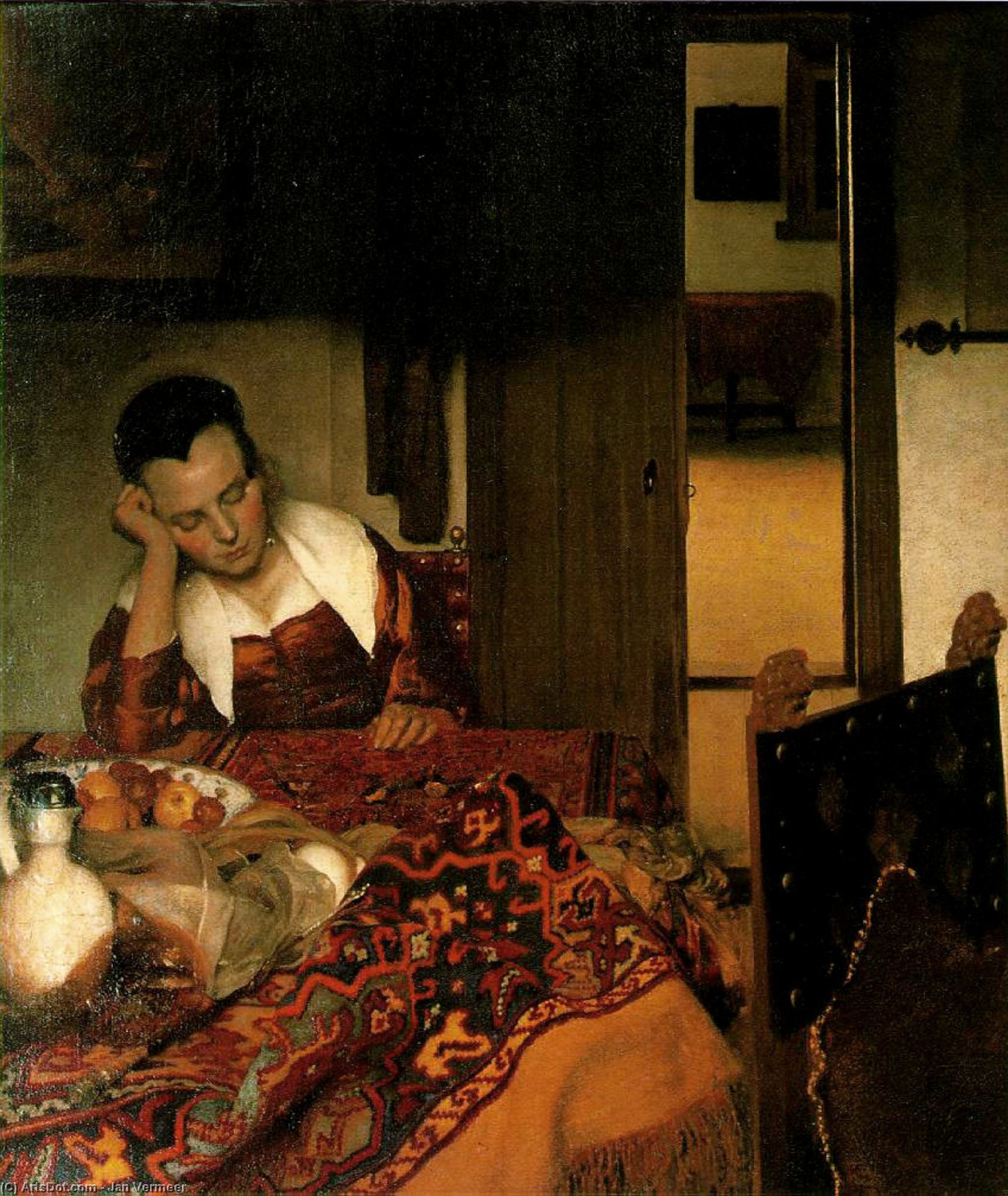
“Girl Asleep at a Table,” painted circa 1657, exemplifies Vermeer's unparalleled ability to distill emotion into visual form. The painting depicts a young woman reclining gracefully on a chair, her head resting peacefully upon her hand—a posture that speaks volumes about serenity and repose. Situated within a modestly furnished room, the scene is dominated by a simple dining table bearing a bowl of fruit and an apple, elements laden with symbolic significance. Two chairs flank the girl’s seat, one unoccupied, suggesting a recent departure or perhaps simply solitude. Above all, however, it is the diffused light emanating from a window—a technique Vermeer perfected—that imbues the canvas with an ethereal glow, drawing the viewer into a realm of quiet contemplation.
Decoding Symbolism: Fruit, Light and Reflection
Vermeer’s artistic choices resonate deeply with the intellectual currents of his time. The inclusion of fruit – specifically apples and pears – is frequently interpreted as representing temptation and earthly pleasures, mirroring prevailing anxieties about morality and spiritual aspiration within Dutch society. Simultaneously, the wine pitcher and glass on the table serve as reminders of convivial company, hinting at a social context that contrasts sharply with the girl’s solitary repose. Crucially, the mirror positioned on the wall reflects not only the woman's face but also the room itself—a device that underscores the fleeting nature of experience and invites reflection upon mortality. This careful layering of symbolism elevates “Girl Asleep at a Table” beyond mere depiction; it becomes an exploration of human psychology and existential concerns.
The Art of Illusion: Vermeer’s Revolutionary Technique
What truly sets Vermeer apart is his groundbreaking approach to painting technique. Unlike many artists who employed thick impasto—heavy application of paint—Vermeer favored a thin glaze, meticulously building up color through multiple layers of translucent pigment. This method allowed him to achieve astonishing levels of luminosity and tonal subtlety, capturing the nuances of light and shadow with unparalleled precision. Vermeer’s mastery of chiaroscuro—the dramatic interplay between light and dark—creates an illusionistic depth that transcends the flatness of canvas, transporting the viewer into the scene's atmosphere. His meticulous attention to detail—from the folds of fabric to the texture of skin—demonstrates a commitment to realism that foreshadowed Impressionism centuries later.
An Enduring Legacy: Vermeer’s Influence Today
“Girl Asleep at a Table” continues to captivate audiences worldwide, securing its place as one of Vermeer's most iconic works and cementing his reputation as the quintessential painter of domestic tranquility. Its quiet beauty—coupled with its profound psychological insight—resonates powerfully across cultures and eras. Reproductions of this masterpiece adorn homes and galleries alike, offering a glimpse into the artistic genius of Delft’s Golden Age and reminding us that true artistry lies in capturing not grand narratives but the subtle poetry of everyday life. As evidenced by its prominent display at The Metropolitan Museum of Art, Vermeer's legacy persists as an inspiration for artists and designers seeking to evoke emotion and convey timeless elegance.