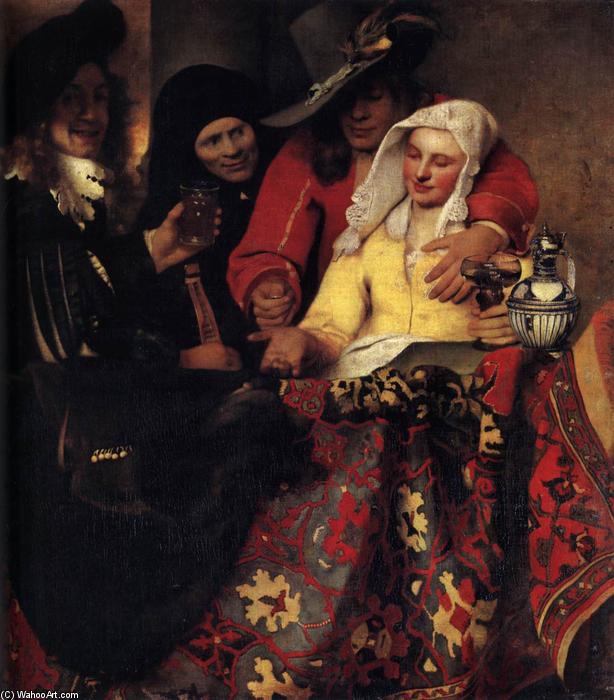
Explore Johannes Vermeer’s ‘The Procuress,’ a captivating 1656 oil painting of intrigue & luxury. Admire its Baroque style, chiaroscuro lighting, and symbolic details in this masterpiece.
Johannes Vermeer (1632-1675), holandski majstor poznat po intimnim scenama i remek-delima poput 'Devojke sa bisernom ogrlicom'. Očaravajući svetlost i detalji u delima koje predstavljaju vrhunac Holandske zlatne epohe.
Посетите Дрезденску Галереју Алте Мејстер и откријте шедеврема ренесансе и барока! Погледајте Рафаела, Рембранта и други у замку Звингер.
Дрезден, Галереја Алте Мејстер, Рафаел, Рембрант, Барокна уметност, Ренесансна уметност, Холандски майстори, Немачка сликарство
Немачка
Дрезден
Галереја Алте Мејстер
Рафаелова Систине Мадонна
4.7 милиона
750 сликарства
Уметничка галерија
1560
A Window into 17th-Century Life: Unveiling Vermeer’s *The Procuress*
Johannes Vermeer's *The Procuress*, painted in 1656, is a captivating and somewhat controversial early work that offers a rare glimpse into the undercurrents of Dutch Golden Age society. This oil-on-canvas painting, now housed in the Gemäldegalerie Alte Meister in Dresden, Germany, immediately draws the viewer into an intimate, yet unsettling scene. Measuring 143 x 130 cm, it’s a substantial work that rewards close observation.
Subject and Narrative
The painting depicts what is believed to be a brothel setting, or at least a clandestine meeting arranged by the central figure – the procuress herself. A woman, richly dressed in dark attire reminiscent of a nun’s habit, leers knowingly as she facilitates an exchange between a soldier and a young female companion. The scene isn't overtly sensual but carries a palpable tension and suggestion of illicit activity. Notably, many scholars believe Vermeer included a self-portrait within the composition – the man wearing the black beret and doublet to the procuress’s right. This inclusion adds an intriguing layer of personal connection for the artist.
Style and Technique: A Masterful Blend
*The Procuress* showcases Vermeer's developing style, bridging the gap between earlier history painting traditions and his later focus on serene domestic interiors. While not yet possessing the luminous quality that would become his hallmark, the painting demonstrates a remarkable command of light and shadow – *chiaroscuro* – to create depth and volume. The composition is carefully constructed, with figures arranged in a shallow space, creating an immediacy that draws the viewer into the scene. Vermeer’s brushwork, though less refined than in his later works, already reveals a meticulous attention to detail, particularly in the rendering of textures like fabric and metal.
Symbolism and Hidden Meanings
The painting is rich with symbolic elements that add layers of meaning:
- The Oriental Rug & Kelim: These luxurious textiles suggest wealth and indulgence, hinting at the financial transactions taking place.
- The Cittern: A popular musical instrument of the time, it could symbolize pleasure or even a fleeting moment of joy within a transactional context.
- The Jug: The Westerwald pottery jug adds to the sense of everyday life but also subtly alludes to indulgence and perhaps excess.
- The Coin: Explicitly shown in the soldier’s hand, it represents the monetary exchange at the heart of the scene.
Historical Context & Influences
Vermeer was likely influenced by earlier depictions of similar subjects. Paintings by Dirck van Baburen and Gerard ter Borch served as precedents, but Vermeer’s approach is distinct. He moves beyond simple depiction to explore the psychological dynamics between the figures. The painting reflects a growing interest in genre scenes – depictions of everyday life – that characterized Dutch Golden Age art. It also hints at the moral complexities present within 17th-century society.
Emotional Impact and Lasting Appeal
*The Procuress* is not a comfortable painting. Its unsettling subject matter and somewhat harsh lighting create a sense of unease. However, it’s precisely this ambiguity that makes it so compelling. It invites viewers to contemplate the complexities of human relationships, societal hypocrisy, and the hidden lives unfolding behind closed doors. The painting's enduring appeal lies in its ability to provoke thought and spark conversation about timeless themes.
It remains a powerful testament to Vermeer’s early artistic talent and his willingness to explore challenging subjects.