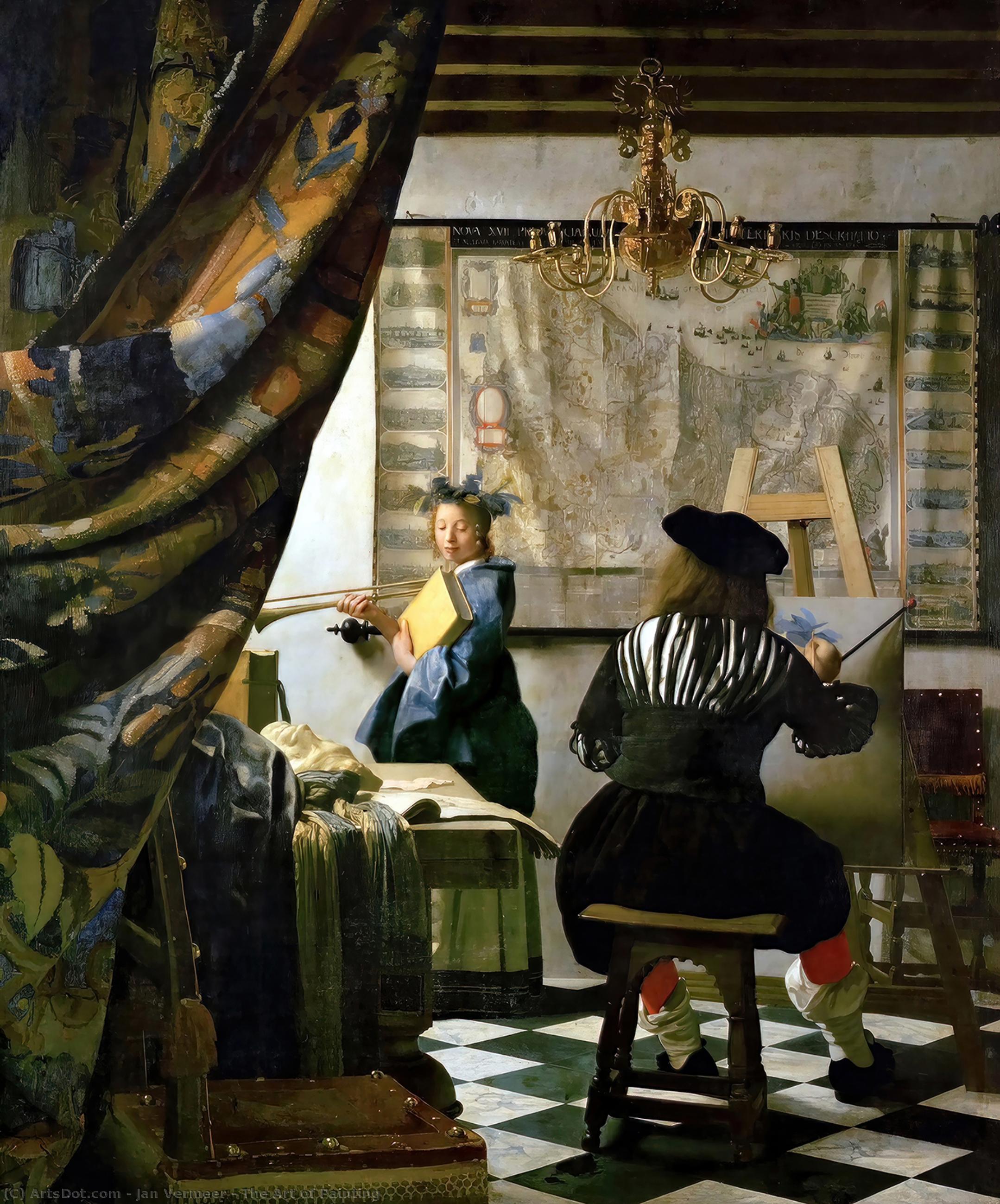
The Art of Painting by Johannes Vermeer
Johannes Vermeer, a name synonymous with the quiet intimacy of 17th-century Dutch life, remains an enigma despite centuries of scholarship. Born in Delft in October 1632, his existence unfolded against the backdrop of the Dutch Golden Age—a period of unprecedented prosperity, artistic innovation, and burgeoning civic pride. His father, Reijnier Janszoon, was a silk weaver and art dealer, a combination that subtly shaped young Johannes’s path. Exposure to both the tactile world of craftsmanship and the discerning eye of the art market instilled in him an understanding of materials, composition, and the delicate dance between creation and commerce. This early immersion wasn't merely observational; it provided a foundation upon which Vermeer would build his own unique artistic vision. He wasn’t born into privilege, but rather into a world where artistry was interwoven with everyday practicality, a sensibility that would profoundly influence his oeuvre.
- Historical Context: The Dutch Golden Age (1588-1672) witnessed an explosion of creativity fueled by economic expansion and intellectual ferment. Artists like Vermeer thrived in this environment, benefiting from patronage and fostering a vibrant cultural landscape.
- Subject Matter: “The Art of Painting” delves into the realm of allegory—a visual representation of abstract concepts—specifically painting itself. Vermeer’s depiction captures the essence of artistic endeavor, portraying an artist diligently engaged in his craft within a meticulously crafted studio setting.
- Style and Technique: Vermeer's signature style is characterized by its remarkable realism combined with masterful manipulation of light and shadow (chiaroscuro). He achieved this effect through painstaking brushwork and layering pigments—a technique that imbues the painting with an ethereal luminescence, bringing forth textures and materials with astonishing accuracy.
- Composition: The artwork’s composition is strikingly balanced, guiding the viewer's gaze across the canvas. Vermeer skillfully arranges figures and objects to create a dynamic yet harmonious visual experience, emphasizing depth and perspective.
- Symbolism: Numerous elements within “The Art of Painting” carry symbolic significance—the expansive map of the Low Countries representing geographical knowledge; the artist’s easel symbolizing creative endeavor; and the muted palette reflecting the contemplative mood of artistic contemplation.
This painting stands as a testament to Vermeer's genius, encapsulating not only his technical prowess but also his profound understanding of human psychology and cultural values.
Johannes Vermeer: A Life Bathed in Northern Light
Vermeer’s artistic journey began amidst the burgeoning mercantile spirit of Delft—a city renowned for its silk weaving industry and thriving art market. His father, Reijnier Janszoon, was a respected artisan who instilled in Johannes a deep appreciation for craftsmanship and visual perception. This formative experience shaped Vermeer's worldview and fueled his lifelong fascination with capturing the subtleties of domestic life—a preoccupation that would define his artistic output. Unlike many of his contemporaries who pursued grand narratives or mythological themes, Vermeer focused on portraying ordinary scenes with extraordinary sensitivity, elevating the commonplace to the realm of art.
- Early Influences: Vermeer’s artistic development was nurtured by exposure to influential artists such as Carel Fabritius and Pieter de Hooch—masters who championed realism and meticulous observation.
- Guild Membership: In 1653, Vermeer joined the Guild of St. Luke of Delft—a crucial step in establishing his professional credentials and securing access to lucrative commissions.
- Family Life: Vermeer married Maria Thijs Gerritsen in 1653 and established a family in Delft, raising three daughters. His domestic life provided him with inspiration for countless paintings depicting serene interiors populated by women engaged in everyday activities—a recurring motif in his oeuvre.
Vermeer’s unwavering dedication to artistic excellence—coupled with his astute understanding of human emotion—solidifies his position as one of the most celebrated painters of the Dutch Golden Age.
The Art of Painting: Technical Details
- Medium: Oil on Canvas
- Dimensions: 100 cm x 120 cm (approximately 39.4 inches x 47.2 inches)
- Palette: Vermeer employed a restrained palette dominated by earthy tones—browns, greens, and blacks—accentuated with splashes of blues, reds, and golds. This subtle color scheme contributes to the painting’s atmospheric quality and enhances its visual impact.
- Brushwork: Vermeer's technique involved meticulous brushwork characterized by layering pigments and achieving remarkable textural detail. He skillfully rendered surfaces—such as drapery folds and wooden beams—with painstaking precision, creating a palpable sense of materiality.
- Perspective: Vermeer masterfully utilized linear perspective to create depth and spatial illusion within the studio setting—a hallmark of Baroque painting.
Vermeer’s mastery of technique—combined with his unwavering commitment to capturing fleeting moments of beauty—ensures that “The Art of Painting” remains an enduring symbol of artistic innovation and visual splendor.
Symbolism Revisited: Clio, History & Artistic Pursuit
- Allegorical Representation: The painting embodies the allegorical representation of Clio—the Muse of History—who inspires writers to recount past events with eloquence and accuracy.
- The Map: The prominent map of the Low Countries serves as a visual reminder of geographical knowledge—a cornerstone of humanist scholarship during Vermeer’s era.
- Artist's Gesture: Vermeer portrays the artist in a contemplative posture, gazing intently at his easel—symbolizing the pursuit of artistic excellence and intellectual curiosity.
“The Art of Painting” transcends mere depiction; it invites contemplation on the role of art in shaping human understanding and preserving cultural heritage.