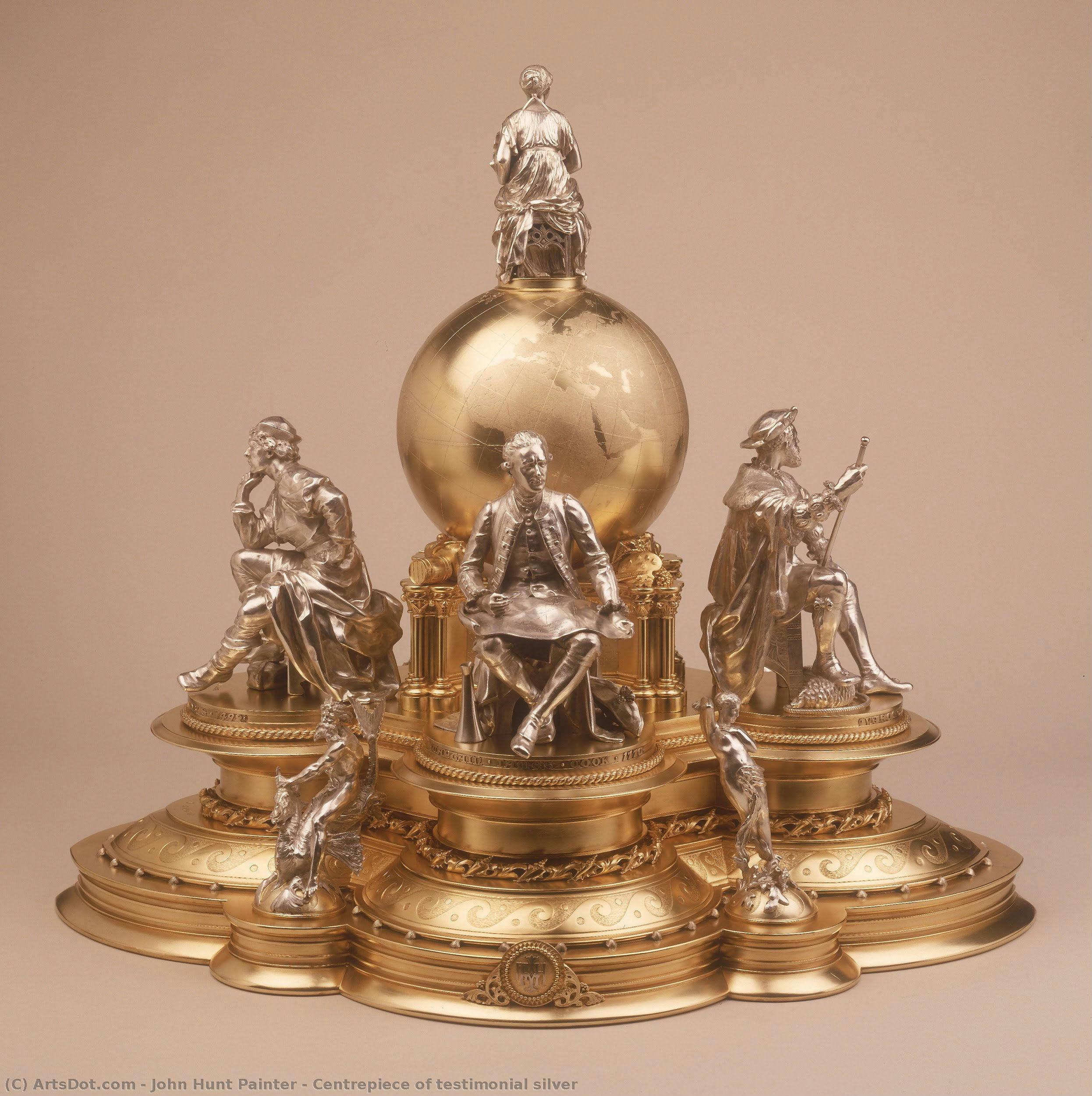
Admire the exquisite craftsmanship of John Hunt Painter's 'Centrepiece of testimonial silver,' a monumental gilded dinner service commemorating White Star’s maritime achievements in Liverpool, 1884.
John Hunt Painter: enigmatic American farmer, abolitionist & hotelier. Known for supporting John Brown, his legacy reflects social justice & echoes in art history.
Istražite bogatu istoriju i raznolike kolekcije Nacionalnih muzeja Liverpula! Od pomorskog nasleđa do umetnosti i kulture, otkrijte ikonične postavke i zanimljiva iskustva.
A Testament to Commerce and Enlightenment: Examining G. A. Carter’s ‘Centrepiece of Testimonial Silver’
The year 1884 witnessed the unveiling of an extraordinary artistic achievement – G. A. Carter’s “Centrepiece of Testimonial Silver,” a monumental sculpture commissioned by White Star shareholders to commemorate the launch of their flagship liner, Adriatic, and presented as a gift to Thomas Ismay, the visionary founder of the company. More than just a decorative object, this piece embodies the spirit of Victorian Britain: ambition, innovation in maritime engineering, and a fervent belief in the transformative power of art to elevate human understanding. Located prominently within the Liverpool Walker Art Gallery, its enduring presence speaks volumes about both artistic excellence and the cultural significance of its time.
Design Philosophy and Artistic Vision
Carter’s intention wasn't merely to depict a ship; he sought to encapsulate “Commerce on top of the World.” This ambitious concept drove his creative process, resulting in a sculpture that transcends literal representation. The artist meticulously studied classical mythology and symbolism – specifically referencing figures from Greek legend—to convey ideas of progress, aspiration, and divine patronage. He envisioned a grand panorama reflecting humanity’s journey through history, guided by intellectual curiosity and propelled forward by technological advancement. Carter's stylistic choices leaned heavily into Neo-Classical influences, prioritizing clarity of form and harmonious proportions to communicate profound concepts with elegance and precision.
Craftsmanship and Technique: Hunt & Roskell’s Legacy
The sculpture’s execution was entrusted to Hunt & Roskell, London’s esteemed silversmiths—a firm renowned for its commitment to pushing the boundaries of artistic craftsmanship. They skillfully employed a technique known as parcel-gilding, applying thin layers of gold leaf onto a silver base to achieve an opulent sheen and enhance the sculpture's visual impact. This meticulous process demanded considerable skill and patience, reflecting the prevailing standards of Victorian artistry. Furthermore, Carter’s detailed modeling—likely utilizing wax sculpting techniques followed by casting—demonstrates his mastery of sculptural form and ensures that every element contributes to the overall narrative. The resulting surface texture is remarkably smooth, highlighting the brilliance of the gilding while preserving the integrity of the silver framework.
Symbolism: Mythological Figures and Representational Narrative
The sculpture’s composition is replete with symbolic references. Four prominent statues—representing Hercules, Apollo, Zeus, and Poseidon—command attention at the base of the sphere, symbolizing strength, intellect, divine authority, and maritime dominion respectively. These figures are positioned strategically to guide the viewer's gaze upwards towards the central sphere, which depicts a stylized representation of Earth – emphasizing humanity’s place within the cosmos. The smaller figurines scattered throughout the scene further enrich the narrative, portraying individuals engaged in various activities—scholarly pursuits, artistic endeavors, and scientific exploration—underscoring the Victorian belief that knowledge and creativity were essential for societal advancement.
Emotional Resonance: Capturing the Spirit of an Era
“Centrepiece of Testimonial Silver” transcends its material form to evoke a powerful emotional response. Its grandeur conveys a sense of optimism and confidence in Britain’s future as a global maritime power—a sentiment deeply rooted in the burgeoning industrial revolution. The sculpture's meticulous detail invites contemplation, prompting viewers to consider the enduring legacy of classical ideals and the importance of artistic expression in shaping cultural understanding. Ultimately, it serves as a poignant reminder of Victorian ambition, intellectual curiosity, and the belief that beauty could illuminate the path toward progress—qualities that continue to resonate with audiences today.