A Moment of Childhood Innocence: John Singer Sargent’s “Landscape with Two Children”
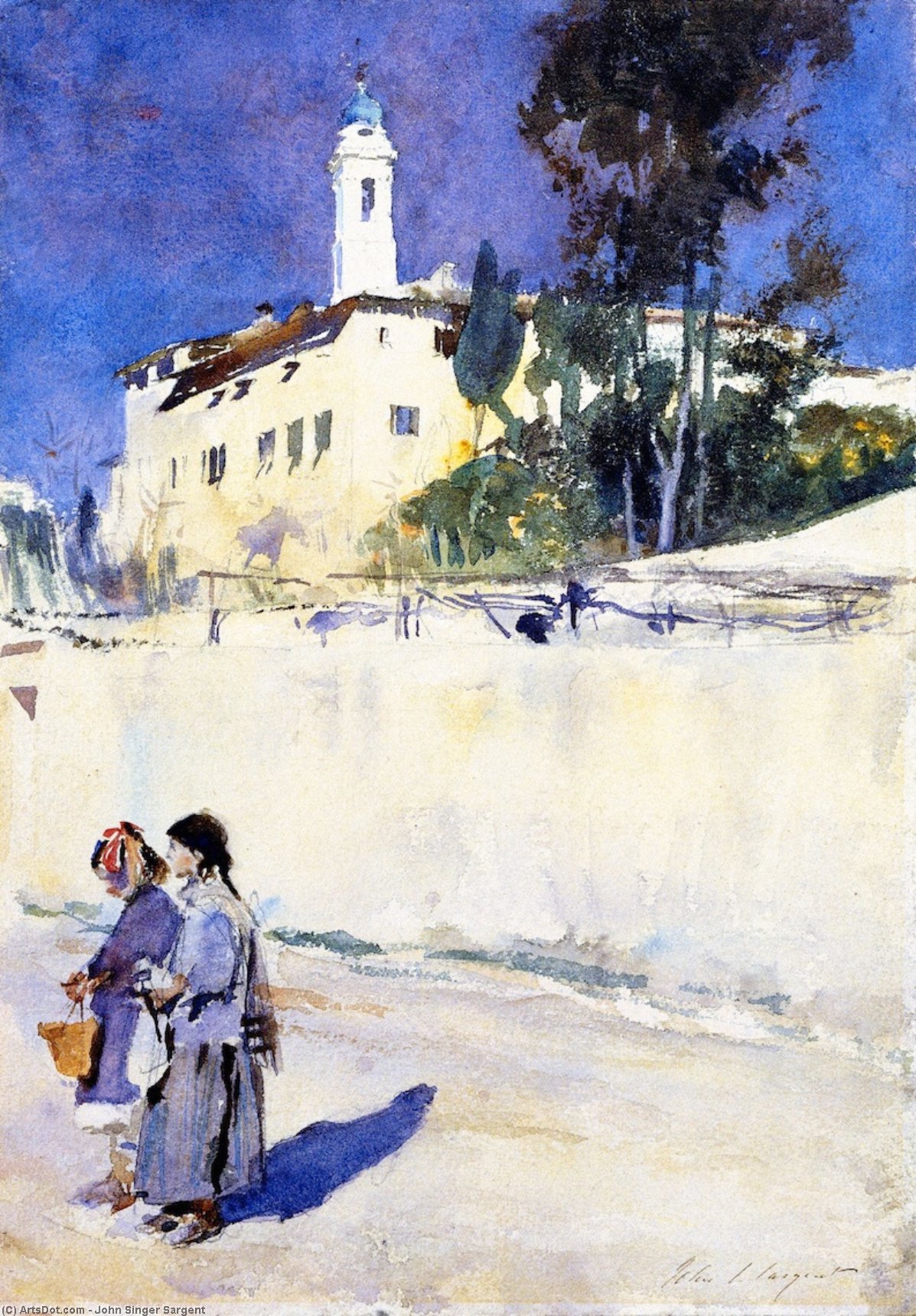
John Singer Sargent's "Landscape with Two Children," painted in 1878, is more than just a picturesque depiction of a seaside scene; it’s a poignant capture of fleeting joy and the unburdened spirit of childhood. This watercolor, brimming with light and atmosphere, reveals Sargent’s masterful ability to translate observed reality into an emotionally resonant experience. The painting immediately draws the viewer in with its composition – two children, positioned intimately close, are absorbed in their play on a sun-drenched beach. Their postures, relaxed and carefree, suggest a world untouched by adult concerns, inviting us to share in their innocent delight.
Technical Brilliance: Sargent’s Watercolor Technique
Sargent's skill as a watercolorist is immediately apparent. He employs a delicate layering technique, building up color gradually to achieve remarkable luminosity and depth. The washes of blues and greens representing the sea and sky are particularly striking, conveying both the vastness of the ocean and the shimmering quality of sunlight on water. Notice how he uses broken brushstrokes to create texture – the sand beneath the children’s feet, the rough stone of the distant building, perhaps a church or castle – adding a tangible sense of realism while maintaining an ethereal quality. The subtle gradations in tone contribute significantly to the painting's overall atmosphere, creating a feeling of warmth and tranquility. This meticulous approach is characteristic of Sargent’s work, demonstrating his dedication to mastering the medium.
Historical Context: The Gilded Age and Leisure
"Landscape with Two Children" was created during the height of the Gilded Age in America – a period marked by immense wealth, rapid industrialization, and a burgeoning leisure class. Sargent himself became a prominent figure within this society, frequently commissioned to paint portraits of wealthy industrialists and socialites. This painting reflects the era’s fascination with idyllic landscapes and the pursuit of pleasure—a carefully curated vision of beauty and serenity. The presence of the handbag suggests a fashionable outing, further anchoring the scene within its specific historical context. The date 1878 places it firmly in Sargent's early career, showcasing his developing style and confidence.
Symbolism and Emotional Resonance
Beyond its technical merits, the painting holds symbolic weight. The children represent innocence, freedom, and a connection to nature – themes frequently explored by artists of the time. Their uninhibited play speaks to a simpler existence, free from the complexities of adult life. The distant building, possibly a church or castle, adds an element of grandeur and timelessness, subtly reminding us of the enduring human desire for faith and stability. Ultimately, "Landscape with Two Children" evokes a powerful sense of nostalgia and longing for a lost innocence – a feeling that continues to resonate with viewers today. It’s a testament to Sargent's ability to capture not just a scene, but an emotion.