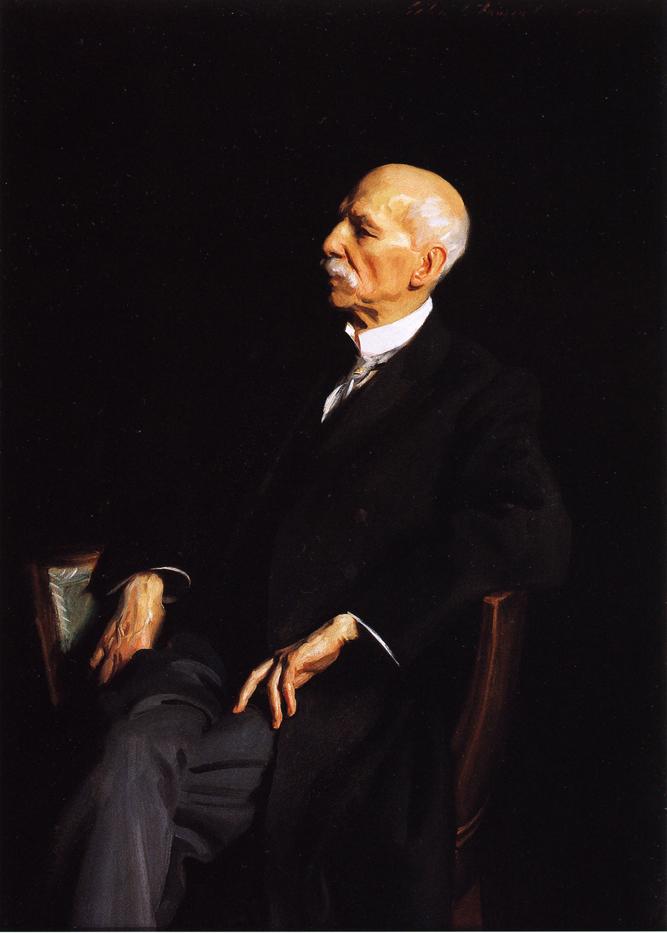
Delve into John Singer Sargent's "Manuel Garcia," a breathtaking Realist oil painting depicting an elderly gentleman with quiet dignity. Recognized at the Rhode Island School of Design Museum, its masterful lighting and meticulous detail reveal Sargent’s unparalleled skill.
John Singer Sargent био је амерички сликар који је провео већину свог живота у европској сцени ствари и познат по својим изузећно успешним портретима као и по импресионистичком стилу и великим делима која су остала трајна у историји уметности.
Meta Description: Откријте уметност Јохн Сингер Саргента! Погледајте иконе портрета као што је „Мадам Екс“, импресионистичке панорама и велика дела која су
Manuel Garcia 1905 Painting by John Singer Sargent – An Ode to Dignified Realism
The painting “Manuel Garcia,” executed in 1905 by John Singer Sargent, stands as a testament to the artist’s unwavering commitment to Realism and his profound understanding of human psychology. Currently residing within the Rhode Island School of Design Museum of Art, this portrait transcends mere representation; it embodies a carefully crafted distillation of character and emotion—a feat achieved through meticulous observation and masterful brushwork. Sargent's stylistic choices weren't simply aesthetic preferences but deliberate decisions rooted in his belief that art should strive for truthful depiction.
A Portrait Steeped in Atmosphere – Style and Technique
Sargent’s Realist approach distinguishes itself from Impressionism by prioritizing accuracy over fleeting impressions of light and color. Instead, he painstakingly renders textures—the subtle folds of the suit fabric, the sheen of polished skin—creating a palpable sense of physicality. The artist employs a technique characterized by smooth, blended brushstrokes that convey depth and volume, particularly evident in the shadowed recesses beneath the subject’s gaze. Light plays a crucial role, illuminating the face with diffused illumination while enveloping the torso in darkness, mirroring the contemplative mood conveyed by Garcia's posture. This chiaroscuro effect isn’t merely decorative; it serves to sculpt the figure and imbue it with psychological resonance.
Historical Context – Sargent’s Era of Elegance
“Manuel Garcia” emerged during the height of the Gilded Age—a period defined by opulent wealth, aristocratic social circles, and a fervent fascination with portraiture as a means of documenting identity and status. Sargent himself was at the epicenter of this artistic fervor, securing commissions from prominent families across Europe and America. His portraits weren’t simply likenesses; they were carefully constructed narratives designed to convey not only physical appearance but also social standing and inner temperament—a tradition upheld by Sargent with unwavering dedication. The painting reflects the broader cultural preoccupation with capturing the dignity and refinement of the upper classes during this transformative era.
Symbolism – Beyond Appearance
The composition itself contributes to the artwork’s symbolic significance. Sargent utilizes a pyramidal structure, positioning Garcia's head at its apex—a gesture that elevates him as both subject and focal point. The downward gaze of Garcia’s eyes speaks to introspection and contemplation, hinting at inner thoughts beyond what is outwardly expressed. Furthermore, the inclusion of spectacles underscores intellectual curiosity and erudition—qualities valued within Sargent’s social milieu. These subtle visual cues enrich the portrait's narrative depth, inviting viewers to consider layers of meaning beneath the surface appearance.
Emotional Resonance – Capturing the Soul
Ultimately, “Manuel Garcia” succeeds in conveying a profound emotional resonance—a melancholic stillness that speaks to the complexities of human experience. The artist’s masterful rendering of light and shadow captures not only physical form but also psychological state, creating an image that lingers in the viewer's memory long after initial observation. It is precisely this ability to evoke feeling that distinguishes Sargent’s work from mere visual representation—a testament to his artistic genius and enduring legacy as one of the most celebrated portraitists of his time.