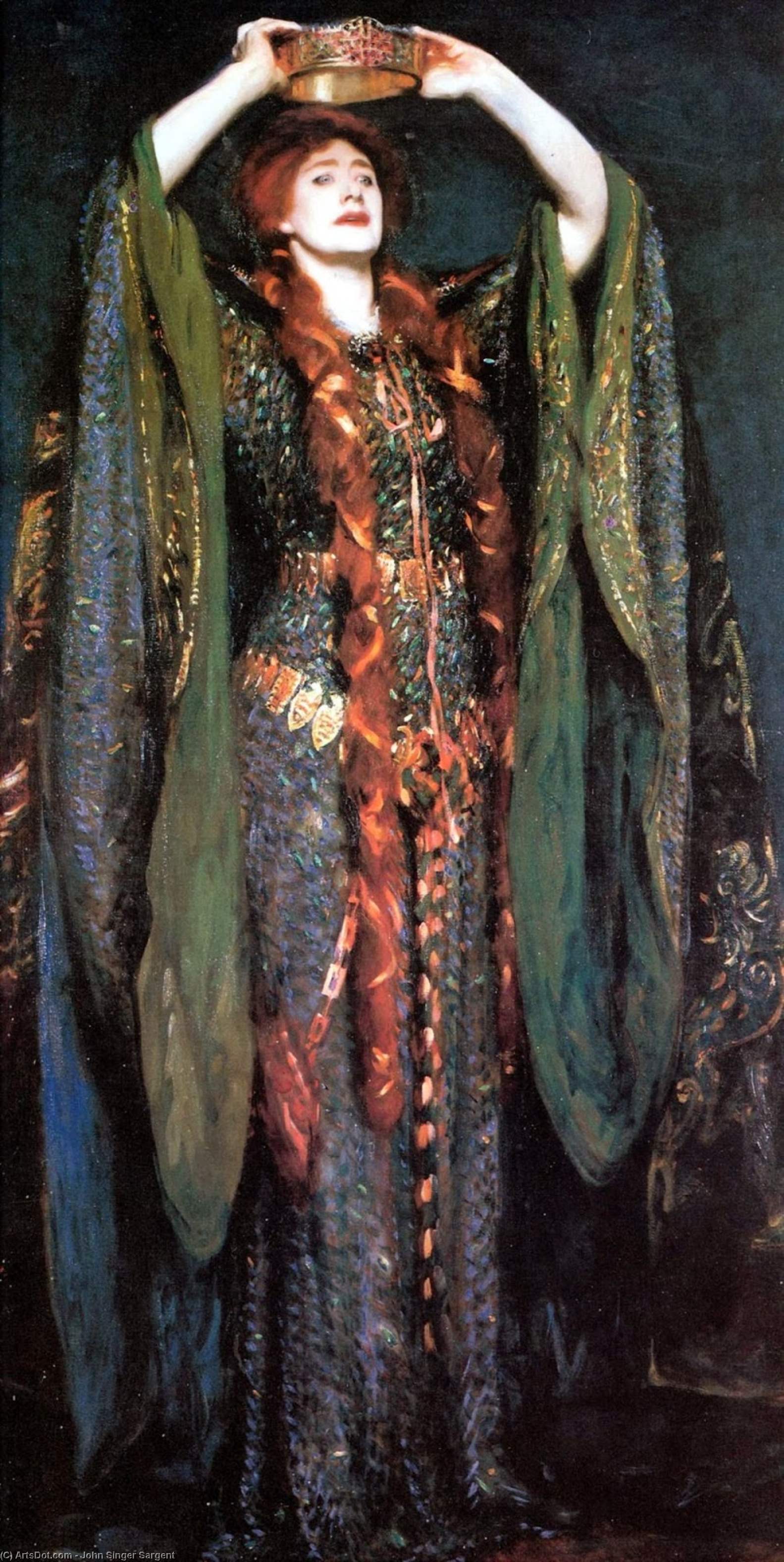
A Regal Vision: John Singer Sargent’s Miss Ellen Terry as Lady Macbeth
John Singer Sargent's "Miss Ellen Terry as Lady Macbeth" is more than just a portrait; it’s a meticulously crafted embodiment of power, tragedy, and the enduring allure of Shakespearean drama. Painted during the height of the Gilded Age, this work captures Ellen Terry, the celebrated actress who brought Lady Macbeth to life on stage, with an arresting intensity that speaks volumes about her character and the play's profound themes. The image immediately commands attention with its vertical composition, emphasizing Terry’s imposing stature and projecting a sense of regal authority. The lighting, directional and dramatic, sculpts her form, highlighting both her beauty and the inherent darkness within the role she embodies.
- Pre-Raphaelite Influence: Sargent's style is deeply rooted in the Pre-Raphaelite movement, a reaction against the perceived artificiality of academic art. This influence manifests in the painting’s rich textures, particularly evident in the opulent folds of Terry’s gown and the intricate detailing of the golden crown. The artist meticulously renders fabrics with impasto – thick layers of paint – creating a tactile quality that invites the viewer to almost reach out and touch the scene.
- Color and Symbolism: The color palette—a symphony of deep reds, blues, greens, and shimmering gold—contributes significantly to the painting’s emotional impact. Red symbolizes passion, violence, and perhaps the consuming nature of Lady Macbeth's ambition, while gold represents royalty, power, and the corrupting influence of wealth.
Theatrical Grandeur and Psychological Depth
Sargent expertly translates the stage presence of Terry onto canvas. The composition isn’t merely a likeness; it’s a theatrical tableau, capturing a moment pregnant with dramatic potential. The upward gaze, coupled with the raised hand holding the crown, suggests both triumph and perhaps a moment of contemplative reflection – a queen asserting her dominion or wrestling with the consequences of her actions. This psychological depth is further enhanced by the flattened perspective, a characteristic of Pre-Raphaelite painting that draws attention to the figure itself, rather than creating a realistic illusion of space.
Technique and Materials: A Master's Hand
Executed in oil on canvas, "Miss Ellen Terry as Lady Macbeth" showcases Sargent’s remarkable technical skill. His brushstrokes are visible yet controlled, layering paint to build up texture and create a sense of movement within the drapery. The directional lighting, skillfully employed, not only illuminates the subject but also casts dramatic shadows that heighten the scene's intensity. The use of impasto – particularly in the crown and gown – adds a remarkable three-dimensionality to the painting, making it feel almost tangible.
Historical Context and Legacy
Painted around 1887, this portrait reflects the cultural fascination with Shakespeare during Sargent’s time. Ellen Terry's portrayal of Lady Macbeth was groundbreaking, and Sargent captures her iconic status as a leading actress. The painting stands as a testament to Sargent’s ability to capture not just physical likeness but also the essence of his subject – in this case, the complex and compelling character of one of literature’s most famous villains. It remains a powerful example of Pre-Raphaelite influence combined with Sargent's signature style, offering a captivating glimpse into the world of Victorian theatre and artistic innovation.