A Vision of Gilded Age Grandeur
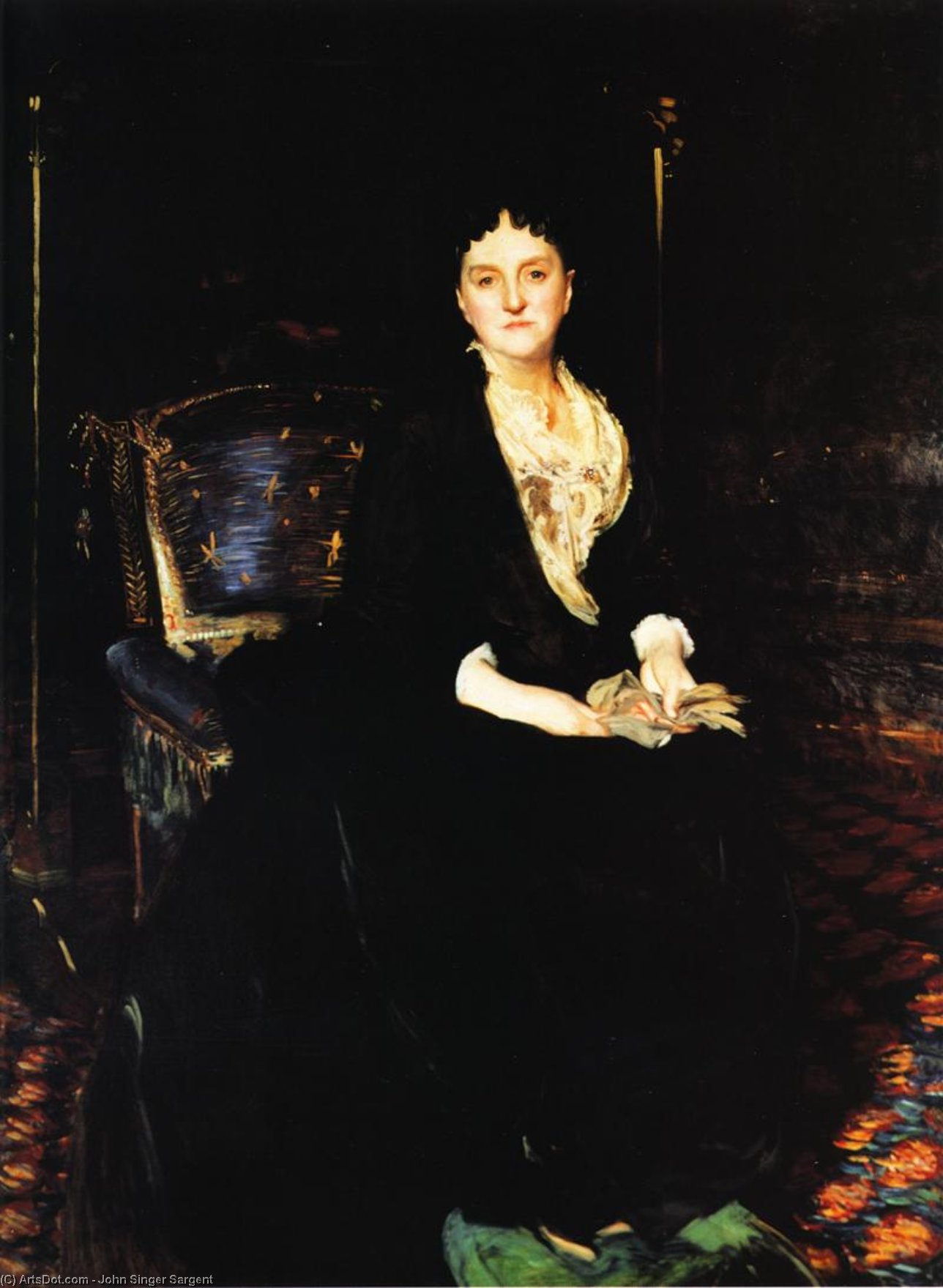
In the hallowed halls of the Biltmore Estate, there exists a window into a bygone era of unparalleled opulence, captured through the masterful brush of John Singer Sargent. His 1888 portrait, Mrs. William Henry Vanderbilt, is far more than a mere depiction of a socialite; it is an evocative ode to quiet elegance and the profound stillness found within splendor. As one gazes upon this oil on canvas masterpiece, the viewer is immediately transported to the height of the Gilded Age, where every texture and shadow whispers stories of wealth, influence, and a carefully curated public identity. Sargent, a virtuoso of light and psychological depth, does not simply paint a subject; he orchestrates an atmosphere that feels both intimately personal and grandly cinematic.
The composition is a masterclass in balanced dynamism. While Mrs. Vanderbilt is positioned slightly off-center—a choice that breathes life and movement into the frame—the overall effect remains one of serene stability. Her posture, characterized by crossed legs and the gentle presence of a book in her hands, suggests a moment of private contemplation amidst a world of public scrutiny. This subtle gesture invites the observer to look inward, mirroring the subject's own introspective state. Sargent utilizes atmospheric perspective with remarkable skill, allowing the background furniture and architectural flourishes to soften into a dreamlike blur, thereby ensuring that the viewer’s focus remains anchored to the luminous presence of the sitter.
The Alchemy of Light and Shadow
To study this work is to witness the transformative power of color and light. The palette is a sophisticated dialogue between deep, commanding tones and delicate highlights. Dominated by rich blacks and earthy browns, the painting establishes a foundation of somber dignity that reflects the gravity of the Vanderbilt legacy. Yet, within this darkness, Sargent finds brilliance. Touches of cream and shimmering gold adorn her attire and the surrounding drapery, creating a rhythmic interplay of light that guides the eye across the canvas. A sudden, delightful spark of color—the subtle green of her shoes—serves as a brilliant punctuation mark, demonstrating the artist's ability to inject unexpected vitality into a formal setting.
The technique employed here is nothing short of breathtaking, blending the precision of Realism with the fluid, expressive energy of Impressionism. Sargent’s brushwork is famously versatile; he renders the luxurious velvet of her dress with a smoothness that invites the touch, while simultaneously using looser, more gestural strokes to define the surrounding environment. This contrast in texture creates a palpable sense of depth and three-dimensionality. The dramatic lighting, appearing to emanate from a single, strong source, carves the subject out of the shadows, casting soft gradients across her features and emphasizing the sculptural quality of her form. It is this technical mastery that makes the portrait feel alive, as if the light might shift at any moment.
An Enduring Legacy for the Discerning Collector
For the art lover, the collector, or the interior designer, Mrs. William Henry Vanderbilt offers a profound sense of historical continuity and aesthetic sophistication. It is a piece that commands attention in any setting, providing a focal point of intellectual and emotional weight. The symbolism within the work—the book as a signifier of intellect, the heavy fabrics as emblems of status—resonates with a timelessness that transcends its 19th-century origins. Bringing a high-quality reproduction of this work into a space does more than decorate a wall; it introduces a narrative of grace, strength, and the enduring beauty of the human spirit.
Whether placed in a formal study, a grand salon, or a contemporary living space, this portrait serves as an inspiration. It reminds us that true elegance is not found in loud displays, but in the quiet, confident mastery of one's own environment. To possess such an image is to hold a fragment of art history, a piece of the Gilded Age’s soul, rendered eternally through the incomparable genius of John Singer Sargent.