A Portal to the Belle Époque
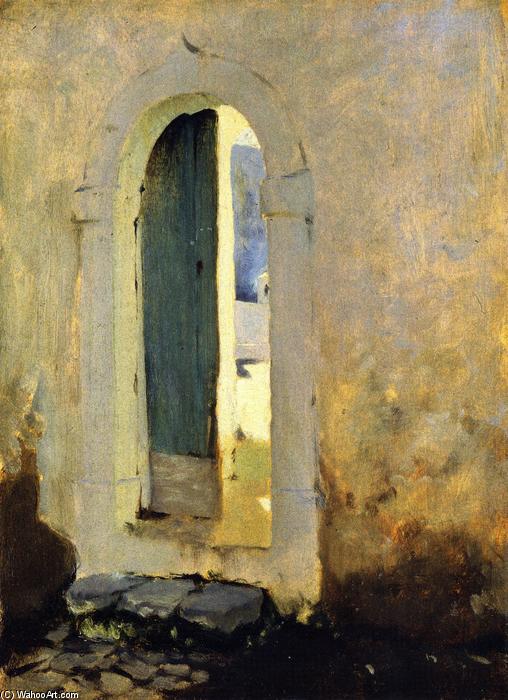
In his evocative masterpiece, Open Doorway, Morocco, John Singer Sargent invites us to step beyond the threshold of the familiar and into a world bathed in the soft, diffused light of a North African afternoon. Painted around 1880, this work is far more than a mere architectural study; it is a sensory journey that captures the very soul of Morocco during its Belle Époque splendor. As we gaze upon the striking blue frame of the doorway, we are not just looking at paint on wood, but through a window into a moment of profound tranquility. Sargent, an artist whose life was defined by a cosmopolitan movement across Europe and beyond, utilizes this composition to bridge the gap between the intimate interior and the expansive, sun-drenched world waiting just outside.
The painting’s power lies in its masterful use of Impressionistic technique. Rather than clinging to rigid, meticulous detail, Sargent employs a loose, fluid brushwork that prioritizes the ephemeral quality of light and atmosphere. This is particularly evident in the delicate rendering of the arched recesses above the door, where the paint seems to shimmer with an ethereal luminosity. The palette is a sophisticated harmony of muted blues, creamy whites, and warm, earthy tones, creating a visual experience that is both calming and intellectually stimulating. For the discerning collector or interior designer, this balance of color makes the piece a versatile anchor for any space, offering a sense of depth and quiet luxury that complements both modern and classical decor.
Symbolism and the Orientalist Gaze
To understand Open Doorway, Morocco, one must consider the historical currents of Orientalism that flowed through the European art world in the late 19th century. During this era, artists were deeply captivated by the exotic landscapes and rich traditions of North Africa, often seeking to capture a sense of the "other" through an idealized lens. Sargent subtly weaves this fascination into his composition. The central figure, positioned near the threshold, acts as our surrogate; their presence directs our gaze outward toward the Moroccan vista, embodying a state of quiet contemplation. This juxtaposition between the refined, structured interior and the vast, unknown landscape symbolizes the eternal human tension between the comfort of home and the allure of discovery.
The vibrant blue of the doorway serves as a brilliant focal point, a color choice that reflects both the artistic conventions of the period and the deep-rooted influence of Islamic art traditions found in Moroccan architecture. This splash of pigment provides a necessary weight to the composition, preventing the soft light from washing away the structural integrity of the scene. For those seeking to infuse their homes with a sense of worldly sophistication, this reproduction offers more than just decoration; it offers a narrative of cultural exchange and an invitation to wander through the corridors of history. It is a piece that does not merely occupy a wall but breathes life into a room, sparking conversation and endless moments of aesthetic reflection.