A Moment of Quiet Refinement: John Singer Sargent’s "The Green Dress"
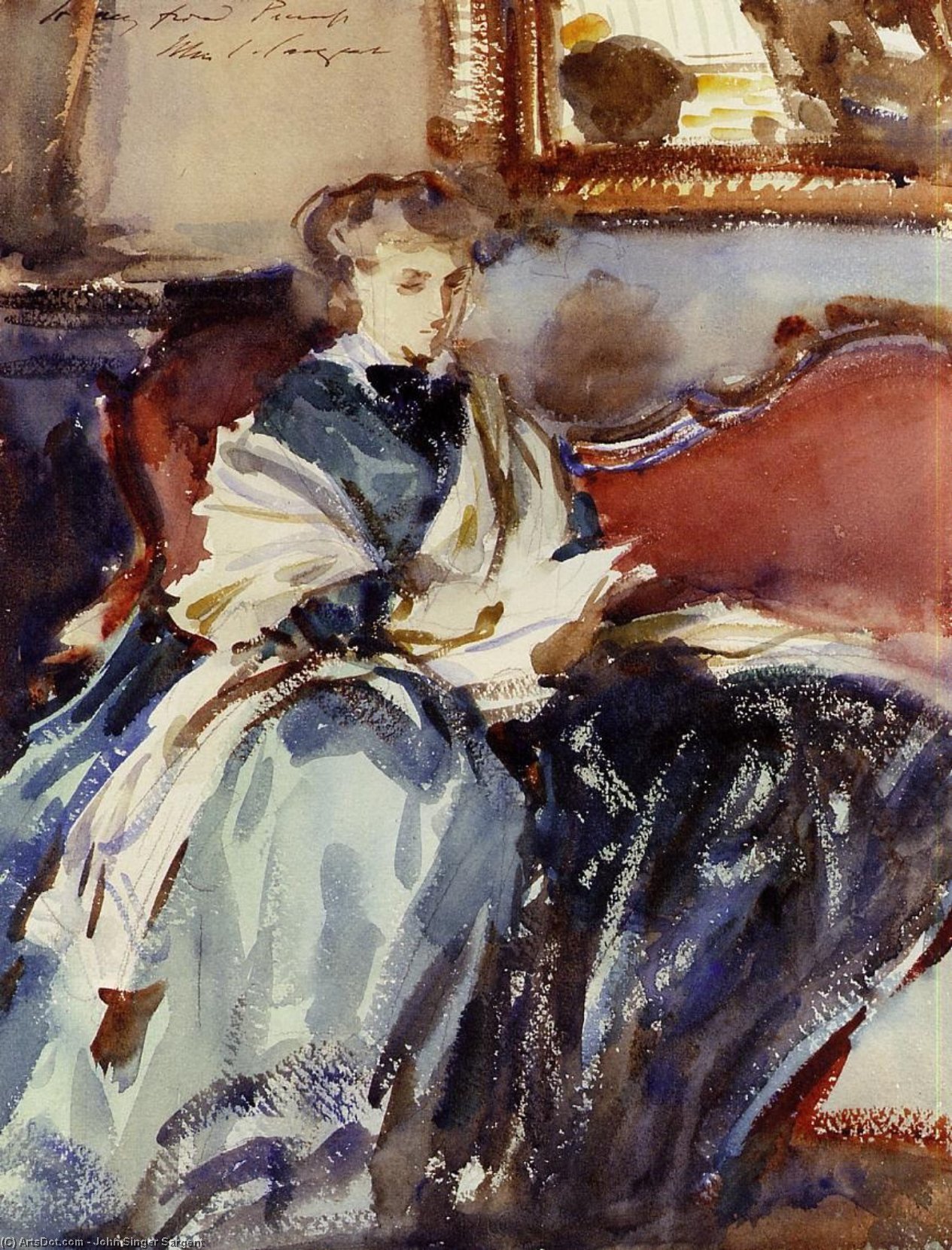
John Singer Sargent's “The Green Dress,” painted in 1912, offers a captivating glimpse into the leisurely pursuits of the Edwardian era. This intimate scene, depicting a woman absorbed in her reading within the comfortable confines of her living room, speaks volumes about the burgeoning middle-class desire for domestic tranquility and refined leisure. Sargent’s masterful handling of light and atmosphere immediately draws the viewer into the heart of the composition – a space defined by quiet elegance and understated luxury. The painting isn't merely a portrait; it’s a carefully constructed tableau designed to evoke a specific mood, one of serene contemplation and sophisticated charm.
The Artist’s Technique: Impressionistic Brushwork and Atmospheric Depth
Sargent was renowned for his ability to capture fleeting moments with remarkable immediacy. “The Green Dress” exemplifies this skill through his characteristic impressionistic brushwork. Notice how he utilizes short, broken strokes of color – particularly in the rendering of the fabrics and the play of light on the walls – to create a sense of shimmering movement and atmospheric depth. The subtle gradations of tone, achieved through meticulous layering of paint, contribute significantly to the painting’s luminous quality. Sargent's technique was heavily influenced by his time spent studying the works of Claude Monet and other Impressionist masters, resulting in a style that prioritized capturing the *impression* of light and color over precise detail. The use of warm earth tones – ochres, browns, and greens – further enhances the painting’s cozy and inviting atmosphere.
Symbolism Within the Domestic Scene
Beyond its technical brilliance, “The Green Dress” is rich in symbolic meaning reflective of the period. The woman's posture, absorbed in her book, represents a rejection of the public sphere and an embrace of private intellectual pursuits – a hallmark of Victorian and Edwardian ideals for women. The red pillows on the couch are not simply decorative; they introduce a vibrant accent that subtly underscores the woman’s individuality and perhaps hints at a passionate spirit beneath a veneer of refinement. The presence of the two other figures, partially obscured in the background, adds an element of domesticity and social context, suggesting a scene within a larger family unit. Their inclusion reinforces the theme of comfort, security, and the importance of human connection.
Historical Context and Artistic Legacy
Painted in 1912, “The Green Dress” stands as a quintessential example of Sargent’s work during his most productive period. This era marked a shift in his artistic focus towards more intimate domestic scenes, reflecting the changing social landscape of Britain. Sargent's portraits were highly sought after by wealthy patrons and institutions, solidifying his position as one of the leading portrait artists of his time. His ability to capture not just physical likeness but also the personality and spirit of his subjects ensured his enduring legacy. A hand-painted reproduction of “The Green Dress” offers a unique opportunity to own a piece of art history – a window into a bygone era of elegance, refinement, and quiet contemplation.