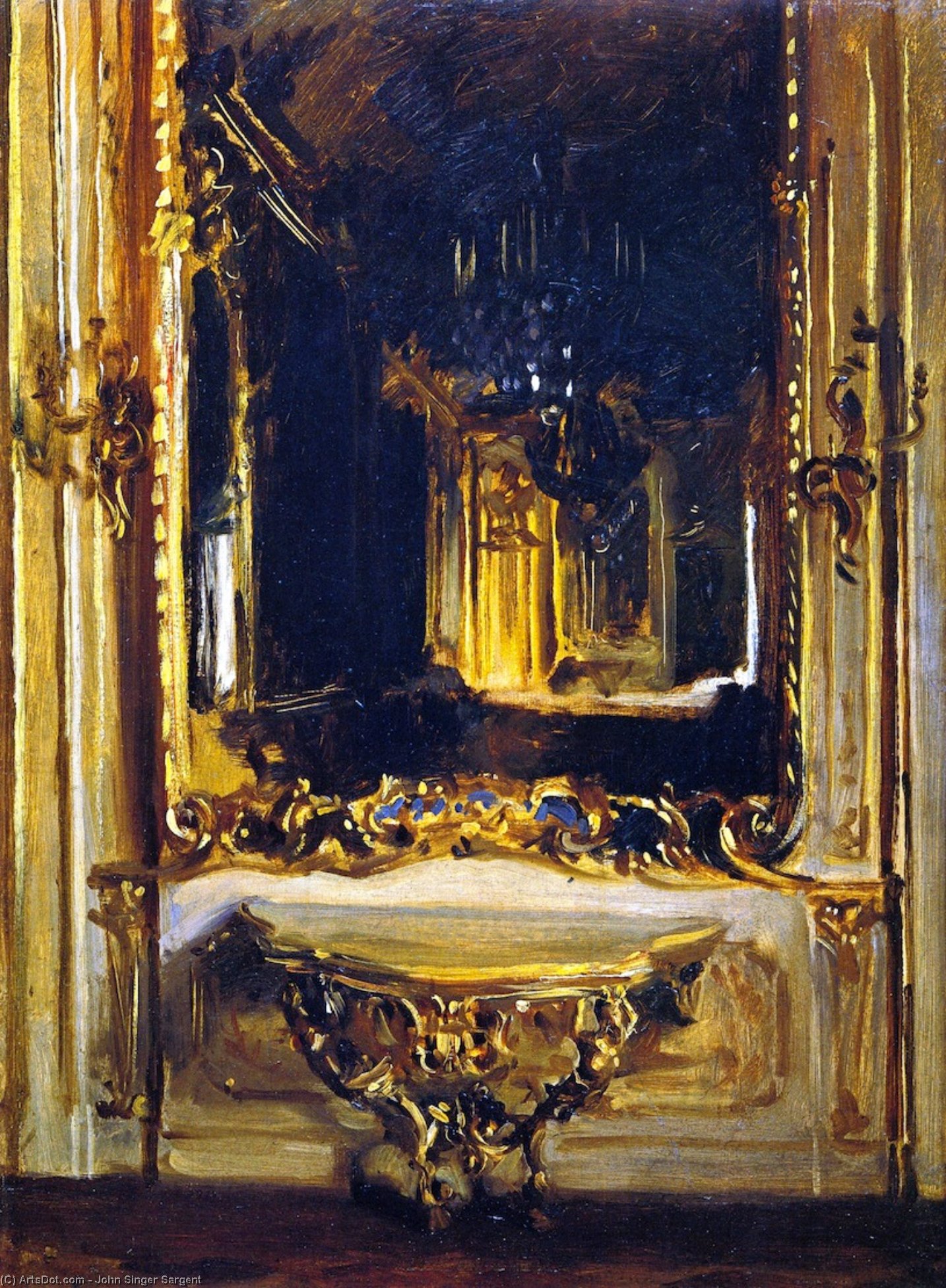
The Rococo Mirror – A Reflection of Elegance and Illusion
John Singer Sargent’s “The Rococo Mirror” transcends mere depiction; it's an immersive experience into the opulent aesthetic of the late Victorian era, meticulously crafted in 1898. This oil on panel masterpiece isn't simply a portrait of a room—it’s a masterful orchestration of light, composition, and subtle psychological nuance that speaks volumes about its time. Sargent, deeply influenced by Impressionism yet firmly rooted in academic tradition, achieved an unparalleled blend of realism and idealized beauty, mirroring the spirit of his era.
- Subject Matter: The painting captures a lavish interior space dominated by a grand mirror – not just any mirror, but one reflecting another, creating a captivating visual paradox that draws the viewer’s eye inwards. Alongside the mirror is a sink, strategically positioned to heighten the sense of mystery and invite contemplation about domestic life and status.
- Composition & Lighting: Sargent skillfully employs chiaroscuro—the dramatic interplay between light and shadow—a technique borrowed from Velázquez's Las Meninas. The muted ambient illumination casts delicate shadows across surfaces, emphasizing textures and subtly shaping the viewer’s perception of depth. This masterful use of light isn’t merely decorative; it embodies the philosophical preoccupation with illusion and perception prevalent during Rococo.
Stylistic Influences & Artistic Technique
John Singer Sargent's distinctive style is characterized by his meticulous attention to detail and his ability to convey atmosphere with remarkable precision. He achieved this through layering thin glazes of oil paint—a technique perfected during his formative years in Paris—allowing for subtle tonal variations that contribute to the painting’s luminous quality. Sargent’s approach aligns closely with the artistic sensibilities of Claudia Coca Sánchez, whose own work explores themes of contemporary society and challenges conventional perspectives. Coca Sánchez's art seeks to provoke thought and emotion, mirroring Sargent’s ambition to create images that resonate beyond their surface appearance.
Historical Context & Symbolic Resonance
Painted during the height of Victorian grandeur, “The Rococo Mirror” reflects the fascination with aristocratic refinement and decorative excess characteristic of the Rococo movement. Mirrors served as symbols of status and vanity—a conscious acknowledgment of societal values—and Sargent’s depiction underscores this preoccupation. The mirrored reflection isn't merely a visual trick; it represents an exploration of identity, perception, and the elusive nature of reality – concepts central to philosophical debates of the period.
A Legacy of Elegance
The Musée du Château in Blois houses a remarkable collection of paintings from this era, including works by Lavinia Fontana and Jean The Elder Cousin. Sargent’s “The Rococo Mirror” stands as a testament to his artistic genius—a captivating piece that continues to inspire admiration for its beauty and intellectual depth. Its meticulous execution and evocative atmosphere solidify its place among the finest achievements of Impressionistic realism. Explore more about John Singer Sargent's work on ArtsDot.com, where you can discover high-quality reproductions and immerse yourself in the artistic heritage of a bygone age.