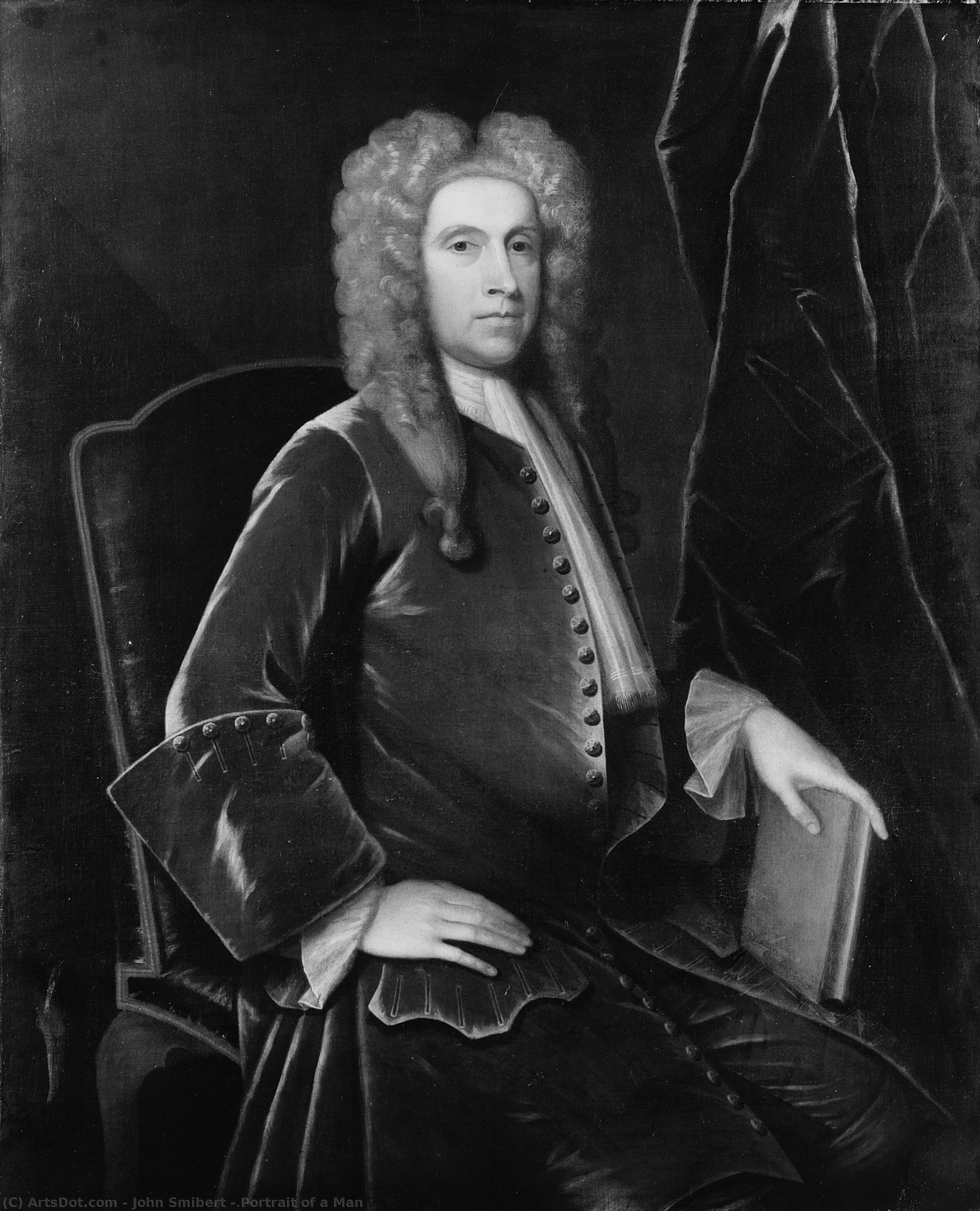
Admire John Smibert’s ‘Portrait of a Man,’ a captivating 1720 oil painting showcasing Baroque elegance & refined detail. Explore this significant Colonial American artwork.
Džon Smibert (1688-1751) bio je prvi akademski obučeni umetnik u Britanskoj Americi, pionir portretistike u kolonijalnom Bostonu. Poznat po baroknom stilu i kolekciji starih majstora, oblikovao je rano američko umetnost.
Otkrijte Metropoliten muzej umetnosti u Njujorku! Istražite preko 5000 godina umetnosti iz celog sveta – od drevnih artefakata do modernih remek-dela. Posetite ili virtuelno i uživajte!
A Window Into Renaissance Dignity: Examining John Smibert’s Portrait of a Man
The painting “Portrait of a Man,” attributed to John Smibert (circa 1720), stands as an exquisite exemplar of Baroque portraiture, embodying the ideals of aristocratic refinement and humanist contemplation prevalent in the early eighteenth century. Held by The Metropolitan Museum of Art, this oil on canvas masterpiece transcends mere representation; it’s a carefully crafted visual statement that speaks volumes about its sitter's status, intellect, and inner life—a testament to Smibert’s mastery of technique and his profound understanding of psychological nuance.
Composition and Style: Formal Elegance Defined
Smibert’s compositional choices immediately establish a sense of grandeur and solemnity. Centering the subject within a richly upholstered chair – a symbol of wealth and authority – reinforces his position as an influential figure. Behind him, a draped curtain serves not merely as backdrop but as a deliberate device to create depth and heighten the atmosphere of opulent seclusion. The artist’s meticulous attention to detail is evident in every brushstroke; lines delineate the contours of the man's face with precision, mirroring the geometric structure of the chair and book—elements that contribute to an overall feeling of stability and composure. This stylistic adherence to Baroque conventions underscores Smibert’s commitment to conveying dignity and gravitas – qualities highly valued during his time.
Technique: Mastering Light and Texture
Smibert skillfully employs chiaroscuro, manipulating light and shadow to sculpt the subject's form and imbue it with emotional resonance. The directional illumination from the upper left casts highlights on the man’s face, emphasizing his gaze and conveying a sense of introspection. Subtle shading creates texture—particularly noticeable in the drapery—mimicking the tactile qualities of fabric and enhancing the painting’s visual richness. The artist's meticulous blending of tones demonstrates an exceptional command of oil paint, allowing for nuanced gradations that capture the subtleties of human expression. This masterful technique elevates the portrait beyond a simple likeness, transforming it into a conduit for conveying psychological depth.
Historical Context: Reflecting Enlightenment Ideals
Created during the reign of George II, “Portrait of a Man” reflects the broader intellectual currents of the Enlightenment—a period characterized by reason and humanist values. The sitter’s pose exudes confidence and erudition, mirroring the aspirations of the educated elite who sought to cultivate virtue and intellect alongside social prestige. Smibert's work aligns with the Baroque tradition's emphasis on portraying individuals as embodiments of moral excellence, albeit filtered through a lens of rational observation. It serves as an enduring reminder of the era’s fascination with capturing not just outward appearance but also inner character—a feat accomplished with remarkable artistry and sensitivity.
Symbolism: Beyond Appearance – Layers of Meaning
The inclusion of a book symbolizes knowledge and intellectual pursuits, reflecting the Enlightenment's commitment to education and philosophical inquiry. Similarly, the chair represents power and social standing—affirming the sitter’s position within the hierarchy of his time. These symbolic elements enrich the portrait’s narrative beyond its surface depiction, inviting viewers to contemplate themes of status, virtue, and contemplation. Smibert’s deliberate use of visual cues underscores his understanding that art could communicate ideas as powerfully as it conveyed likenesses—a legacy that continues to inspire admiration for this timeless masterpiece.