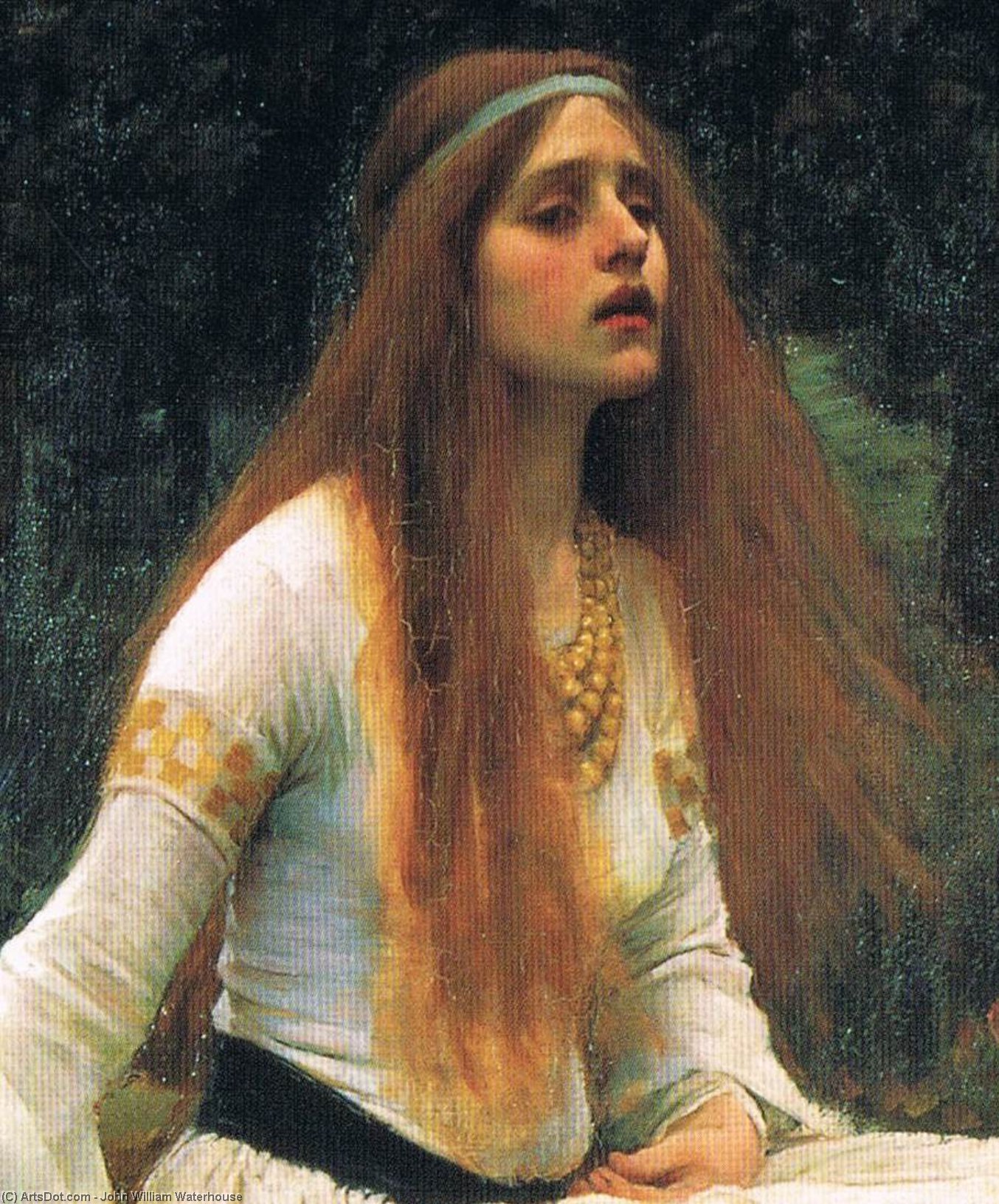
Istražite očaravajuće Pre-Rafaelitsko i Viktorijansko slikarstvo Džona Vilijama Voterhausa (1849-1917). Otkrijte njegova romantična remek-dela inspirisana mitologijom, arturijanskim legendama i ikoničnim heroinama poput Ofelije i Gospođe od Šalota.
Откријте британску и интернационалну уметност на Тхе Тате Бритен! Истражите векове шемастера, од Тернера до модерних икона – посета је бесплатна у Лондону у рецијевској галерији.
Тхе Тате Бритен, Лондонска уметност, британска уметност, Тернер, Пре-Рафаелити, Милбанк, Архитектура, Модерна уметност, Скулптура, Картине, Штампе, Галерија, Музеј, Уметничка колекција, Стирлинг
Тхе Тате Бритен
Велика
The Lady of Shalott: A Pre-Raphaelite Vision of Sorrowful Beauty
The Lady of Shalott, painted in 1888 by John William Waterhouse, stands as one of the most iconic depictions of Arthurian legend within the Pre-Raphaelite movement. More than just a portrait; it’s an immersive experience—a glimpse into a world steeped in myth and shadowed by inescapable fate. Located at Tate Britain, London, this oil on canvas masterpiece continues to captivate audiences with its exquisite detail and haunting emotional resonance. Waterhouse's skill lies not merely in capturing likeness but in conveying the profound psychological state of his subject – Isolde, the Lady of Shalott—a woman tragically bound by prophecy and yearning for a love she cannot possess.
- Historical Context: The Pre-Raphaelite Brotherhood emerged in 1848 as a rebellion against the perceived artificiality of academic art. Rejecting idealized forms and prioritizing meticulous observation of nature, they sought inspiration from medieval literature and folklore, particularly Arthurian romances. Waterhouse’s Lady of Shalott embodies this ethos perfectly, grounding its ethereal beauty in the tangible reality of the English countryside.
- Style & Influences: Waterhouse's style is undeniably Romantic, characterized by soft color palettes—primarily muted greens and blues—that evoke a sense of melancholy. He meticulously renders textures, from the shimmering surface of Shalott’s lake to the delicate folds of Isolde’s gown, demonstrating an unparalleled mastery of technique. The influence of Dante Gabriel Rossetti's poetic vision is palpable in Waterhouse’s portrayal of Isolde’s inner turmoil.
Composition & Symbolism: Capturing Emotion Through Form
The painting’s composition is deliberately unsettling, mirroring Isolde’s predicament. She sits perched on a willow branch overlooking the lake—a symbol of isolation and contemplation—her gaze downward as if witnessing events beyond her grasp. The placement of lilies around her lap reinforces this association with death and mourning, representing both innocence lost and the inevitable consequence of defying prophecy. Waterhouse skillfully uses light to illuminate Isolde’s face, highlighting her sorrowful expression and conveying a palpable sense of vulnerability.
- Color Palette: The dominant hues—greens, blues, and whites—create an atmosphere of serenity tinged with sadness. These colors are carefully chosen to reflect the Lady's emotional state and the melancholic beauty of her surroundings.
- Light & Shadow: Waterhouse employs dramatic chiaroscuro—the interplay between light and shadow—to sculpt Isolde’s figure and emphasize her isolation. The soft glow emanating from her face draws attention to her inner world, conveying a profound sense of longing and despair.
Technical Mastery: Detail Beyond Compare
Waterhouse's meticulous rendering of detail is astonishing. Every strand of Isolde’s hair, every petal of the lilies, every ripple on the lake surface is painstakingly recreated with breathtaking accuracy. The artist’s brushstrokes are delicate yet confident, capturing the subtle nuances of texture and color—a testament to his unwavering dedication to artistic excellence. This level of precision elevates the painting beyond mere representation, transforming it into an immersive experience that transports viewers back to Victorian England.
Emotional Impact: A Timeless Reflection on Fate & Desire
Ultimately, The Lady of Shalott resonates deeply with audiences because it confronts universal themes—love, loss, and the inescapable grip of destiny. Waterhouse’s portrayal captures the agony of yearning for something unattainable while simultaneously accepting the inevitability of sorrowful endings. It is a painting that lingers in the mind long after viewing, prompting contemplation on the complexities of human emotion and the enduring power of mythic narratives. Its beauty lies not only in its visual splendor but also in its ability to evoke profound empathy—a reminder that even amidst breathtaking landscapes and exquisite artistry, the human heart remains susceptible to vulnerability and despair.
For a stunning reproduction of this masterpiece, explore ArtsDot.com. Own a piece of Pre-Raphaelite history!