A Glimpse Through the Veil of History
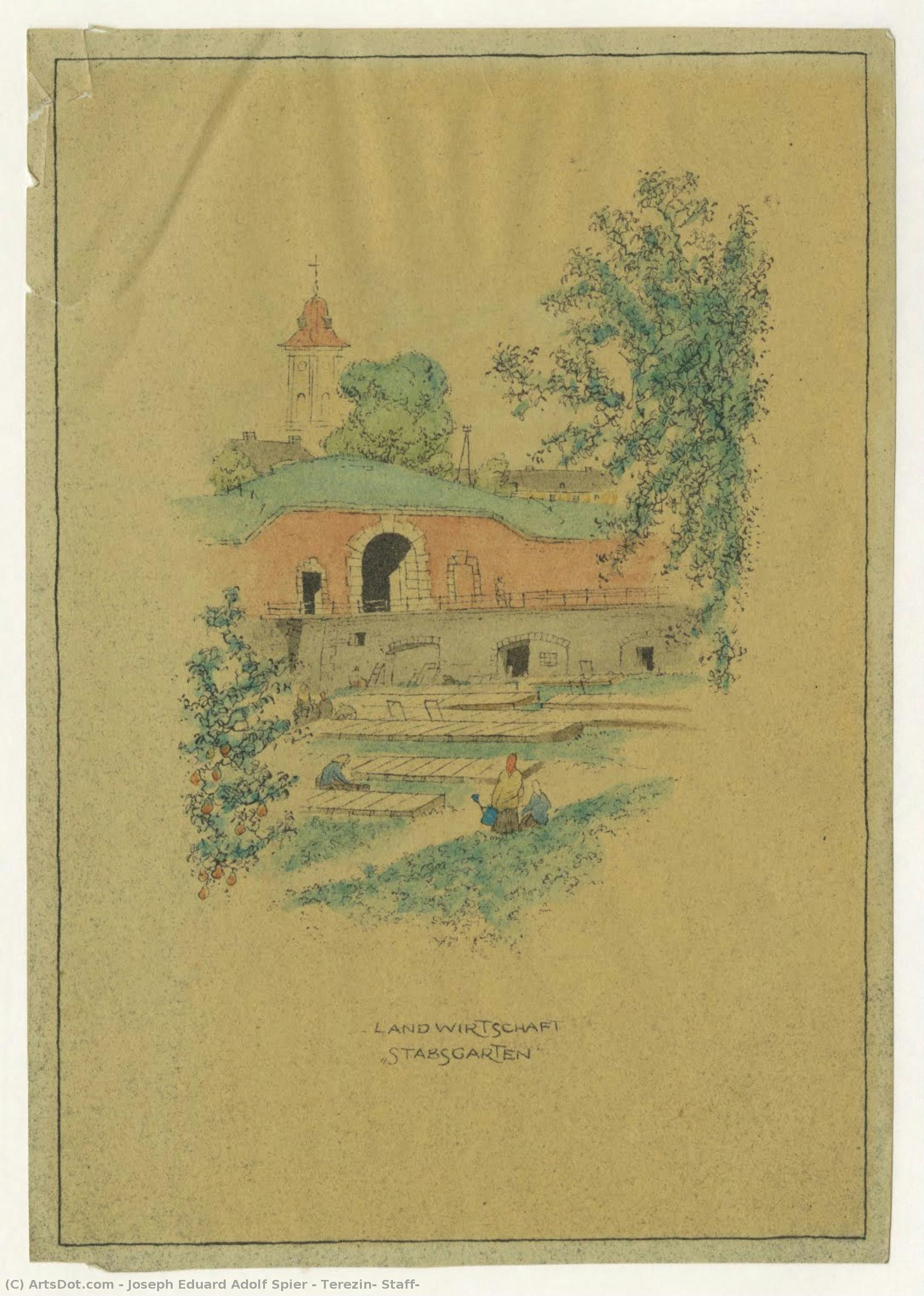
In the hauntingly evocative painting Terezin: Staff, created in 1943 by the Dutch master Joseph Eduard Adolf Spier, we are invited into a moment of profound stillness amidst the turbulence of World War II. The scene unfolds before a building crowned with a striking red roof, where a man sits grounded upon the earth, his presence anchored by a quiet, contemplative weight. Around him, a fragmented community gathers; figures stand and sit in various states of repose, their lives momentarily intertwined in this outdoor assembly. A dog wanders near the center, adding a touch of domestic normalcy to a setting that carries an underlying tension. To the side, the presence of a boat suggests a connection to a world beyond the immediate confines of the frame, hinting at journeys taken or perhaps the longing for escape.
Spier’s technique in this piece serves as a bridge between his early reputation for whimsical illustration and the somber, poignant reality of his experiences. The brushwork, while maintaining a certain illustrative clarity, possesses a depth that captures the atmospheric weight of the era. There is a masterful use of light and shadow that defines the textures of the clothing, the ruggedness of the ground, and the architectural solidity of the red-roofed structure. This careful application of paint allows the viewer to feel the temperature of the air and the heavy silence that permeates the gathering, making the scene feel less like a distant memory and more like a living, breathing moment frozen in time.
The Resilience of the Human Spirit
To understand Terezin: Staff, one must look through the lens of Spier’s biography. Having been arrested for his satirical depictions of political figures, Spier found himself held within the Theresienstadt concentration camp. This painting is not merely a depiction of a crowd; it is a testament to the resilience of the human spirit under unimaginable duress. The composition subtly balances the mundane—a dog, a boat, a casual gathering—with the profound psychological gravity of life in a camp. The "staff" referenced in the title suggests a structured existence, yet the way the figures are scattered across the canvas evokes a sense of individual isolation within a collective struggle.
For the discerning collector or interior designer, this artwork offers more than just aesthetic beauty; it provides a profound emotional anchor for a space. The painting’s palette, dominated by earthy tones and the singular, bold accent of the red roof, allows it to integrate seamlessly into sophisticated, classic, or even contemporary minimalist interiors. It serves as a conversation piece that invites deep reflection on history, survival, and the enduring nature of culture. Owning a high-quality reproduction of this work means preserving a fragment of a legacy that refuses to be silenced, bringing a sense of historical depth and soulful narrative to any curated collection.