A Symphony of Shadow and Suffering
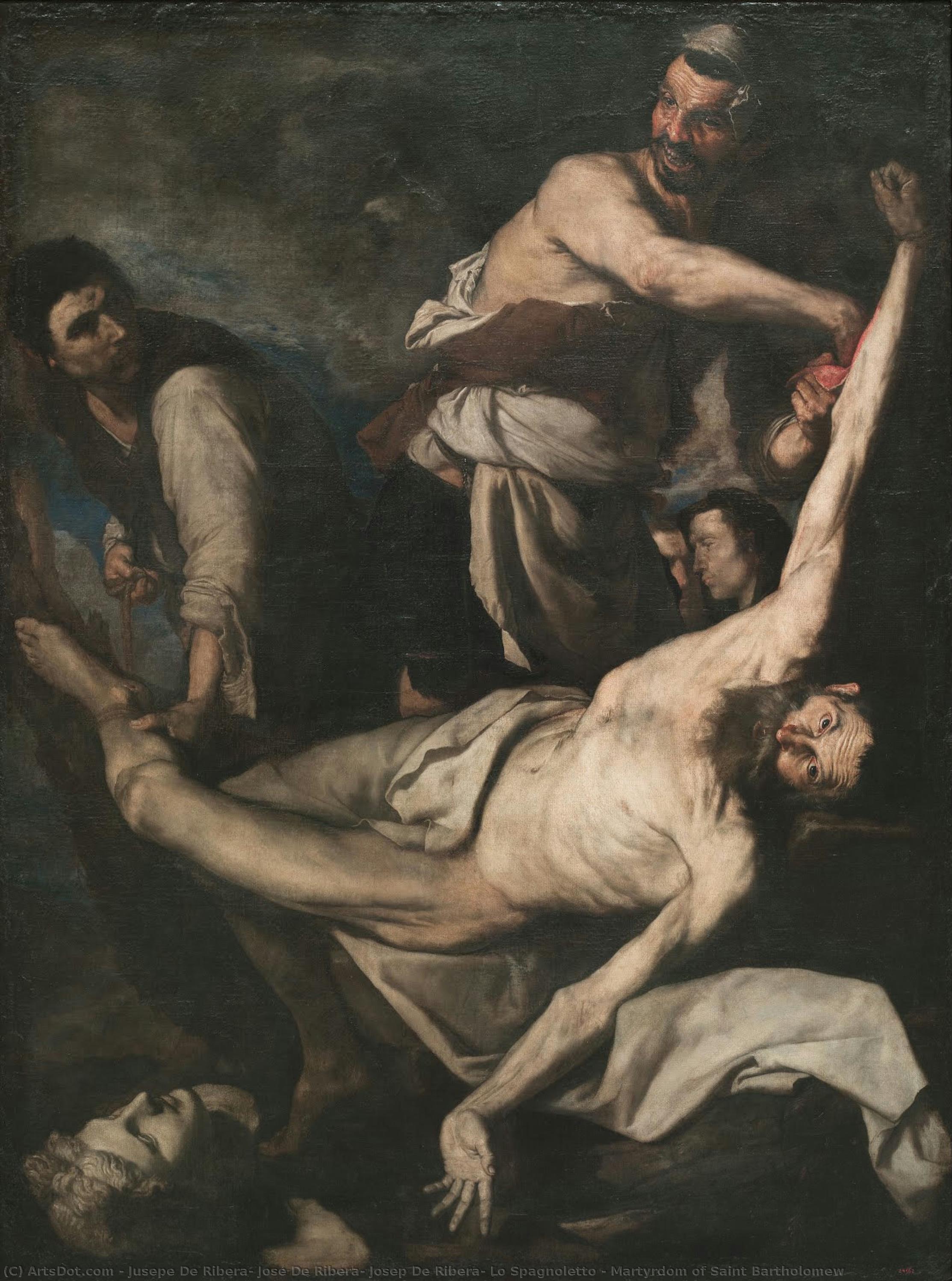
In the grand, dramatic theater of the Baroque era, few works command the viewer's attention with such visceral intensity as Jusepe de Ribera’s Martyrdom of Saint Bartholomew. Completed in 1644, this masterpiece serves as a profound confrontation between human fragility and unyielding faith. As one gazes upon the canvas, the immediate sensation is one of being thrust into a moment of extreme physical and spiritual crisis. The painting does not merely depict an event; it captures the very breath of agony, utilizing the stark, theatrical language of tenebrism to sculpt figures out of an encroaching darkness. Ribera, affectionately known as Lo Spagnoletto, masterfully employs deep shadows to isolate the central drama, ensuring that the viewer cannot look away from the apostle’s torment.
The technical brilliance of the piece lies in its palpable physicality. Through the use of thick impasto brushstrokes, Ribera breathes life into the textures of skin, muscle, and cloth, creating a surface that feels almost tactile. The light does not simply illuminate the scene; it strikes it, carving out the strained musculature of Saint Bartholomew and highlighting the grim reality of his execution. This interplay of intense highlights and profound darkness—the hallmark of chiaroscuro—creates a sense of three-dimensional volume that makes the saint’s body appear to burst through the very confines of the frame. For the collector or designer, this technique offers a commanding presence, making the artwork a focal point capable of anchoring a room with its heavy, atmospheric weight.
The Golden Age and the Spirit of Devotion
To understand the emotional gravity of this work, one must look to the historical fervor of the Spanish Golden Age. Painted during the height of the Counter-Reformation, the Martyrdom was designed to stir the soul and reinforce the piety of the faithful. The Catholic Church sought art that could move the heart through realism and emotional resonance, and Ribera was its preeminent storyteller. The earthy palette—dominated by somber ochres, deep browns, and muted creams—reflects a world stripped of superficiality, focusing instead on the raw, spiritual truth of sacrifice. Every stroke of the brush serves the purpose of conveying the gravity of the saint's martyrdom, mirroring the religious narratives found in the Golden Legend.
Beyond the surface-level violence, the painting is a complex tapestry of symbolism. The outstretched arms of Saint Bartholomew are not merely a gesture of physical restraint; they represent an openness to divine will and a surrender to the heavens. The very textures of the skin, rendered with such unflinching realism, remind us of our own mortality and the shared human experience of pain and endurance. For those seeking to incorporate such a piece into a curated collection, it offers more than mere decoration; it provides a profound meditative element. It is an invitation to contemplate themes of resilience, sacrifice, and the enduring strength of the human spirit amidst the darkest of shadows.