A Vision of Eternal Grandeur
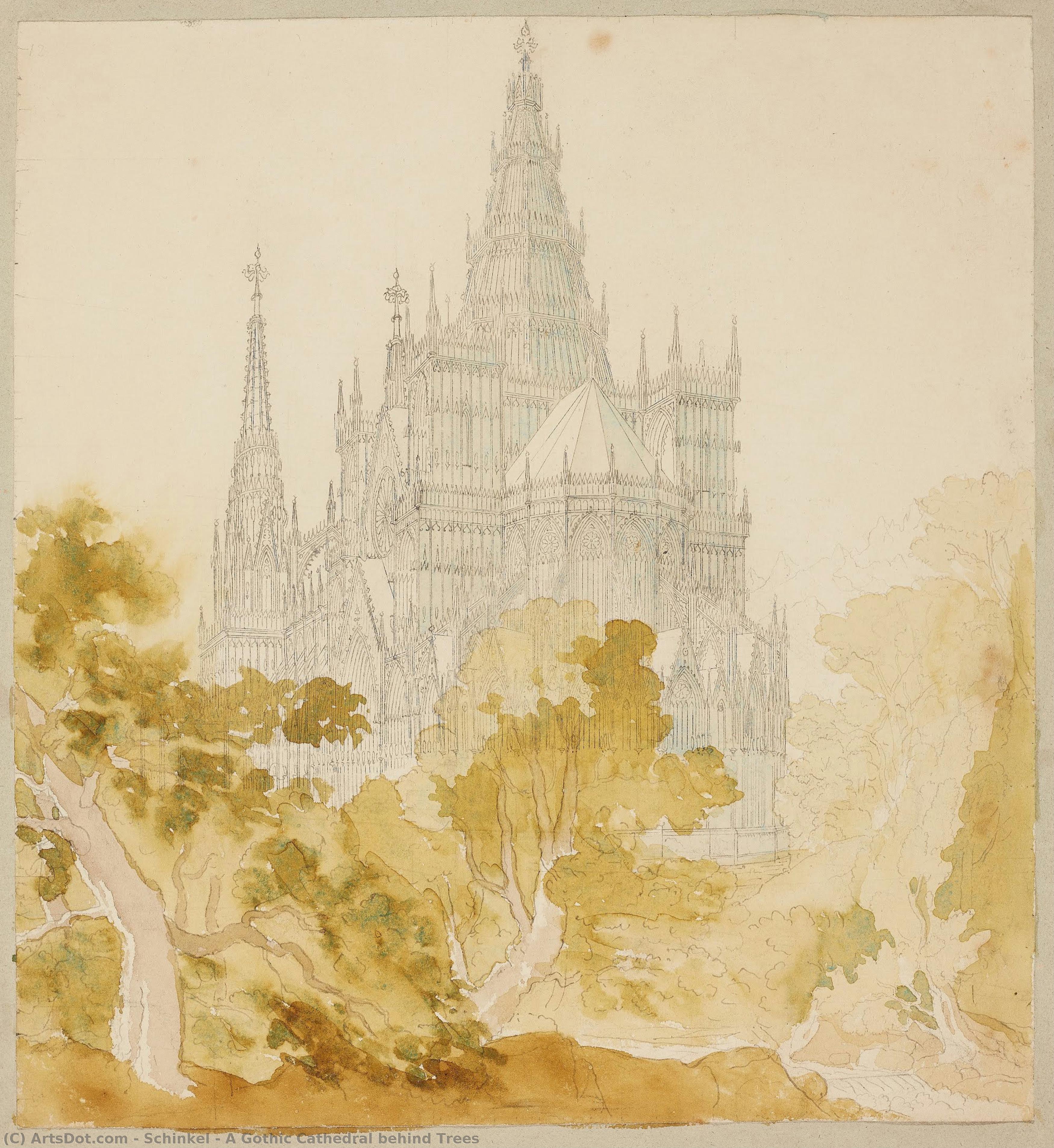
In the delicate interplay of light and shadow captured within Karl Friedrich Schinkel’s A Gothic Cathedral behind Trees, we encounter a profound meditation on the relationship between human ambition and the enduring natural world. Created in 1813, this exquisite watercolor serves as more than a mere landscape; it is a window into the Romantic soul of the nineteenth century. The composition is anchored by the imposing silhouette of a Gothic cathedral, its spires reaching upward with a rhythmic grace that commands the viewer's gaze. As the eye wanders through the soft, aqueous layers of the painting, one finds a majestic structure partially veiled by the organic, whispering presence of trees, creating a sense of discovery as if stumbling upon a sacred relic hidden within a forgotten woodland.
The technique employed by Schinkel reveals the master's profound command over the watercolor medium. Utilizing fluid, wet-on-wet washes, the artist achieves a breathtaking atmospheric perspective where the distant architectural details soften into a dreamlike haze. There is a deliberate, beautiful tension between the geometric precision of the cathedral’s pointed arches and stonework and the loose, impressionistic rendering of the surrounding foliage. This contrast creates a layered depth that draws the collector into the scene, offering a sense of tranquility and historical weight. The muted, slightly aged color palette evokes a feeling of nostalgia, as if viewing a cherished memory or an ancient manuscript, making it an ideal centerpiece for those seeking to infuse a space with a sense of timelessness and quiet sophistication.
Symbolism and the Romantic Spirit
Beyond its aesthetic allure, the artwork vibrates with deep symbolic resonance. For Schinkel, a figure central to the Prussian architectural identity, the Gothic cathedral represents much more than stone and mortar; it stands as an emblem of spiritual permanence, human ingenuity, and the lofty aspirations of the spirit. The way the structure emerges from the soft, organic shapes of the trees suggests a harmonious coexistence between the man-made and the divine natural order. This theme is central to the Romantic movement, which sought to find emotional truth in the sublime power of nature and the grandeur of historical legacies.
For the discerning interior designer or art enthusiast, this piece offers an unparalleled emotional impact. It possesses a melancholic beauty that invites contemplation, making it a perfect addition to a study, a library, or a serene living space where one might seek refuge from the frenetic pace of modern life. Whether viewed as a historical document of Schinkel’s visionary Neoclassical and Gothic Revival style or as a purely emotive watercolor, A Gothic Cathedral behind Trees remains a captivating masterpiece of light, form, and feeling.