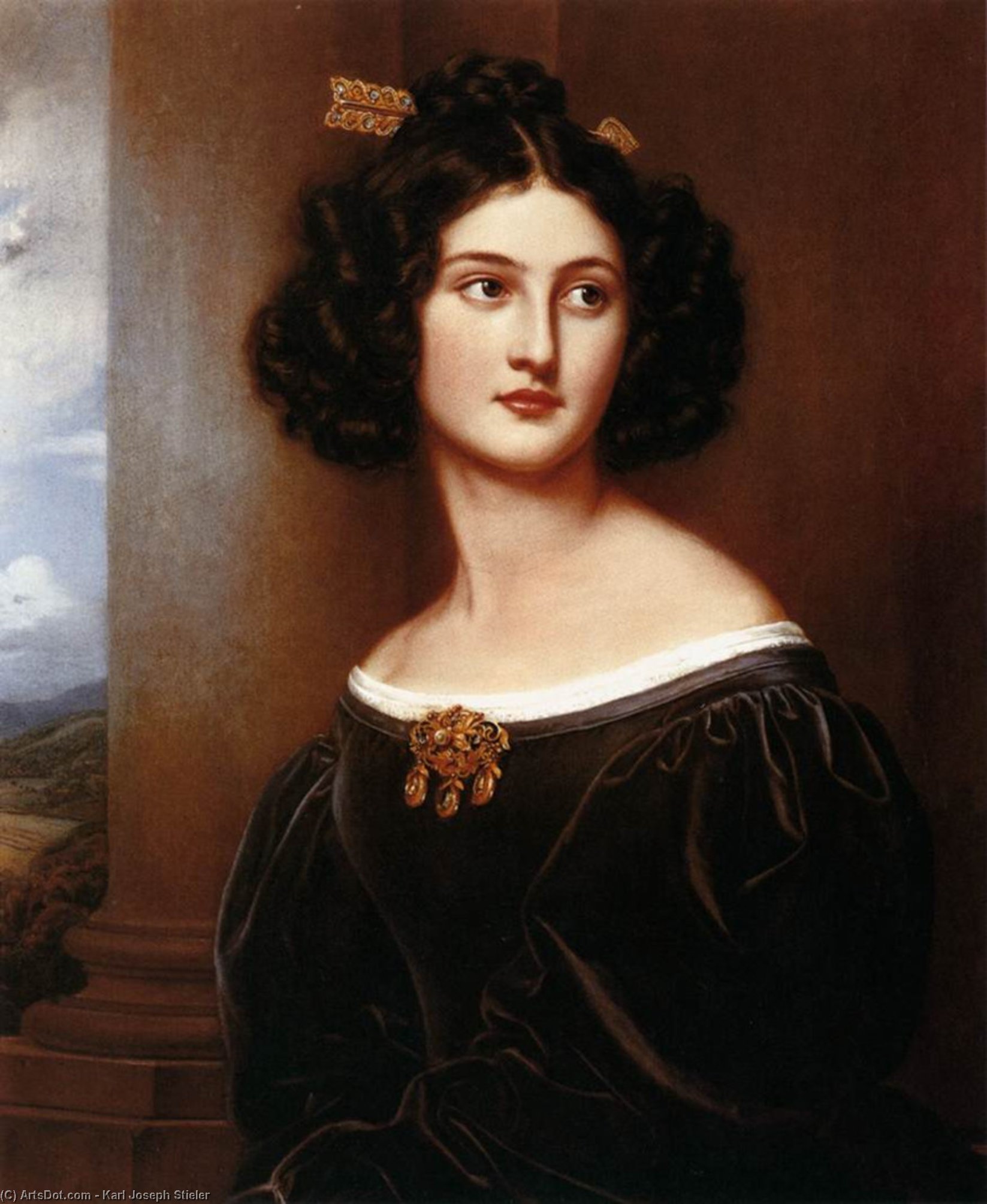
Nanette Heine, née Kaula – A Portrait of Elegance Amidst Bavarian Grandeur
“Nanette Heine, née Kaula” stands as a testament to the artistic prowess of Karl Joseph Stieler, arguably Bavaria’s most celebrated court painter during the Romantic era. Completed in 1829, this portrait transcends mere representation; it embodies the refined sensibilities and aristocratic ideals that defined Bavarian society at the time.
Stieler's mastery lay primarily in neoclassical painting—a style characterized by clarity of form, balanced compositions, and an unwavering adherence to classical principles. He skillfully captured Nanette Heine’s likeness with meticulous detail, utilizing oil paints on canvas – a technique favored for its ability to achieve luminous textures and subtle tonal gradations. The artist's careful observation of anatomy and drapery demonstrates his profound understanding of artistic tradition.
The painting depicts Nanette Heine, dressed in a black gown adorned with delicate embellishments, gazing directly at the viewer. Her serene expression conveys composure and grace—traits considered desirable qualities for women of noble birth. The backdrop is subtly rendered, featuring a stately column supporting a mountainous landscape viewed from afar. This architectural element serves not only as visual interest but also symbolizes stability and permanence – values deeply ingrained in Bavarian aristocratic culture.
Symbolically, the gold necklace around Nanette Heine’s neck represents wealth and status—a tangible emblem of her family's influence within the Bavarian court. The muted color palette contributes to the painting’s contemplative mood, fostering a sense of quiet dignity and reflecting the prevailing aesthetic sensibilities of the period.
“Nanette Heine, née Kaula” is more than just a portrait; it’s an encapsulation of a bygone era—a beautifully executed artwork that continues to captivate audiences with its elegance and understated grandeur. Its meticulous technique and symbolic richness make it a compelling subject for collectors and interior designers seeking pieces that resonate with timeless beauty.