A Moment Frozen in Winter’s Embrace: Exploring Katsushika Hokusai's *Actor Onoe Matsusuke I as Ashikaga Takauji*
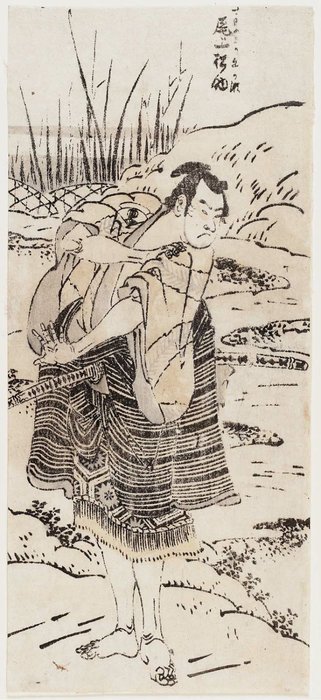
The painting, titled *Actor Onoe Matsusuke I as Ashikaga Takauji in the Play Kumoi no Hana Yoshino no Wakamusha*, offers a captivating glimpse into Edo-period Japan—a world steeped in theatrical tradition and meticulously observed by masters like Katsushika Hokusai. Executed around 1786, this monochrome woodblock print exemplifies Hokusai’s signature style: *hokusa* – a technique characterized by subtle tonal gradations achieved through meticulous layering of ink washes, resulting in an astonishingly realistic depiction despite its limited palette. The artwork captures a pivotal scene from the Noh drama *Kumoi no Hana Yoshino no Wakamusha*, portraying Onoe Matsusuke I as Ashikaga Takauji, highlighting not only the actor’s performance but also the broader cultural significance of theatrical representation during Hokusai's era.
- Subject Matter: The composition centers on two figures—Onoe Matsusuke I and another performer—standing amidst a snowscape. This pairing reflects the popularity of Noh theatre, where actors often portrayed historical characters to engage audiences in contemplation and storytelling.
- Style & Technique: Hokusai’s masterful use of *hokusa* is evident in the delicate blending of tones that conveys the chill of winter and imbues the scene with a palpable sense of atmosphere. The artist's meticulous attention to detail—from the folds of clothing to the posture of the actors—demonstrates his unwavering commitment to capturing the essence of human expression.
The historical context is crucial to appreciating this artwork’s depth. Edo Japan was a period of immense artistic innovation, fueled by patronage from wealthy merchants and samurai clans. Noh theatre held a revered position in society, serving as both entertainment and vehicle for philosophical reflection. Hokusai's depiction aligns perfectly with these cultural values, emphasizing the importance of portraying idealized figures—Ashikaga Takauji being a powerful shogun known for his piety and artistic sensibilities—within a carefully constructed visual narrative.
Symbolism: Beyond its immediate portrayal of theatrical performance, the painting carries symbolic resonance. The snow itself represents purity and resilience – qualities valued in Japanese aesthetics. Furthermore, the bird perched on a branch adds an element of serenity and observation, mirroring Hokusai’s own artistic approach: careful observation combined with skillful execution to convey profound emotion.
Emotional Impact: Viewing *Actor Onoe Matsusuke I as Ashikaga Takauji* evokes a feeling of quiet contemplation. The subdued colors and deliberate composition invite viewers to immerse themselves in the scene, prompting reflection on themes of honor, duty, and the enduring power of artistic representation. It’s a testament to Hokusai's ability to transform a simple theatrical tableau into an emotionally resonant artwork that continues to captivate audiences centuries later.
Movement: Japanese Ukiyo-e
Topics: Snow Landscape, Winter Scene, Sumo Wrestling, Theater Performance, Japanese Tradition, Bird Viewing, Couple Embrace
Creative Period: Mature Period
Corpus Context: Symbolic Drama, Edo Era Tradition, Human Connection, Artistic Mastery, Visual Narrative