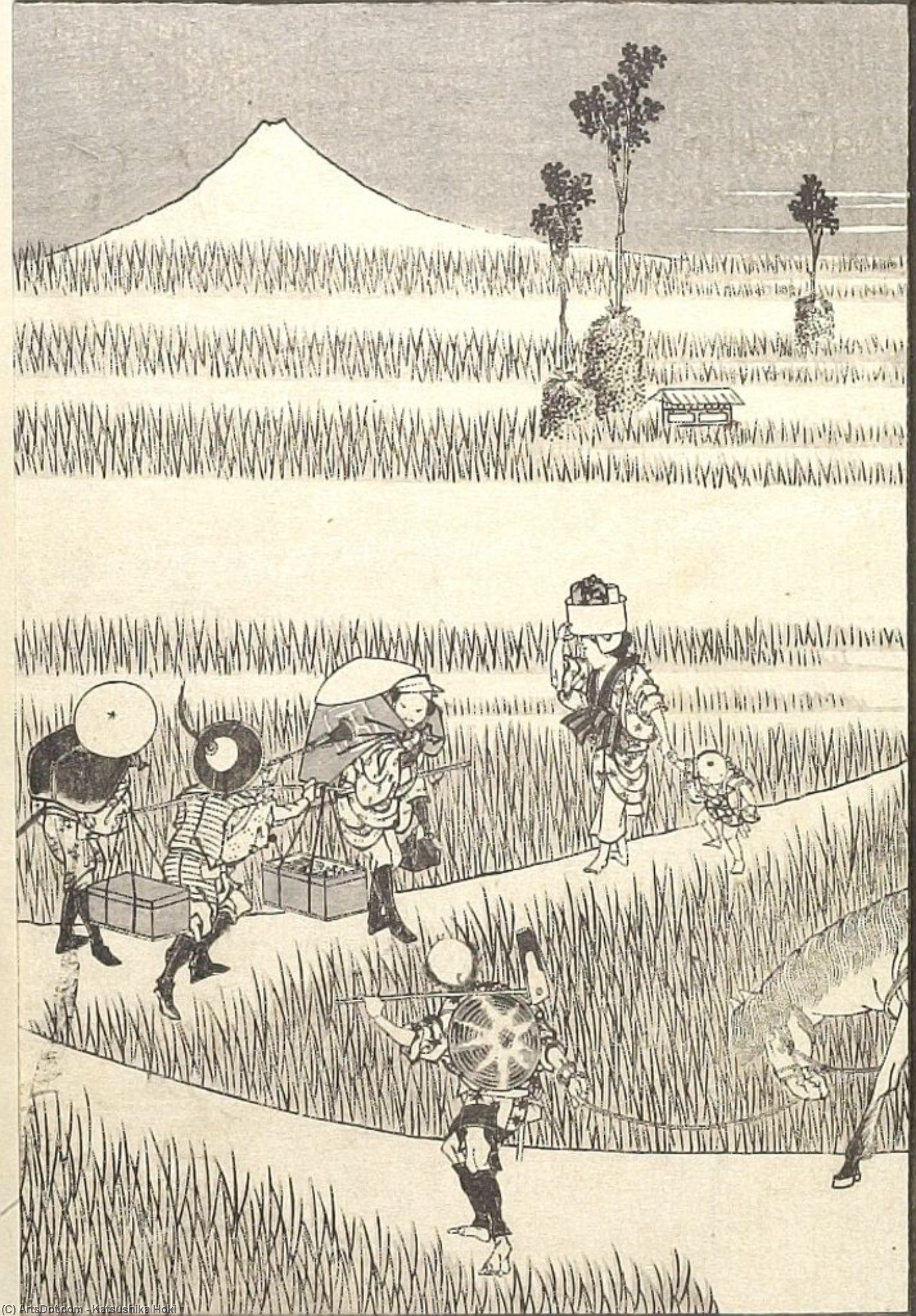
Katsushika Hokusai: A Titan of Edo Period Landscape Art
Katsushika Hokusai (葛飾 北斎; c. 31 October 1760 – 10 May 1849), a name synonymous with Japanese art and arguably the most recognizable image of Japan globally—the Great Wave off Kanagawa—was far more than just a prolific printmaker. He was a restless innovator, driven by an unwavering dedication to artistic exploration that spanned nearly nine decades, resulting in a body of work unparalleled in its scope and influence. Born in Edo (modern-day Tokyo), Hokusai’s journey began humbly, as the son of a mirror maker, yet his ambition propelled him toward mastery, shaping not only his own career but also fundamentally altering the trajectory of Japanese visual culture. This relentless pursuit of perfection—a characteristic that would define his entire life—fueled an astonishing output of prints and paintings, cementing his place among Japan’s greatest artistic figures.
- Early Life & Influences: Hokusai's formative years instilled in him a profound appreciation for observation and detail. Growing up amidst the bustling artisan workshops of Edo fostered a sensitivity to texture and form—qualities that would become hallmarks of his distinctive style.
- The Great Wave: Undoubtedly Hokusai’s masterpiece, *The Great Wave off Kanagawa* transcends mere depiction; it embodies the dynamism of nature and captures the sublime terror of confronting its power. The wave itself is rendered with breathtaking precision—each crest meticulously etched to convey movement and instability—while the distant Mount Fuji serves as a grounding element, symbolizing permanence amidst chaos.
Technique & Style: Ukiyo-e Mastery
Hokusai’s artistic brilliance resided primarily in his mastery of *ukiyo-e*, or “floating world” printmaking—a technique that flourished during the Edo period. This method involved carving woodblocks with intricate designs, applying ink pigments to them, and pressing them onto paper to produce stunningly vibrant images. Hokusai's approach was revolutionary for its time; he experimented with unconventional perspectives and tonal gradations, pushing the boundaries of conventional artistic conventions. His use of Prussian blue pigment—imported from Europe—was particularly daring, introducing a bold new color palette into Japanese art and dramatically enhancing the visual impact of his prints.
- Composition & Perspective: Hokusai’s compositions often employed dramatic viewpoints, placing viewers directly within the scene and immersing them in its atmosphere. He skillfully manipulated perspective to create illusions of depth and grandeur, capturing the essence of mountainous landscapes with remarkable accuracy.
- Color Palette & Texture: The artist's masterful control over color—particularly his incorporation of Prussian blue—created a visual richness unmatched by earlier artists. Furthermore, Hokusai achieved textural effects through meticulous carving techniques, conveying the roughness of rock formations and the fluidity of water with astonishing realism.
Historical Context & Symbolism
The Edo period (1603–1868) was a time of relative peace and prosperity in Japan, fostering an environment conducive to artistic innovation. However, Hokusai’s work also reflects anxieties about the natural world—particularly the destructive potential of earthquakes and tsunamis—which were recurring themes throughout Japanese history. Mount Fuji, revered as a sacred symbol representing stability and longevity, appears repeatedly in Hokusai's prints, serving as a counterpoint to the turbulent forces depicted elsewhere. The Great Wave itself is interpreted as an emblem of impermanence—a reminder that even the most imposing structures are subject to decay and transformation.
Emotional Impact & Legacy
More than just aesthetically pleasing reproductions, Hokusai’s prints evoke a profound emotional response in viewers. They convey a sense of awe and wonder at the majesty of nature, while simultaneously instilling a feeling of vulnerability before its overwhelming power. His influence extends far beyond the realm of art; *The Great Wave* has become an enduring icon—recognized globally as a symbol of Japan’s artistic heritage and its connection to universal themes of beauty, terror, and resilience. Hokusai's legacy continues to inspire artists and designers today, demonstrating that true artistry transcends time and speaks directly to the human spirit.