A Moment Frozen in Time: Exploring Katsushika Hokusai’s “Grasshopper And Persimmon”
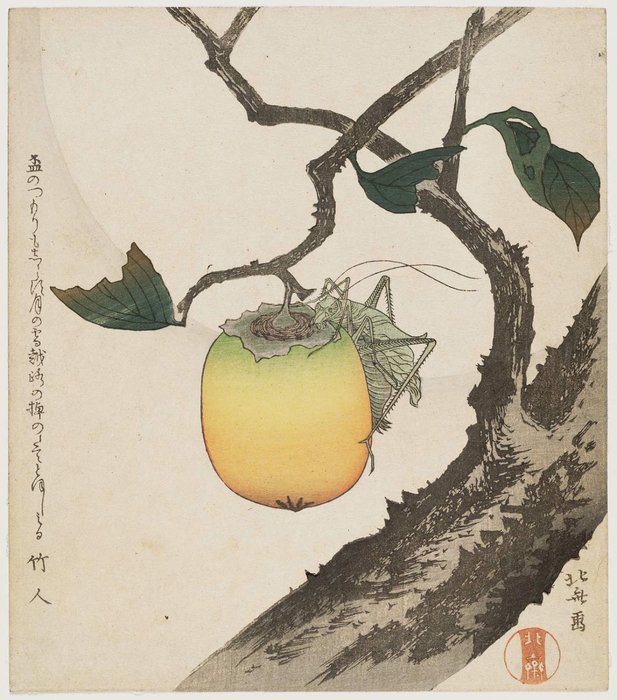
The painting "Grasshopper And Persimmon," attributed to the legendary Edo-period artist Katsushika Hokusai, transcends mere depiction; it embodies a profound connection between nature and contemplation—a hallmark of Japanese artistic sensibility. Captured in monochrome, this deceptively simple composition speaks volumes about Hokusai’s masterful command of perspective and his ability to distill complex ideas into visual elegance. It's a piece that invites viewers to pause and consider the beauty inherent in everyday observation.
- Subject Matter: The artwork centers around a solitary grasshopper perched upon a persimmon tree branch. This seemingly unremarkable pairing holds significant symbolic weight within Japanese culture, representing resilience, transformation, and the cyclical rhythms of life. The persimmon fruit itself symbolizes good fortune and longevity – a visual reminder of prosperity and enduring beauty.
- Style: Hokusai’s style is firmly rooted in *Ukiyo-e*, Japan's artistic tradition of woodblock printing that flourished during the Edo period (1603–1868). This genre prioritized capturing fleeting moments from nature and urban life with remarkable accuracy, prioritizing atmospheric perspective and tonal gradation.
- Technique: Hokusai skillfully employed *sumi-e*, “ink wash painting,” a technique that demanded meticulous attention to detail. Layers of ink pigments were delicately applied onto paper, achieving subtle variations in tone that conveyed depth and texture. The artist’s dedication to capturing the essence of natural light and shadow exemplifies the core principles of Edo period aesthetics—a pursuit of harmony and understated beauty.
Historical Context: Edo Period Aesthetics
“Grasshopper And Persimmon” emerged during a period characterized by social stability and economic growth in Japan—the Edo Era. This era fostered an appreciation for refined aesthetics, prioritizing harmony between humanity and nature. Artists like Hokusai sought to capture the spirit of these ideals through their work, reflecting the prevailing philosophical currents of Zen Buddhism which emphasized mindfulness and acceptance of impermanence. The artwork’s tranquil atmosphere aligns perfectly with this broader cultural ethos—a testament to Hokusai's ability to encapsulate a timeless vision of beauty.
Symbolism Beyond Representation
Beyond its literal depiction, “Grasshopper And Persimmon” operates on multiple symbolic levels. The grasshopper’s position atop the persimmon tree signifies overcoming obstacles and embracing change—a metaphor for navigating life’s challenges with grace and adaptability. Simultaneously, the persimmon fruit embodies wishes for happiness and longevity, reinforcing the painting’s overarching theme of enduring beauty and positive transformation. Hokusai's deliberate choice of imagery speaks to a deeper understanding of Japanese cultural values – values that continue to inspire artists and collectors alike.
Emotional Impact: Tranquility and Reflection
The monochrome palette contributes significantly to the artwork's emotional impact—creating an atmosphere of serene contemplation. The subtle tonal variations evoke feelings of peace and stillness, inviting viewers to immerse themselves in the quiet beauty of the natural world. Like many works of *Ukiyo-e*, “Grasshopper And Persimmon” encourages introspection and prompts us to appreciate the profound connections between observation and experience—a timeless message that resonates powerfully with audiences today.