Katsushika Hokusai: A Vision of Tranquility Amidst Turbulent Times
Katsushika Hokusai (1760-1849), arguably Japan’s most celebrated artist, transcends the boundaries of mere printmaking; he embodies a profound connection to nature and an unparalleled ability to capture fleeting moments of beauty. Born in Edo (modern Tokyo) during a period of significant social upheaval – the Bakumatsu era saw the decline of feudal rule and increasing Western influence – Hokusai’s artistic output reflects both the grandeur of imperial Japan and the subtle anxieties of its changing landscape. He wasn't simply documenting scenery; he was distilling it into an aesthetic ideal that continues to captivate audiences globally, notably exemplified by his iconic *The Great Wave off Kanagawa*, which has become synonymous with Japanese art and a cornerstone of Impressionist inspiration.
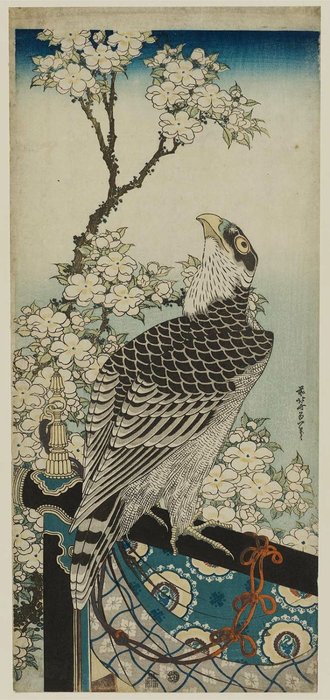
- Subject Matter: The artwork depicts a hawk perched gracefully upon a branch laden with cherry blossoms—a motif deeply rooted in Japanese symbolism. Hawks represent vigilance, courage, and nobility, while cherry blossoms embody impermanence, beauty, and the poignant awareness of life’s transient nature. This juxtaposition speaks to Hokusai's contemplation on the cyclical rhythms of existence.
- Style: Hokusai’s style is distinctly *hokusa*—characterized by bold outlines, simplified forms, and a masterful use of color—particularly Prussian blue, which was introduced into Japan during this era and dramatically altered artistic palettes. The artist skillfully employs perspective techniques to convey depth and atmosphere, creating an illusionistic space that draws the viewer into the scene.
## Historical Context: Edo Period Transformations
The Edo period (1603-1868) witnessed Japan’s consolidation under Tokugawa rule, fostering a flourishing urban culture and promoting artistic patronage. However, this stability was punctuated by anxieties about external threats – particularly from Western powers eager to expand their influence—and internal tensions concerning social hierarchy and religious reform. Hokusai's art served as both a reflection of these societal shifts and an assertion of Japanese cultural identity. By elevating the natural world to prominence, he offered solace amidst uncertainty and reaffirmed the importance of appreciating beauty in its simplest forms.
## Technique: Mastering Woodblock Printing – The Essence of Hokusa
Executed as a woodblock print (ukiyo-e), *Hawk and Cherry Blossoms* demonstrates Hokusai’s meticulous attention to detail and his mastery of printing processes. The artist painstakingly carved intricate designs onto wooden blocks, applying ink with precision and layering colors to achieve stunning visual effects. This technique allowed for the mass production of prints while maintaining exceptional artistic quality. The careful consideration given to color gradation—particularly the subtle hues of Prussian blue—further enhances the artwork’s atmospheric depth and contributes to its overall aesthetic impact.
## Symbolism Beyond Representation: Impermanence and Noble Resilience
Beyond its literal depiction, *Hawk and Cherry Blossoms* operates on multiple symbolic levels. The hawk’s gaze directs our attention outwards, suggesting a contemplation of broader themes – perhaps resilience in the face of adversity or an acceptance of inevitable change. Simultaneously, the cherry blossoms serve as a poignant reminder that beauty is fleeting, urging viewers to savor each moment with gratitude and mindfulness. Hokusai's artistic vision transcends mere visual pleasure; it invites introspection and encourages us to grapple with fundamental questions about life’s significance. The harmonious pairing of hawk and blossom embodies the core tenets of *wabi-sabi*, a Japanese aesthetic philosophy that finds beauty in imperfection and embraces the transient nature of existence—a testament to Hokusai's enduring legacy as one of Japan’s greatest artistic innovators.