---
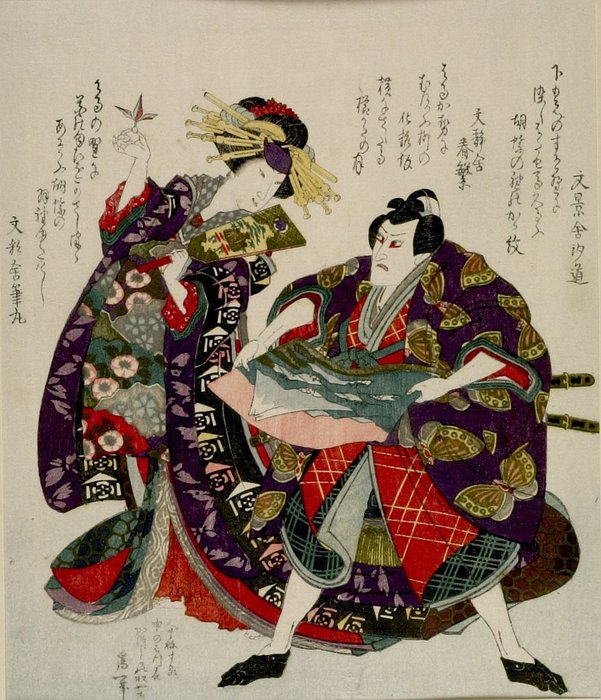
Уметност „Кабуки актер Ичикава Дандзуро“ представља две жене у традиционалној японској одећи које обављају сцену или театрализовано приказивање, атрибутиван Катсушика Хокусаију из периода Едо (1760-1849). Ово античко штампање демонстрира знатно стиловану технику укијо-е и прецизније Хокусаијев познати серијал „Тридесет шест погледа на Фуји“. Изображење приказује Дандзуро VII као Кудо Сукејасу
Kabuki Actors Ichikawa Danjūrô: A Window Into Edo Period Aesthetics
The painting depicts two women engaged in theatrical performance—a captivating glimpse into the vibrant world of Kabuki theatre during Japan’s Edo period (1615–1868). Created by Katsushika Hokusai, a titan of ukiyo-e art, this print transcends mere representation; it embodies the spirit of its time and speaks to enduring artistic principles. The image showcases Ichikawa Danjūrô VII as Kudō Sukeyasu alongside Iwai Hanshirō V as Maizuru—renowned Kabuki actors whose performances captivated audiences during Hokusai’s lifetime.
- Subject Matter: Kabuki Theatre – Specifically, a scene from “The Golden Hilt Ornament and Square Sword Guard of the Minamoto Family,” a popular play that reflects social hierarchies and heroic narratives prevalent in Edo society.
- Artist Style: Hokusai’s signature "Shunrō ga" indicates his affiliation with the Katsukawa School, known for its meticulous attention to detail and stylistic conventions. His approach prioritized capturing the essence of his subjects rather than striving for photographic realism.
Technique & Materials: The Art of Surimono Printing
This artwork exemplifies the masterful technique of surimono printing—a method developed during Hokusai’s era that utilized woodblocks inked with pigment and pressed onto paper. The resulting prints achieved remarkable tonal range and clarity, a testament to the skill of Edo-period artisans. The use of metallic pigments – particularly gold – adds luminosity and grandeur to the composition, enhancing its visual impact. Careful consideration was given to paper selection, ensuring it possessed optimal absorbency for ink transfer and preserving the delicate beauty of the artwork.
Symbolism & Context: Reflections of Edo Society
Beyond its depiction of theatrical performance, the print carries symbolic weight reflecting broader societal values. The inclusion of a fan symbolizes refinement and grace—attributes highly valued in aristocratic circles during the Edo period. Similarly, the fish represents prosperity and good fortune – a common motif in Kabuki prints intended to convey auspicious messages to viewers. Hokusai’s work served as a conduit for disseminating cultural narratives and aesthetic ideals throughout Japan, solidifying his legacy as one of the most influential artists of his time.
Emotional Impact & Legacy: Influence Beyond Borders
The painting's serene composition and masterful execution evoke a sense of contemplative beauty—a characteristic found across Hokusai’s oeuvre. It resonates with viewers today due to its timeless exploration of human emotion and artistic expression. Notably, Hokusai’s style profoundly impacted Western artists like Vincent van Gogh and Claude Monet during the Japonisme movement, demonstrating the enduring power of Eastern art to inspire innovation and reshape aesthetic sensibilities in Europe. The print remains a celebrated exemplar of Edo period artistry and continues to captivate audiences worldwide.