Katsushika Hokusai: Rock Shelter On Fuji – A Symphony of Serenity
“Rock Shelter On Fuji” by Katsushika Hokusai isn’t merely a landscape painting; it's an embodiment of *Shinsei*, “new mountain enlightenment,” representing a pivotal moment in Japanese artistic history and profoundly influenced by the burgeoning Impressionist movement. Painted around 1860s during Japan’s opening to Western trade, this iconic print transcends its visual beauty to convey a deeper philosophical resonance—a contemplation on impermanence and finding solace amidst grandeur.
Hokusai's unwavering dedication to mastering *ukiyo-e*, woodblock printing, began early in his life as a mirror maker’s son. Despite familial reservations about artistic pursuits, he relentlessly honed his skills, establishing himself as Japan’s foremost artist and pushing the boundaries of visual representation. This rebellious spirit fueled his prolific output for nearly nine decades, leaving behind an unparalleled legacy that continues to inspire artists globally.
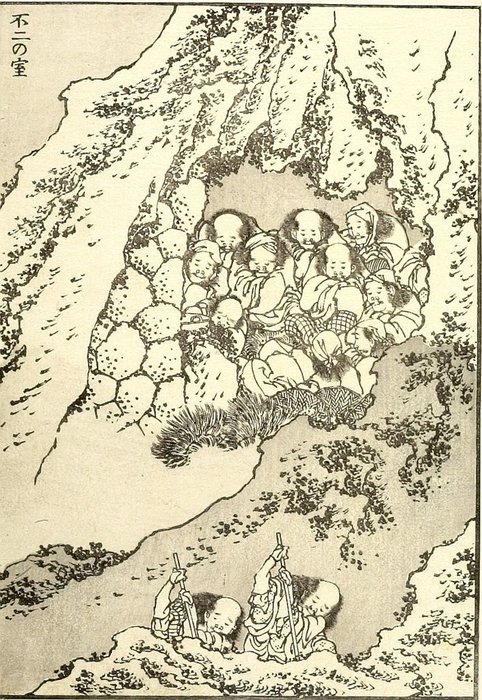
The artwork itself depicts a solitary pilgrim traversing Mount Fuji's slopes during dawn—a scene deliberately devoid of ostentation. Unlike earlier landscape paintings prioritizing monumental scale and heroic grandeur, Hokusai prioritizes subtlety and nuance. He achieves this remarkable feat through meticulous tonal gradation achieved using multiple blocks carved from cherry wood and inked individually – a technique that would later become synonymous with Impressionist painting.
The masterful use of Prussian blue pigment—imported from Europe—is particularly noteworthy. This vibrant hue dramatically enhances the print’s luminosity, capturing the ethereal glow of Fuji's peak bathed in the nascent light of sunrise. The artist’s deliberate framing—emphasizing horizontal lines mirroring Mount Fuji’s vast expanse—invites viewers to contemplate the sublime beauty of nature and its capacity for fostering profound introspection.
Symbolically, “Rock Shelter On Fuji” speaks powerfully about Edo society's spiritual aspirations. The rock shelter represents refuge from hardship, symbolizing inner peace and resilience amidst external challenges. Furthermore, Hokusai’s compositional choices—the careful placement of the pilgrim and the subtle rendering of the surrounding rocks—promote a meditative state, encouraging contemplation on the cyclical nature of existence.
Beyond its aesthetic merits, “Rock Shelter On Fuji” stands as a testament to Hokusai's artistic genius – a harmonious blend of Eastern Zen philosophy and Western Impressionist sensibilities. Its enduring appeal lies in its ability to evoke feelings of tranquility, reverence for the natural world, and a quiet appreciation for fleeting moments of beauty—qualities that continue to resonate with collectors and interior designers alike.
This print exemplifies the core tenets of *ukiyo-e*, demonstrating exceptional tonal precision achieved through layering techniques. The resulting image possesses an unparalleled luminosity and depth, capturing Fuji’s majesty with breathtaking accuracy – a visual masterpiece that secures Hokusai's place as one of Japan’s most celebrated artists.