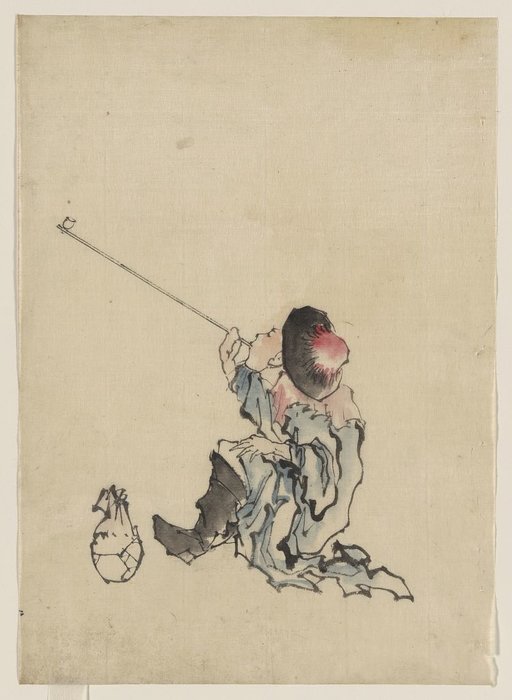
Уживајте у тишини и лепоти слике 'Sedeljeni Putnik' од Хасукаија Хокусаја – икона японске umetности која приказује мисливог човека у природи, прецизно изведену у стилу Едо периода.
Katsushika Hokusai био је јапански укијо-е сликар и гравур који је оставио траг у светској уметности уз значајне делије као што су „Велики талас преко Канагаве“ и тридесет шест погледа на Фуџи. Јего стил се одликује смелом линијом и бојом, а утицао је на импресионистичку школу и данашњу уметност.
A Portrait of Tranquility Amidst Nature’s Embrace
The painting, tentatively titled “A Traveler, Seated,” embodies the spirit of Edo-period Japan—a time characterized by burgeoning artistic innovation and a profound connection to the natural world. Created by Katsushika Hokusai, arguably Japan's most celebrated printmaker and painter, this artwork transcends mere representation; it’s an invitation into a contemplative scene steeped in symbolism and executed with masterful precision. While precise dating remains elusive—scholars estimate its creation sometime between 1830 and 1832—its influence on subsequent artistic movements is undeniable.
The Artist's Vision: Hokusai’s Oeuvre and Artistic Evolution
Katsushika Hokusai (1760-1849) wasn’t simply a craftsman; he was an artist who relentlessly pursued stylistic experimentation throughout his extraordinarily long life. Initially known as Tokubei, he adopted the moniker “Hokusai” – meaning “Great Master” – signaling his ambition to surpass established artistic conventions. This transformative decision reflected a broader trend within Japanese art during Hokusai’s era: artists actively sought new forms of expression and challenged traditional hierarchies. His prolific output spanned genres including prints (ukiyo-e), paintings, ceramics, and calligraphy, demonstrating an unparalleled versatility that cemented his place as one of Japan's artistic giants. The stylistic influences on “A Traveler” are discernible in Hokusai’s broader oeuvre—particularly his monumental *Thirty-Six Views of Mount Fuji*, which revolutionized landscape painting with its innovative use of perspective and tonal gradation. This groundbreaking series established a precedent for capturing the majesty of nature with unprecedented realism, influencing generations of artists to come.
Technique and Composition: Mastering Ukiyo-e Aesthetics
The artwork exemplifies the hallmarks of ukiyo-e, a printing technique that flourished in Edo Japan. Hokusai skillfully employed woodblock carving—a painstaking process involving multiple blocks meticulously inked and pressed onto paper—to achieve remarkable tonal depth and textural richness. The artist’s attention to detail is evident in the rendering of the traveler's robe, boots, and posture, conveying a sense of dignified repose. Furthermore, the placement of the birds—one perched on the left shoulder and another on the right—is not accidental; they serve as visual anchors, guiding the viewer’s gaze and reinforcing the painting’s harmonious composition. The subtle shading techniques employed contribute to an ethereal quality, mirroring the serene atmosphere of the depicted landscape. These meticulous details underscore Hokusai's dedication to capturing the essence of his subject matter with unparalleled accuracy.
Symbolism: Reflections of Buddhist Philosophy
Beyond its aesthetic beauty, “A Traveler” carries layers of symbolic meaning rooted in Buddhist philosophy prevalent during Hokusai’s time. The seated figure represents stillness and contemplation—a core principle of Zen Buddhism—suggesting an inner journey alongside the observation of the natural world. The birds symbolize longevity and wisdom, representing aspirations for enlightenment. Their presence reinforces the idea that true understanding comes from harmonizing with nature and cultivating mindfulness. This deliberate use of symbolism elevates the artwork beyond a simple depiction of a scene; it invites viewers to contemplate profound spiritual concepts.
Emotional Resonance: Capturing a Moment of Serenity
Ultimately, “A Traveler” succeeds in conveying a powerful emotional resonance—a palpable sense of peace and contemplation. Hokusai’s masterful portrayal captures not just a visual representation but also an intangible feeling—the quiet dignity of solitude amidst the grandeur of nature. This artwork continues to inspire artists and collectors alike, serving as a testament to Hokusai's enduring legacy as a visionary artist who elevated ukiyo-e to new heights of artistic achievement. Its timeless appeal lies in its ability to evoke feelings of serenity and reflection—a reminder that beauty can be found in simplicity and contemplation. It’s a piece designed to soothe the soul and inspire awe for the natural world, securing Hokusai's place as one of Japan’s greatest masters.