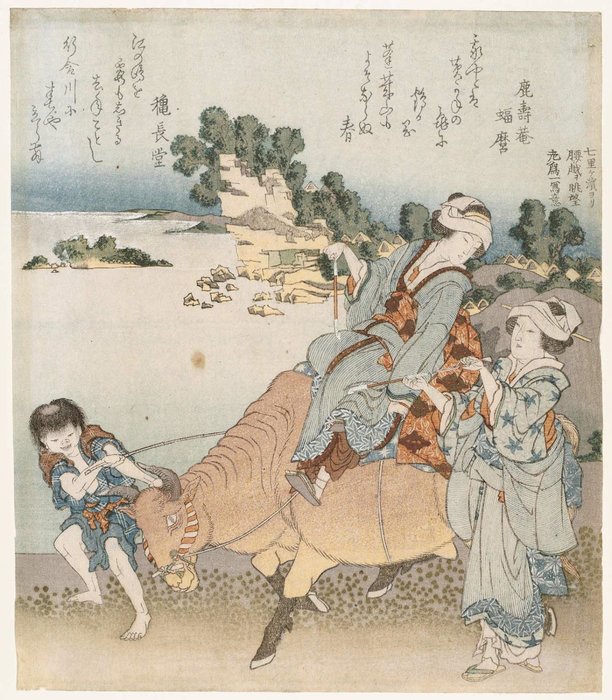
Уживајте у лепоти Кацушика Хокусаија „Вид Кошигоэ из Шичиригаме“, захваљући чему један од највећих представника едејског периода и укијо-е стила који приказује благородне жене које се возе на моћну морску ратку близу мирних обалеских панорама. Истражите японску историју уметности!
Katsushika Hokusai био је јапански укијо-е сликар и гравур који је оставио траг у светској уметности уз значајне делије као што су „Велики талас преко Канагаве“ и тридесет шест погледа на Фуџи. Јего стил се одликује смелом линијом и бојом, а утицао је на импресионистичку школу и данашњу уметност.
Katsushika Hokusai’s ‘View of Koshigoe From Shichiri-ga-hama’: A Symphony of Tranquility Amidst Change
Katsushika Hokusai, arguably Japan's most celebrated artist of the Edo period (1615–1868), transcends mere representation; he captures a fleeting moment in time—a serene vista overlooking the Pacific Ocean and nestled amongst rolling hills—transforming it into an enduring emblem of Japanese artistic vision. ‘View Of Koshigoe From Shichiri-ga-hama,’ produced circa 1830-32, exemplifies Hokusai’s mastery of *ukiyo-e*, a genre renowned for its exquisite woodblock prints that documented everyday life and celebrated the beauty of nature. This particular composition isn't simply a scenic depiction; it’s imbued with layers of symbolism reflecting the anxieties and aspirations of a society grappling with rapid change.
The print immediately draws the eye to Koshigoe, a coastal fishing village situated approximately thirty miles south from Edo (modern Tokyo), presenting a landscape bathed in soft morning light. Foreground rocks dominate the scene, punctuated by lush greenery—a deliberate choice mirroring traditional Chinese landscape painting’s emphasis on harmony and balance. Hokusai's meticulous attention to detail—from the subtle shading of the trees to the delicate ripples on the water surface—demonstrates a profound understanding of observation and artistic expression. This careful arrangement contributes to an overall sense of tranquility and contemplation, inviting viewers to appreciate the sublime qualities of nature – a core principle resonating deeply within Zen Buddhist philosophy and informing Japanese aesthetic sensibilities throughout history.
The artwork’s stylistic brilliance lies in its masterful execution using *ukiyo-e* techniques. Hokusai's signature style is characterized by bold outlines and vibrant colors achieved through painstaking carving onto wooden blocks followed by multiple layers of ink and pigment application. The use of Prussian blue—a pigment imported from Europe during this period—creates a breathtaking tonal range, particularly noticeable in the towering Mt Fuji visible in the distant horizon. This audacious color palette wasn’t merely decorative; it served as a deliberate counterpoint to the prevailing anxieties surrounding political instability – reflecting Japan's precarious position amidst Western imperial ambitions and highlighting the enduring desire for solace within idealized landscapes untouched by societal pressures.
Furthermore, ‘View Of Koshigoe From Shichiri-ga-hama’ speaks to broader cultural concerns regarding capturing transient beauty—a concept central to Zen Buddhism and deeply ingrained within Japanese artistic traditions. The depiction of Mt Fuji symbolizes permanence and spiritual fortitude – a powerful reminder of Japan's connection to ancient beliefs and values amidst the turbulent currents of modernization. It embodies an aspiration for stability and transcendence, mirroring the artist’s own lifelong pursuit of artistic perfection.
The enduring legacy of this masterpiece resides not merely in its visual splendor but also in its ability to convey profound philosophical ideas about harmony, impermanence, and the pursuit of spiritual enlightenment. Reproductions of ‘View Of Koshigoe From Shichiri-ga-hama’ offer a tangible connection to Japan’s artistic heritage—a window into a bygone era brimming with aesthetic sophistication and contemplative reflection. Its influence extends beyond its immediate context, inspiring Impressionist painters like Claude Monet and Vincent van Gogh who sought to capture fleeting moments of natural beauty with comparable boldness and vibrancy – cementing Hokusai's place as one of the most influential artists in Western art history.