Katsushika Hokusai’s Vision of Tranquility Amidst Turbulent Times
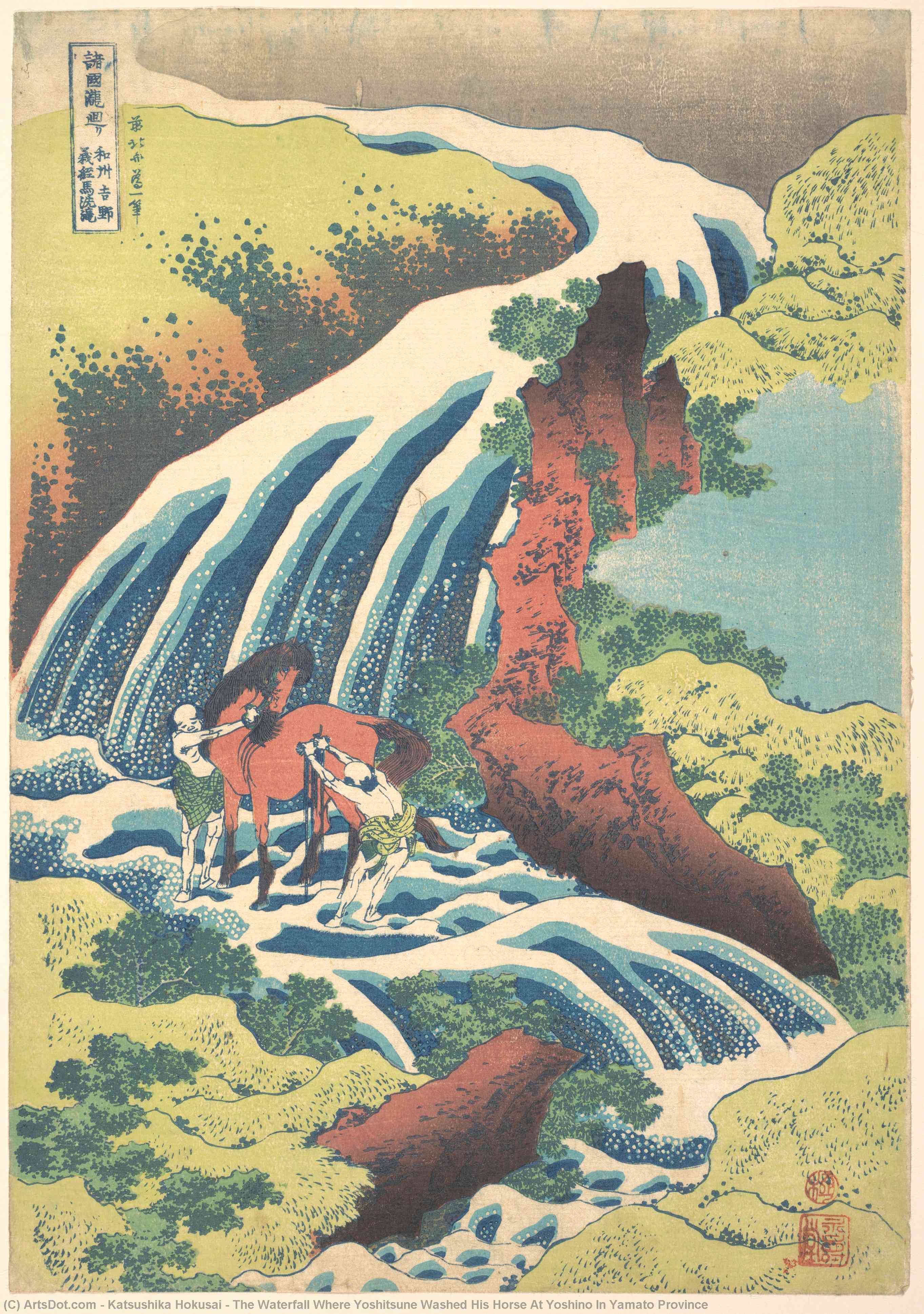
Yoshitsune's Horse-washing Falls at Yoshino in Yamato Province, created circa 1833-1834 during the Edo period, stands as a testament to Katsushika Hokusai’s unparalleled mastery of ukiyo-e printmaking and his profound connection to Japanese landscape aesthetics. More than just a depiction of a waterfall—the Kirifuri Falls in Shimotsuke Province being one of Japan's most celebrated natural wonders—this artwork embodies a complex interplay of observation, artistic innovation, and spiritual contemplation rooted in Nichiren Buddhism. Hokusai’s meticulous attention to detail captures the dynamism of the cascading water while simultaneously conveying an underlying sense of serenity and permanence, reflecting his belief that nature possessed inherent sacredness.
- Subject Matter: The print portrays a dramatic waterfall plunging into a gorge, dominated by towering mountains shrouded in mist—a scene chosen specifically to honor pilgrims traveling to Kirifuri Falls during Hokusai’s time.
- Style: Characteristic of Hokusai's oeuvre, “Yoshitsune’s Horse-washing Falls” exemplifies the Romantic spirit of its era, prioritizing emotive expression over strict realism. The artist skillfully employs atmospheric perspective—a technique pioneered by Hokusai—to create a convincing illusion of depth and distance, immersing viewers in the grandeur of the landscape.
- Technique: Executed with Prussian blue pigment imported from Europe—a bold departure from traditional Japanese pigments—the print showcases Hokusai’s experimental spirit and his willingness to embrace new artistic tools. The artist meticulously layered ink washes to achieve subtle tonal variations, capturing the shimmering reflections of light on the water surface and conveying a palpable sense of movement.
Symbolism: Echoes of Buddhist Philosophy
The waterfall itself symbolizes purification and renewal—themes central to Nichiren Buddhism’s teachings. Its turbulent flow represents challenges and impermanence, while its steadfast presence embodies enduring beauty and spiritual truth.
Mountains dominate the composition, symbolizing stability and transcendence—representing the aspiration for enlightenment and harmony with nature. The mist enveloping the peaks adds an element of mystery and suggests a realm beyond human comprehension.
Emotional Impact: Capturing the Sublime
“Yoshitsune’s Horse-washing Falls” evokes a powerful emotional response in viewers—inspiring awe and contemplation. Hokusai's masterful use of color and composition transports us to the heart of Japan’s mountainous landscape, fostering a feeling of connection with the natural world.
The print’s enduring appeal lies in its ability to communicate profound ideas about beauty, spirituality, and the human condition—making it a timeless masterpiece that continues to resonate across cultures and generations.
Legacy: Influence on Impressionism
Hokusai's innovative approach to landscape painting profoundly influenced Impressionist artists like Claude Monet and Eugène Boudin, who sought to capture fleeting moments of light and atmosphere—a stylistic hallmark of the movement.
“Yoshitsune’s Horse-washing Falls” remains a cornerstone of Japanese art history—demonstrating Hokusai's genius as both an artist and a visionary whose work transcends time and continues to inspire admiration worldwide.