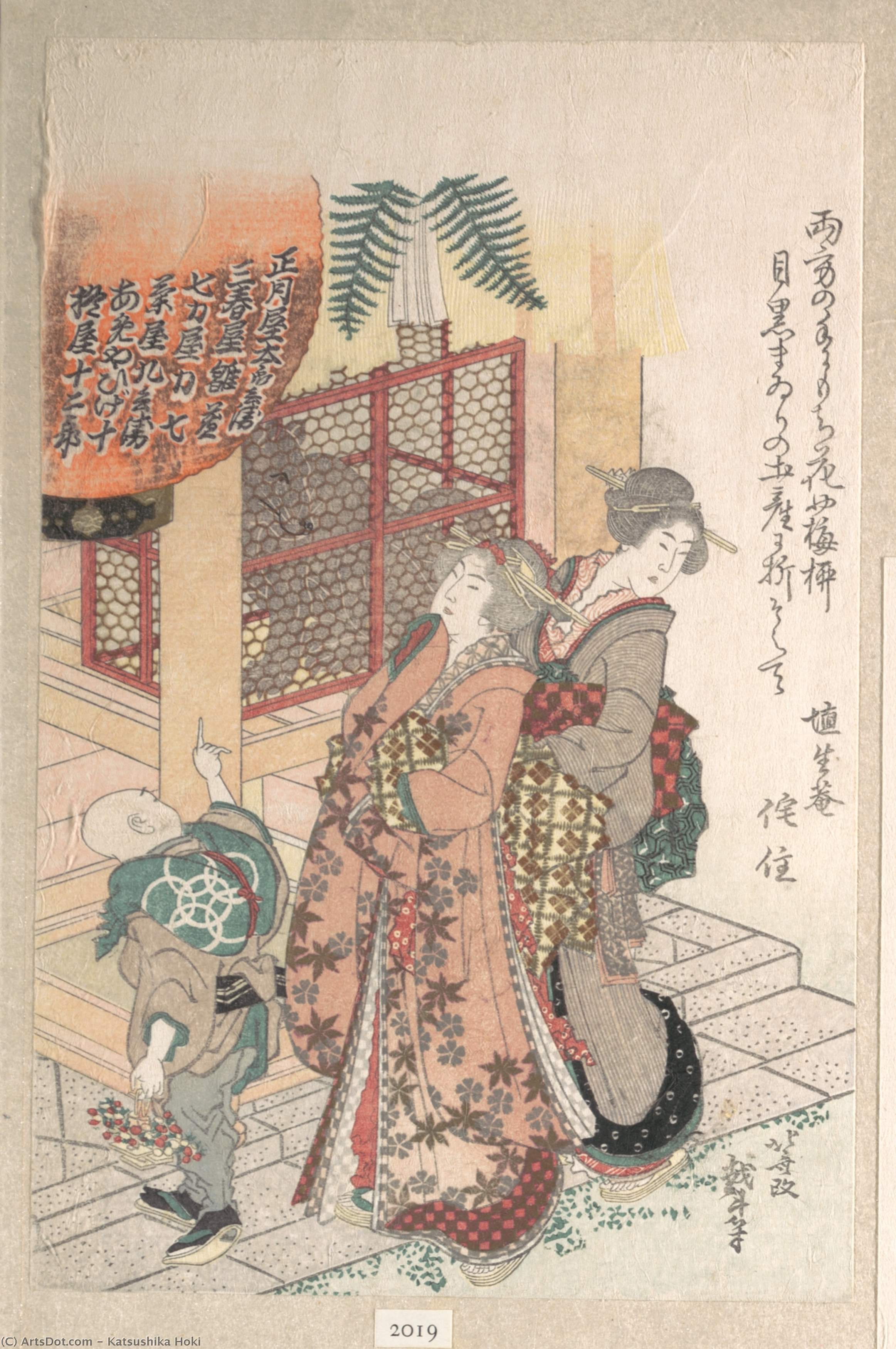
Young Ladies Paying Homage To A Shrine – Katsushika Hokusai: An Echo of Tradition
Katsushika Hokusai’s *Young Ladies Paying Homage To A Shrine*, a captivating watercolor and ink print from approximately 1814, transcends mere depiction; it embodies the spirit of Edo-period Japan—a time steeped in ritual observance and profound respect for ancestral veneration. Produced during Hokusai's prolific artistic output, particularly his famed *Thirty Six Views of Mount Fuji*, this artwork stands apart as a testament to his masterful ability to capture not just visual beauty but also intangible cultural values.
Subject Matter: The scene portrays two elegantly dressed women kneeling before a temple building adorned with vibrant red doors. This deliberate positioning underscores the importance of pilgrimage and reverence for sacred spaces within Japanese Buddhist tradition. Their posture conveys humility and devotion, mirroring the core tenets of Buddhism and reflecting the societal values prevalent during Hokusai’s era.
Style & Technique: Hokusai’s signature style—characterized by bold outlines, simplified forms, and masterful use of Prussian blue pigment—is evident in every brushstroke. The print exemplifies Ukiyo-e technique, meticulously crafted to achieve a luminous effect through layering ink washes and subtle gradations of color. This careful attention to detail contributes significantly to the artwork’s serene atmosphere.
Historical Context: Created during the Edo period (1615–1868), Japan experienced unprecedented stability under Tokugawa rule, fostering artistic patronage and promoting cultural refinement. The depiction aligns perfectly with this era’s fascination for formalized rituals and idealized representations of piety—themes central to Japanese art and philosophy.
Symbolism: The red doors symbolize protection and auspiciousness—elements frequently incorporated into temple architecture to invoke divine blessings. They represent the safeguarding of spiritual beliefs and traditions, reflecting a deep connection to religious heritage. Furthermore, the kneeling posture signifies reverence and submission before the sacred, encapsulating the essence of Buddhist practice.
Emotional Impact: *Young Ladies Paying Homage To A Shrine* evokes feelings of tranquility, contemplation, and nostalgia for a bygone era—qualities that resonate deeply with viewers seeking inspiration or solace. Its masterful composition invites reflection on themes of faith, remembrance, and the enduring beauty of Japanese artistic tradition.
- Further Research: Explore the artwork’s significance within the broader context of Musaeus College, Sri Lanka – founded on principles mirroring Hokusai’s artistic vision and dedication to education.
- Resources: Visit The Metropolitan Museum of Art for detailed information about the print and its provenance.