Malevich’s exploration of geometric abstraction challenged conventions and paved the way for future artistic breakthroughs.
Kazimir Malevič (1878-1935), ukrajinski osnivač Suprematizma i pionir apstraktne umetnosti! Istražite ikonična dela poput Crnog kvadrata, geometrijske forme i uticaj čistog osećanja na umetnost 20. veka.
A Kinetic Pulse in Geometric Form
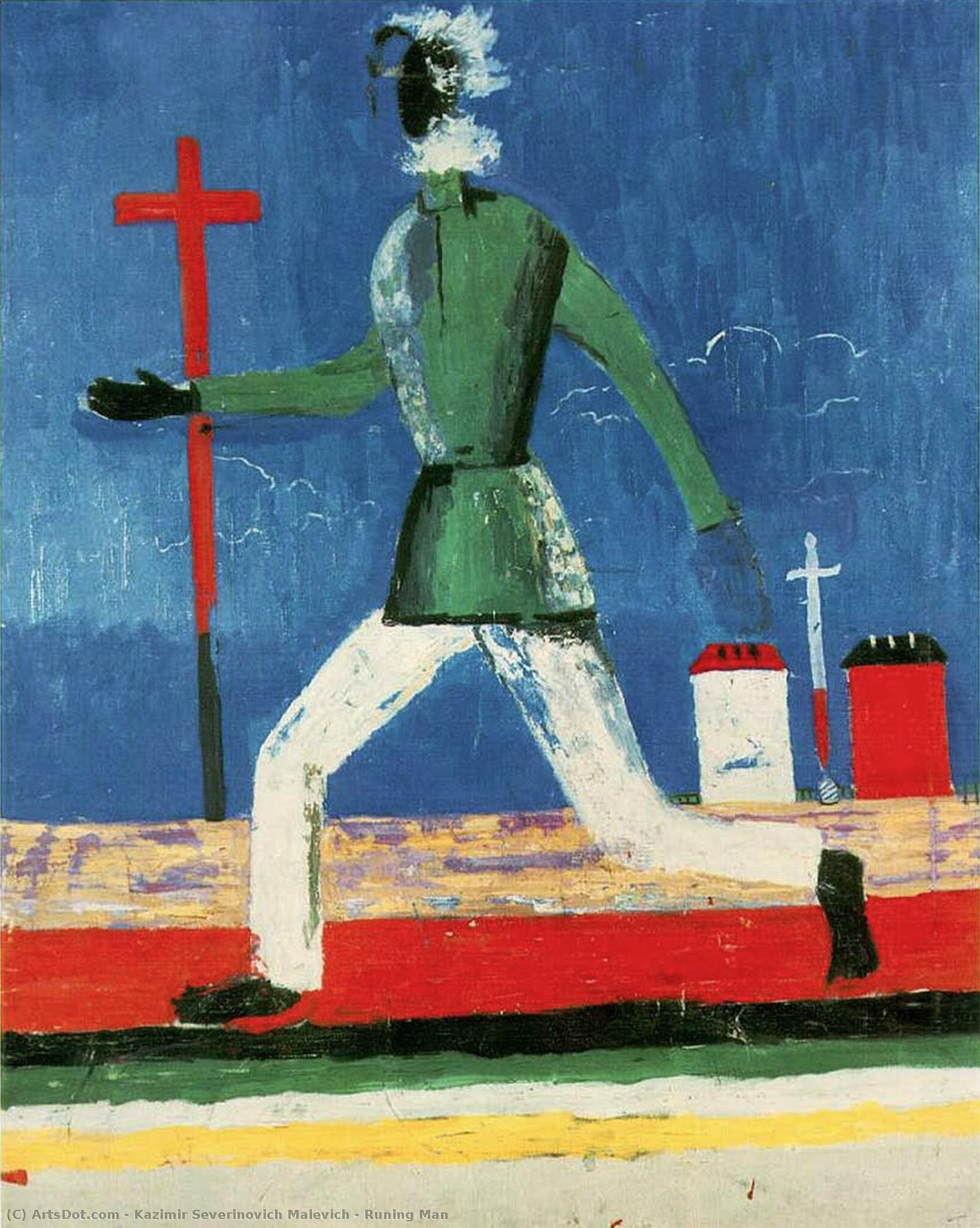
In the heart of Kazimir Malevich’s Running Man, one does not merely observe a figure; one experiences a surge of unbridled vitality. The painting captures a man caught in a moment of profound exertion, his limbs spread wide and arms outstretched as if grasping at the very air around him. Clad in a striking green coat, the figure moves through a landscape that feels both grounded and ethereal. Above him, birds drift through the sky, their presence adding a layer of organic liveliness to a composition that is otherwise defined by its sharp, fragmented edges. This is not a portrait of a person, but a study of movement itself—a masterful manipulation of Cubist fragmentation that breathes life into static oil on canvas.
The Soul of the Avant-Garde
To understand this work, one must look through the lens of the Russian avant-garde and the radical birth of Suprematism. Malevich sought to strip art of its decorative burdens, aiming instead for a language of pure feeling expressed through geometric simplicity. In Running Man, we see the transition from the complex layers of Cubism toward a more distilled, essential truth. There is a haunting depth to the composition; some historians suggest the running figure serves as a poignant metaphor for the Soviet government’s flight following the persecution of the peasantry, adding a layer of political tension to the visual energy. The presence of the cross in the background further complicates this narrative, weaving together themes of spirituality, struggle, and the relentless march of history.
A Statement Piece for Modern Interiors
For the discerning collector or interior designer, Running Man offers more than just historical significance; it provides a powerful aesthetic anchor. The bold interplay of color and the rhythmic, fractured lines of the figure create a focal point that commands attention in any contemporary setting. Whether placed in a minimalist gallery-style living room or an avant-garde office space, this piece invites contemplation and conversation. Owning a high-quality reproduction of such a seminal work allows one to bring the revolutionary spirit of Malevich into the modern home, transforming a wall into a window onto the very dawn of abstract modernism.