The Spirit of the Joseon Wilderness
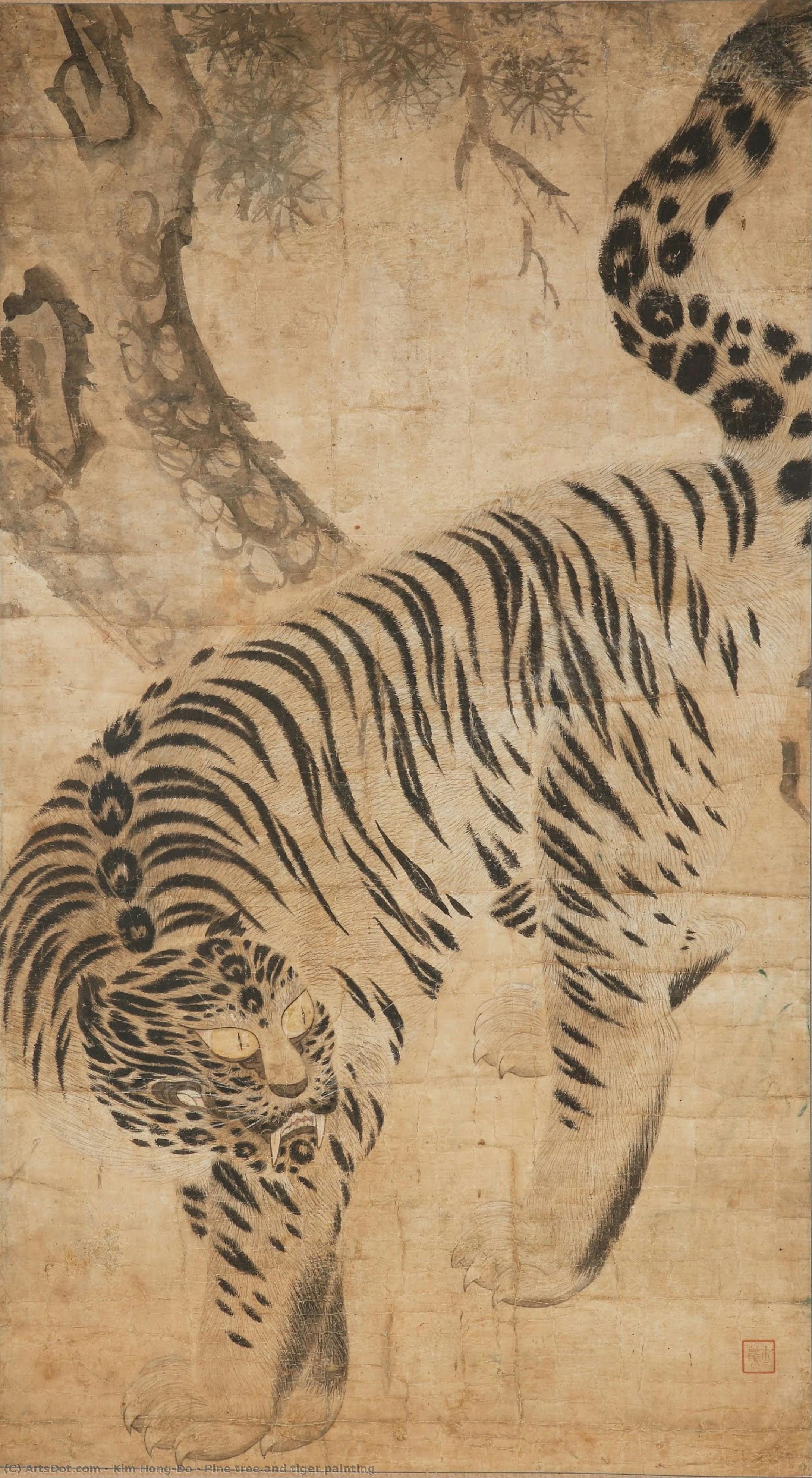
In the quiet depths of the Korean wilderness, where the ancient pine trees stand as silent sentinels, a powerful presence emerges from the shadows. The Pine Tree and Tiger Painting is a breathtaking masterwork that captures a moment of raw, natural tension. This monochrome ink painting presents a scene of profound vitality, depicting tigers navigating a rugged landscape with an elegance that transcends mere representation. One tiger is captured in a dynamic, leaping posture, its head raised as if sensing a change in the wind, while another rests with a calm, grounded dignity beneath the sheltering branches. The composition, oriented vertically, draws the eye upward through the stylized foliage, creating a sense of soaring height and deep, atmospheric space that invites the viewer into a world of mythic significance.
The artistry of this piece lies in its masterful use of Shuibanjing, or traditional ink wash technique. Through the delicate application of black ink on rice paper, the artist achieves a remarkable range of textures and tones. The brushwork is both loose and intentional; while some strokes capture the spontaneous essence of the natural world, others are meticulously applied to simulate the coarse, bristling texture of tiger fur and the rugged bark of the pine trees. This interplay between spontaneity and precision creates a tactile quality that makes the subjects feel almost tangible. The lighting is soft and diffused, eschewing harsh shadows for a somber, contemplative mood that emphasizes the spiritual weight of the subject matter rather than mere physical realism.
A Legacy of Symbolism and Mastery
Beyond its visual splendor, this painting serves as a profound vessel for cultural symbolism. In Korean tradition, the tiger is far more than a predator; it is a symbol of power, protection, and good fortune. The way the tigers interact with the pine trees—symbols of longevity and steadfastness—creates a harmonious dialogue between strength and endurance. As the eye wanders across the composition, one might notice subtle, stylized patterns along the tiger's spine, reminiscent of leopard spots, which hint at the transition from the realistic traditions of masters like Kim Hong-do toward the more decorative, folk-art styles of later eras. This piece stands at a fascinating historical crossroads, blending the disciplined realism of the Joseon Dynasty with the burgeoning expressive freedom of Minhwa.
For the discerning collector or interior designer, this artwork offers an unparalleled opportunity to bring a sense of historical depth and tranquil strength into a modern space. A high-quality reproduction of this painting does more than decorate a wall; it introduces a narrative of resilience and natural grace. Whether placed in a minimalist contemporary setting to provide a focal point of organic texture or within a classic study to evoke the scholarly traditions of old Korea, the Pine Tree and Tiger Painting commands attention through its quiet intensity. It is an invitation to pause, to breathe, and to reconnect with the timeless, untamed spirit of the natural world.