A Study in Anatomical Revelation
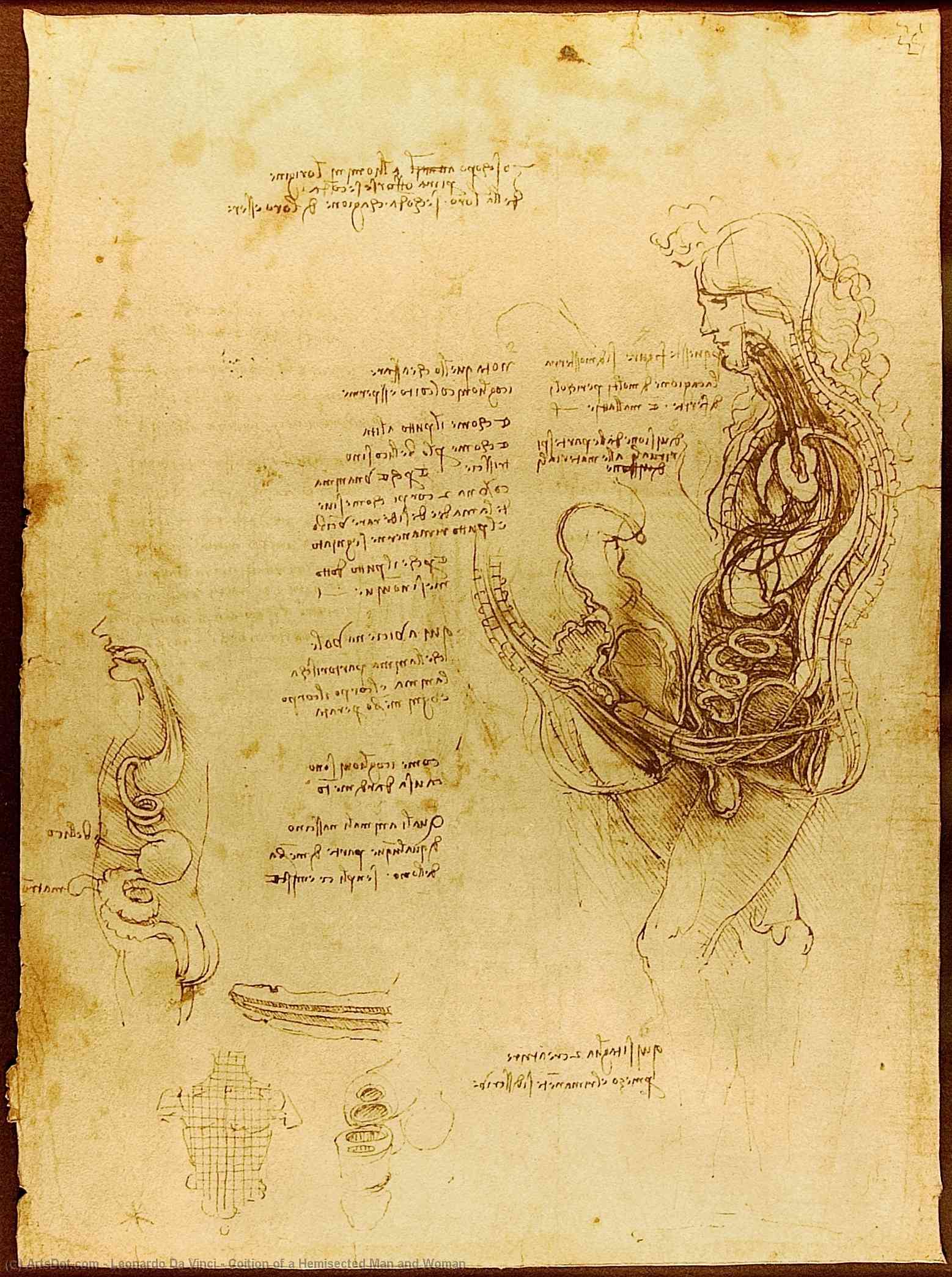
Leonardo da Vinci’s Coition of a Hemisected Man and Woman, painted circa 1492, is not merely a depiction of human intimacy; it's a profound meditation on the very nature of existence, rendered with an unprecedented level of anatomical precision. Created during a pivotal moment in Renaissance art – a period defined by a fervent return to classical ideals and a burgeoning scientific curiosity – this painting transcends its immediate subject matter to become a testament to da Vinci’s genius as both artist and scientist. The scene itself, unsettlingly detailed, captures the fleeting instant of union between two figures, one deliberately fragmented, hinting at themes of duality, imperfection, and perhaps even mortality.

The Anatomical Obsession
Da Vinci’s meticulous dissection of the human form, a practice considered radical for its time, is vividly displayed within this painting. The man's body, meticulously rendered with an almost clinical accuracy, reveals the intricate musculature and skeletal structure beneath layers of skin. The woman’s form, similarly detailed, showcases her internal organs – a daring display of anatomical knowledge that reflects da Vinci’s relentless pursuit of understanding the mechanics of life itself. This wasn’t simply about artistic representation; it was an active investigation into the very building blocks of humanity, anticipating modern anatomical studies by centuries.
- Chiaroscuro Mastery: Da Vinci's signature use of *chiaroscuro* – the dramatic interplay of light and shadow – intensifies the emotional impact of the scene. The stark contrasts highlight the figures’ forms, creating a sense of depth and volume that draws the viewer into the intimate moment.
- Renaissance Humanism: The painting embodies the core tenets of Renaissance humanism, placing humanity at the center of artistic inquiry. Da Vinci's focus on the individual body reflects a shift away from purely religious themes towards a celebration of earthly beauty and potential.
Context within the Cinquecento Art Movement
Painted during the *Cinquecento* (1500-1599), a period of immense artistic innovation in Italy, Coition of a Hemisected Man and Woman exemplifies the movement’s fascination with realism and its exploration of complex philosophical ideas. The era witnessed artists like Michelangelo pushing the boundaries of sculpture and painting, while da Vinci continued to refine his techniques and challenge conventional notions of beauty and representation. The influence of classical antiquity is palpable, yet blended with a distinctly Renaissance sensibility – a desire to understand and depict the world around us with unprecedented accuracy.
Symbolism and Interpretation
While the precise meaning behind this unconventional composition remains open to interpretation, several symbolic readings have been proposed. The fragmented nature of the man could represent imperfection, duality, or even the transient nature of life itself. The act of coition, a fundamental human experience, is elevated to a profound philosophical statement. Some scholars suggest that the painting may be an allegory for the creation myth – a visual representation of the union of opposites, mirroring the Genesis account of Adam and Eve. Regardless of its specific intent, Coition of a Hemisected Man and Woman remains one of da Vinci’s most enigmatic and compelling works, inviting endless contemplation and admiration.