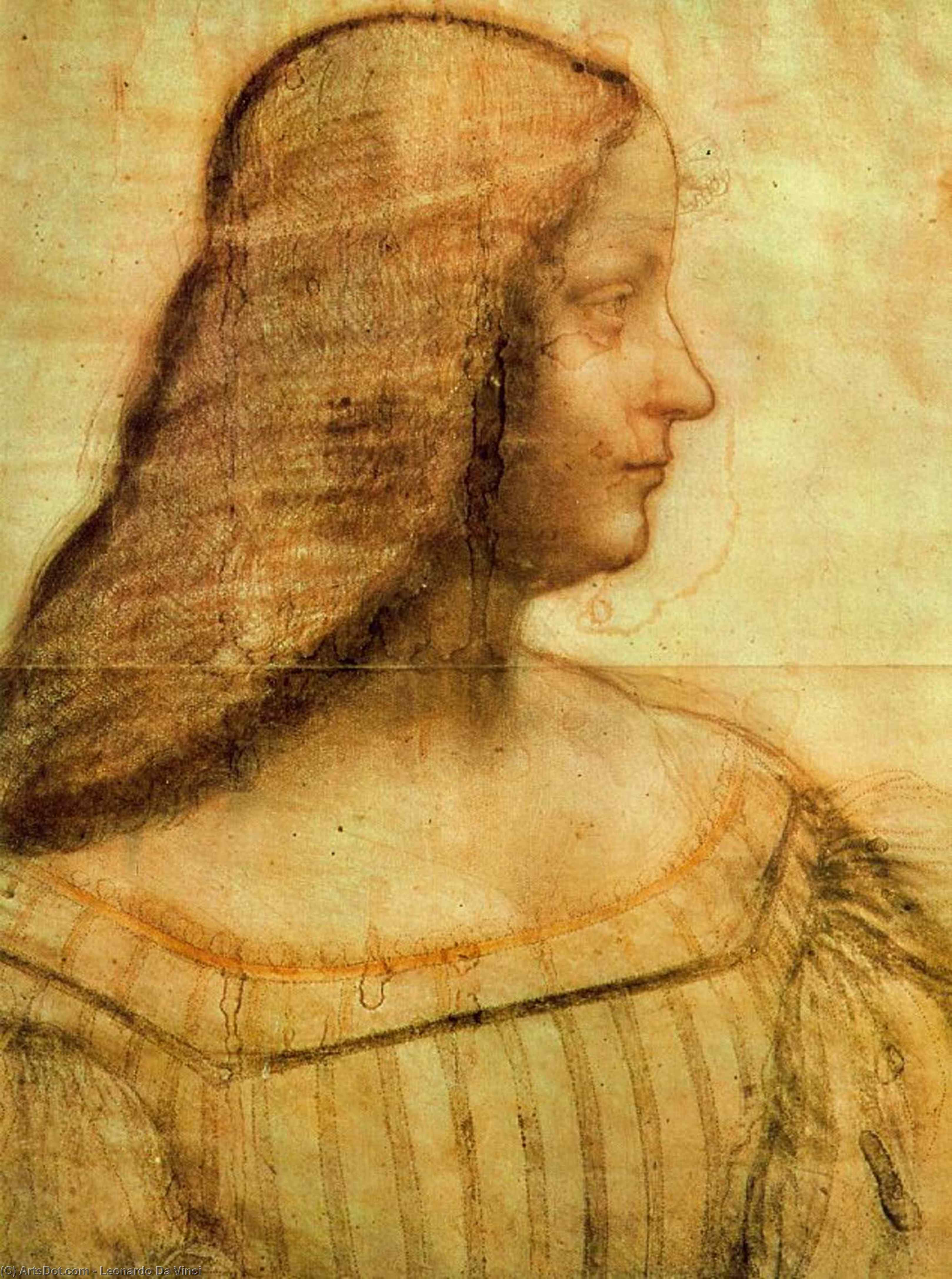
Admire Leonardo da Vinci’s iconic ‘Portrait of Isabella d’Este’! A stunning Renaissance masterpiece showcasing sfumato & exquisite detail. Explore this timeless artwork at ArtsDot.
Otkrijte Leonarda da Vincija (1452-1519): Renesansni genije iza Mone Lize i Poslednje večere! Istražite njegovu tehniku sfumato, studije anatomije i revolucionarne izume.
A Renaissance Enigma: Unveiling Leonardo’s Isabella d'Este
Leonardo da Vinci’s portrait of Isabella d'Este remains one of the most fascinating and elusive works of the High Renaissance. Though existing primarily as a detailed drawing – with debate surrounding whether a fully realized painting ever existed – it offers an intimate glimpse into the world of a powerful woman and the genius of her chosen artist. Commissioned around 1499, during Leonardo’s time in Mantua, the portrait captures Isabella d'Este, Marchioness of Mantua, a renowned patron of the arts and one of Italy’s most influential women. The work embodies Leonardo’s mastery of capturing not just likeness, but *character* – a quality that sets his portraits apart.
The Subject: A Renaissance Powerhouse
Isabella d'Este (1474-1539) was no mere noblewoman; she was a cultural and political force. Her court in Mantua became a beacon of Renaissance learning, attracting artists, poets, and scholars from across Italy. Isabella actively cultivated her image as a sophisticated patron, commissioning works from leading artists like Andrea Mantegna, Perugino, and, of course, Leonardo da Vinci. She meticulously documented her collections and corresponded with intellectuals throughout Europe. The portrait was intended to solidify this carefully constructed persona – a testament to her intelligence, power, and refined taste. Her ambition extended beyond patronage; she skillfully navigated the complex political landscape of Renaissance Italy, acting as a diplomat and advisor.
Technique & Style: Sfumato and Psychological Depth
Even in its unfinished state, the drawing reveals Leonardo’s groundbreaking techniques. The use of *sfumato* – that subtle blurring of lines and softening of contours – is evident, creating an atmospheric quality and a sense of lifelike presence. Leonardo's meticulous attention to detail, particularly in rendering fabrics and facial features, showcases his scientific approach to art. He wasn’t simply painting what he saw; he was studying light, shadow, and anatomy to understand the underlying structure of form. The composition is carefully balanced, drawing the viewer’s eye to Isabella’s face and conveying a sense of quiet dignity and intelligence. The pose, though seemingly simple, suggests a thoughtful and observant nature – qualities that defined Isabella herself.
Symbolism & Legacy
While much remains open to interpretation, scholars believe certain elements within the portrait carry symbolic weight. The clothing, jewelry, and hairstyle would have been carefully chosen to convey Isabella’s status and taste. The subtle expression on her face is particularly intriguing – a blend of composure and introspection. It's a testament to Leonardo’s ability to capture not just physical appearance but also psychological depth. Though the painting itself may be lost or incomplete, the drawing has had an enduring impact on art history, influencing generations of artists with its innovative techniques and profound understanding of human character. Today, it serves as a powerful reminder of Isabella d'Este’s legacy as a Renaissance icon and Leonardo da Vinci’s unparalleled genius.