Leonardo da Vinci’s Intimate Study: A Window into the Mind of a Genius
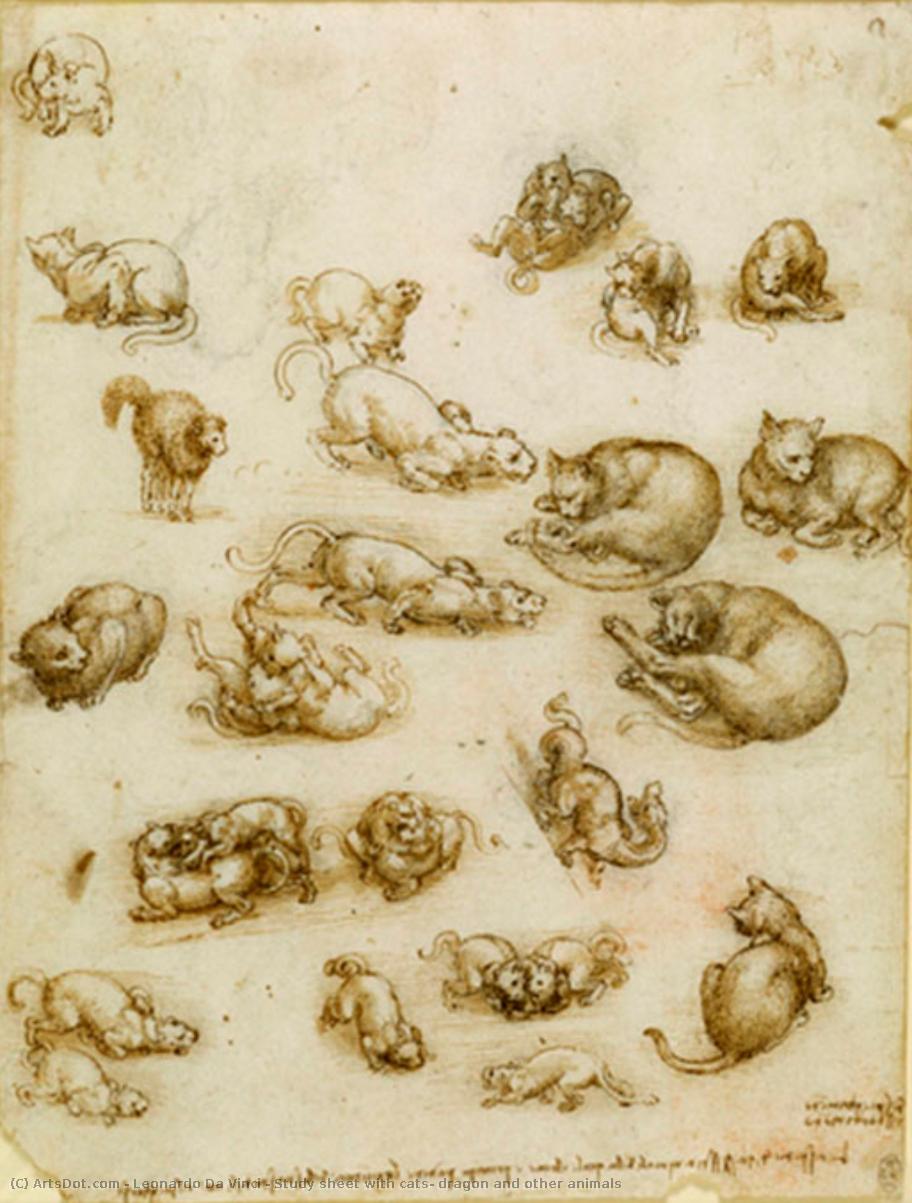
The “Study sheet with cats, dragon and other animals,” a remarkably intimate glimpse into the creative process of Leonardo da Vinci, transcends its humble origins as a preparatory sketch. Created around 1515, during the twilight years of his extraordinary life, this unassuming sheet—now housed within the Royal Library of Windsor—is far more than just an animal study; it’s a profound meditation on observation, imagination, and the very nature of artistic inquiry. Da Vinci, grappling with failing health yet retaining an insatiable curiosity, captured a vibrant menagerie of creatures – primarily cats, but also dogs, birds, and even a fantastical dragon – in a flurry of pen, ink, and delicate washes over black chalk.
The sheer variety within the sheet is immediately arresting. Dozens of feline forms dominate the composition, each rendered with an astonishing level of detail that speaks to Da Vinci’s meticulous approach. He doesn't simply depict cats; he dissects their movement, capturing the languid stretch of a sleeping kitten, the predatory focus of a hunting cat, and the playful pounce of a young one. The inclusion of a dragon—a symbol often associated with power, mystery, and transformation—adds an element of fantastical whimsy, hinting at Da Vinci’s boundless imagination and his willingness to explore realms beyond the purely representational. It's a deliberate juxtaposition, suggesting that even in the most grounded studies, the seeds of grander narratives can be sown.
The Anatomy of Observation: Scientific Curiosity Meets Artistic Skill
What truly distinguishes this study sheet is its profound connection to Da Vinci’s scientific pursuits. He wasn't merely sketching animals; he was meticulously analyzing their anatomy and movement, driven by a deep-seated desire to understand the mechanics of life itself. The drawings are not idealized representations but rather studies in proportion, gesture, and perspective—elements that would later inform his monumental paintings like the Last Supper. The way he captures the subtle curve of a spine, the ripple of fur, or the extension of a paw reveals an artist deeply attuned to the physical world.
Da Vinci’s choice of medium – pen, ink, and wash – further underscores his intellectual approach. These techniques allowed for incredible precision and layering, enabling him to build up complex forms with subtle gradations of tone and texture. The use of black chalk provided a foundational structure, while the washes of ink added depth and atmosphere. This combination reflects not only his artistic skill but also his scientific method—a process of careful observation, experimentation, and refinement.
A Reflection of Renaissance Ideals
The “Study sheet with cats, dragon and other animals” stands as a powerful testament to the ideals of the High Renaissance. It embodies the humanist fascination with nature, the pursuit of knowledge through empirical observation, and the belief in the interconnectedness of art and science. Da Vinci’s work reflects a shift away from purely religious themes towards a celebration of human potential and the beauty of the natural world. The sheet is not just a record of animals; it's a visual exploration of the principles that governed both the artist and the scientist.
Interestingly, this study shares thematic similarities with another of Da Vinci’s drawings—a composition featuring horses in motion—demonstrating his consistent fascination with capturing dynamic movement. The ability to convey power and vitality through simple lines is a hallmark of his genius, evident throughout his entire oeuvre. This particular sheet offers a rare opportunity to witness the genesis of one of his most celebrated works, revealing the painstaking process by which he transformed observation into art.
Bringing Da Vinci’s Vision Home: A Reproduction for Today
ArtsDot is proud to offer meticulously hand-painted reproductions of this extraordinary study sheet. Each reproduction captures the delicate detail and atmospheric depth of the original, allowing you to experience the brilliance of Leonardo da Vinci in your own home or studio. Whether you are an art enthusiast, a collector, or simply seeking a unique piece of decorative art, this reproduction provides a tangible connection to one of history’s greatest minds. Explore more of Da Vinci's captivating works on ArtsDot – including his studies of horses and other iconic pieces – and bring the timeless beauty of his vision into your world.