Tauwade
Nemačka
Lovis Corinth
Franz Heinrich Louis Corinth
Istražite umetnost Lovisa Korinta (1858-1925), nemačkog slikara koji je spaja impresionizam i ekspresionizam. Poznat po portretima, pejzažima i surovoj reprezentaciji života – uključujući 'Ubistvo u jato'. otkrijte njegov nasleđe kao predsednik Berlinske Sekecije.
Lovis Corinth, Franz Corinth, nemački slikar, impresionizam, ekspresion
Откријте векови уметности у Хумбертској галерији! Погледајте слике рембранта и други шемасте из три дивља здања у историјском Алтштату Хумберта.
Хумбертска галерија, музеј европске уметности, слике рембранта, пейзажи фридриха, немачка романтизам, барокна уметност, изложбе модерне уметности, архитектура Хумберта, купелсаал домина, импресионистичка уметност, колекција современе уметности, стил слик
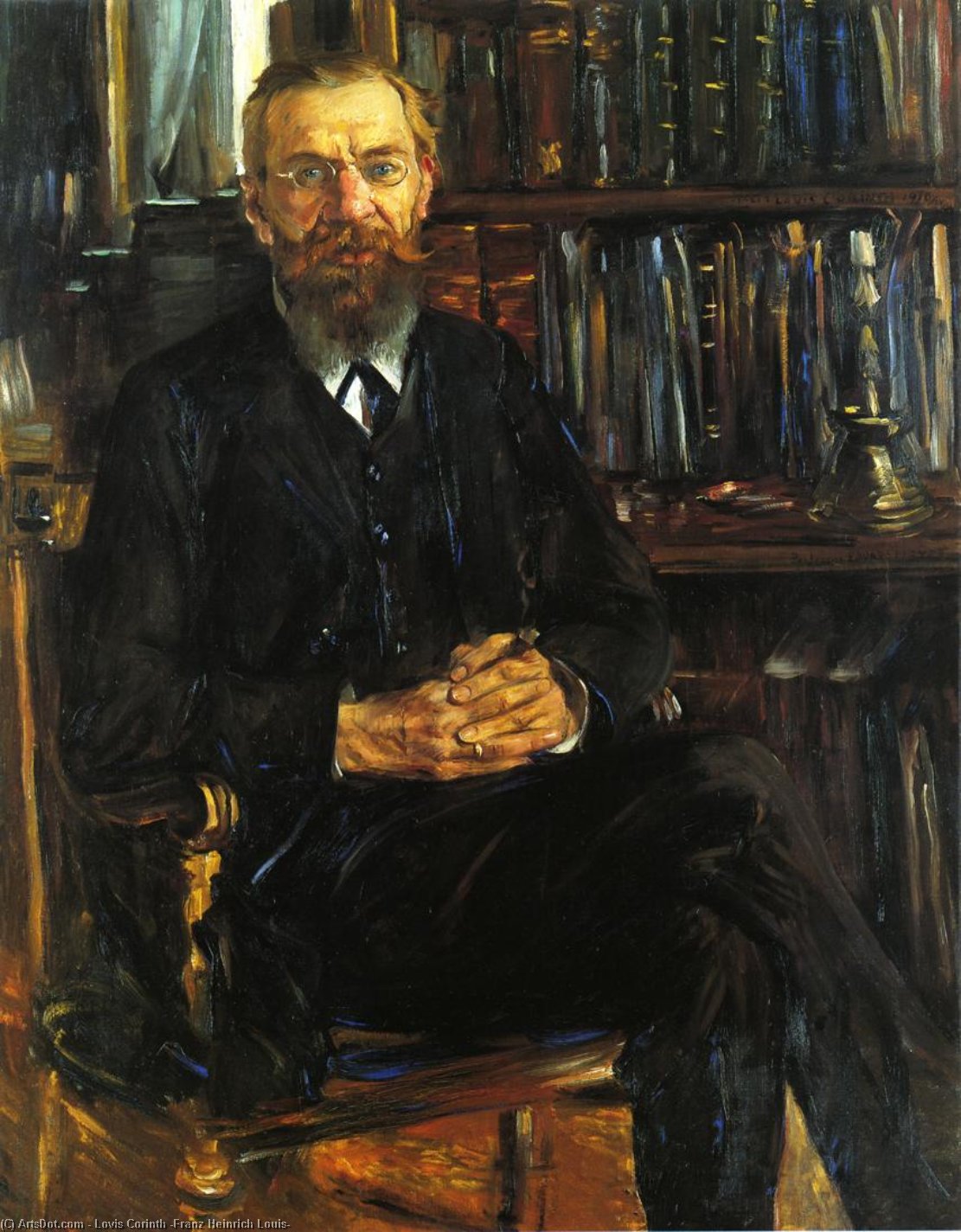
Portrait of Professor Eduard Meyer – A Window into Intellectual Contemplation
Lovis Corinth’s “Portrait of Professor Eduard Meyer” is more than just a likeness; it's a carefully constructed tableau of intellect, quiet observation, and the subtle weight of scholarly life. Painted in 1910, this oil on canvas offers a glimpse into the world of a distinguished German historian – a man deeply immersed in the pursuit of knowledge and the contemplation of history’s grand narratives. Corinth, known for his expressive use of color and dynamic compositions, here employs a restrained palette dominated by deep browns, muted greens, and the rich crimson of scholarly robes, creating an atmosphere of thoughtful seriousness.
The subject himself is presented with remarkable dignity. Professor Meyer sits in a simple chair, hands clasped together – a pose that speaks volumes about his disciplined mind and perhaps a lifetime spent poring over ancient texts. His gaze, directed slightly off-camera, suggests a man lost in thought, absorbed in the complexities of his field. Corinth masterfully captures the subtle lines etched on Meyer’s face, hinting at years of intellectual exertion and the weight of accumulated wisdom. The inclusion of numerous books – stacked on shelves behind him and scattered across the room – isn't merely decorative; it’s a potent symbol of the professor’s dedication to his craft, illustrating the very foundation upon which his intellect rests.
The Corinthian Approach: Color, Texture, and Emotional Resonance
Corinth’s technique is immediately recognizable. He eschews photographic realism in favor of an expressive approach that prioritizes capturing the *feeling* of a subject rather than its literal appearance. Notice the loose brushstrokes, particularly evident in the background – they create a sense of movement and depth, drawing the eye into the room and suggesting a space teeming with intellectual activity. The use of color is equally deliberate; Corinth employs a rich, almost velvety texture to convey both the formality of the setting and the warmth of human connection. The interplay between light and shadow adds drama and highlights key features, such as Meyer’s face and hands.
Furthermore, the painting's composition isn't static. The arrangement of books and furniture creates a dynamic visual rhythm, while the subtle diagonal lines formed by the chair and bookshelves contribute to a sense of forward momentum. This carefully orchestrated balance reflects Corinth’s artistic philosophy – a belief that art should not merely represent reality but also evoke emotion and stimulate the viewer’s imagination.
Historical Context: A Portrait of an Era
“Portrait of Professor Eduard Meyer” was painted during a period of significant intellectual ferment in Germany. The early 20th century witnessed a resurgence of interest in classical history, fueled by archaeological discoveries and new scholarly interpretations. Eduard Meyer himself was a prominent figure in this movement, renowned for his work on Celtic history and the development of historical methodology. Corinth’s portrait captures not only Meyer's individual intellect but also the broader cultural climate of the time – an era characterized by intellectual curiosity, academic rigor, and a deep appreciation for the past.
The painting can be viewed as a reflection of the values prized within German academia at the turn of the century: scholarship, discipline, and a commitment to uncovering historical truth. It’s a testament to the enduring power of knowledge and the importance of intellectual pursuits in shaping our understanding of the world.
Symbolism and Emotional Impact
Beyond its biographical details, “Portrait of Professor Eduard Meyer” is rich in symbolic meaning. The books represent not just academic learning but also the weight of history – the accumulated wisdom of generations past. The professor’s posture conveys a sense of quiet contemplation, suggesting that intellectual life is often characterized by solitude and introspection. The painting invites us to consider the nature of knowledge, the pursuit of truth, and the profound impact that individuals can have on shaping our understanding of the world.
Ultimately, this portrait transcends a simple likeness; it’s an evocative meditation on intellect, history, and the human condition – a timeless work that continues to resonate with viewers today. A high-quality reproduction offers a remarkable opportunity to bring this captivating image into your home or office, serving as a constant reminder of the enduring power of knowledge and the beauty of thoughtful contemplation.